
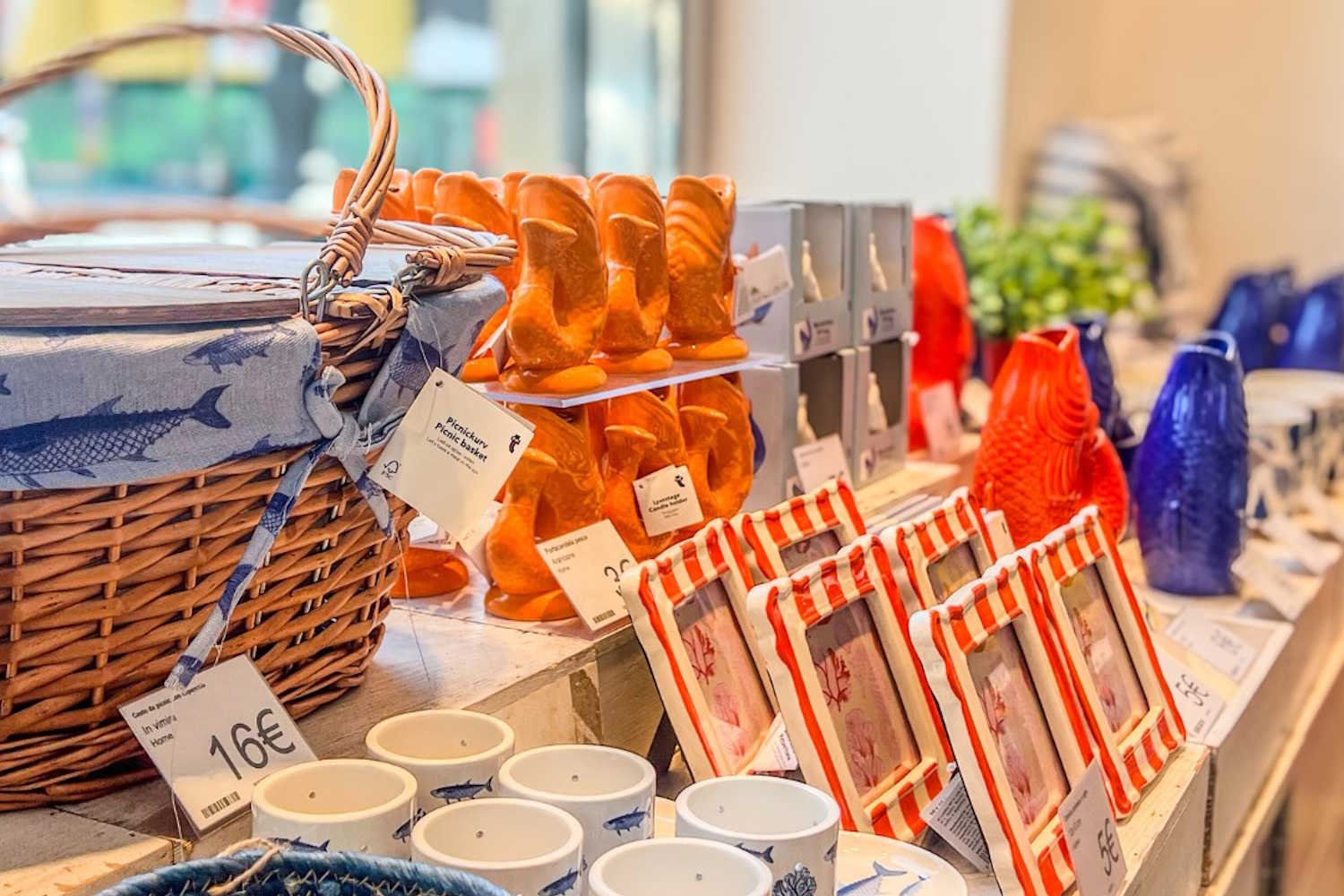
Let’s go in”just to have a look“, attracted by the artfully packaged display cases, and we leave with a candle that smells of Danish biscuits, a super large checkered organizer that we didn’t know we wanted and an unlikely gadget in the shape of a frog that “sooner or later it will be useful”.
It happens in mega stores, super colorful and very tidy for every type of product, type Action or Tiger, and in general in all those shops that transform our shopping moment into a small and wild emotional labyrinth, made up of huge, huge satisfactions that we didn’t even think we needed.
But it’s not our fault: this, gentlemen, is marketing psychology, and it is studied down to the smallest detail. And, yes, hormones are involved too.
The “guided tour” trick
Stores like Tiger have a specific feature: you can’t go straight to the checkout. A bit like when you have to go through the smelly duty free shop, full of jujubes and perfumes that “wow, I don’t have this“, you are forced to follow a serpentine path that exposes you to a continuous flow of small, large, colourful, cheap products. Super wow!
A scheme studied carefully and which works because first of all it increases the time spent: the more minutes you spend in that diabolical trap, the more you are inclined to buy (because basically things come into your hands that you need at that precise moment).
And not only that, having everything within reach of your eyes and wallet reduces decision-making effort: when prices are low, the brain says “ok, take it”. Furthermore, such a disposition exploits FOMO (Fear Of Missing Out): that is, I see them as opportunities at risk of disappearing.
Result? We allow ourselves to be tempted because the environment is designed to make us feel “ok” while we spend even without real need.
And the offering baskets? The perfect bait
Stores like Action also have another very powerful dynamic: offering baskets. They are placed in strategic points – often at the entrance or along the central passages – and contain random products at prices that seem unavoidable.
The psychological mechanism is clear:
The truth? By dint of rummaging, you are not buying what you need: you are chasing the feeling of finding “that stroke of luck”.
Because these stores give us Pleasure
Dopamine is its excellence, capable of coming into play like a great lady well before we arrive festive and enchanted at the checkout. It’s not the object itself that makes us happy, but the expectation of finding something beautiful, useful or simply funny.
In short, those in marketing know very well what exactly goes into circulation in our mind when we find ourselves in those shiny and smelly places, and that the brain loves rewards and above all unpredictable rewards. Low prices also break down moral barriers, and that infinite variety gives the illusion of endless possibility.
It is an open-air “micro casino”: lots of stimuli, small bets, occasional rewards.
How to defend yourself?
Because yes, these places can also be pleasant, just don’t get trapped.
Two simple but effective strategies?
The truth is that Action or Tiger and others attract us because they know how to mix surprise, convenience and color in a satisfying moment. It’s not a problem to have a weakness for these shops and you shouldn’t feel guilty, the secret is to recognize their mechanisms.
When we know as influence us, we can choose more freely. And maybe go out, for once, only with what we really need. In addition to the mug you’ve been looking for for a long time.
