
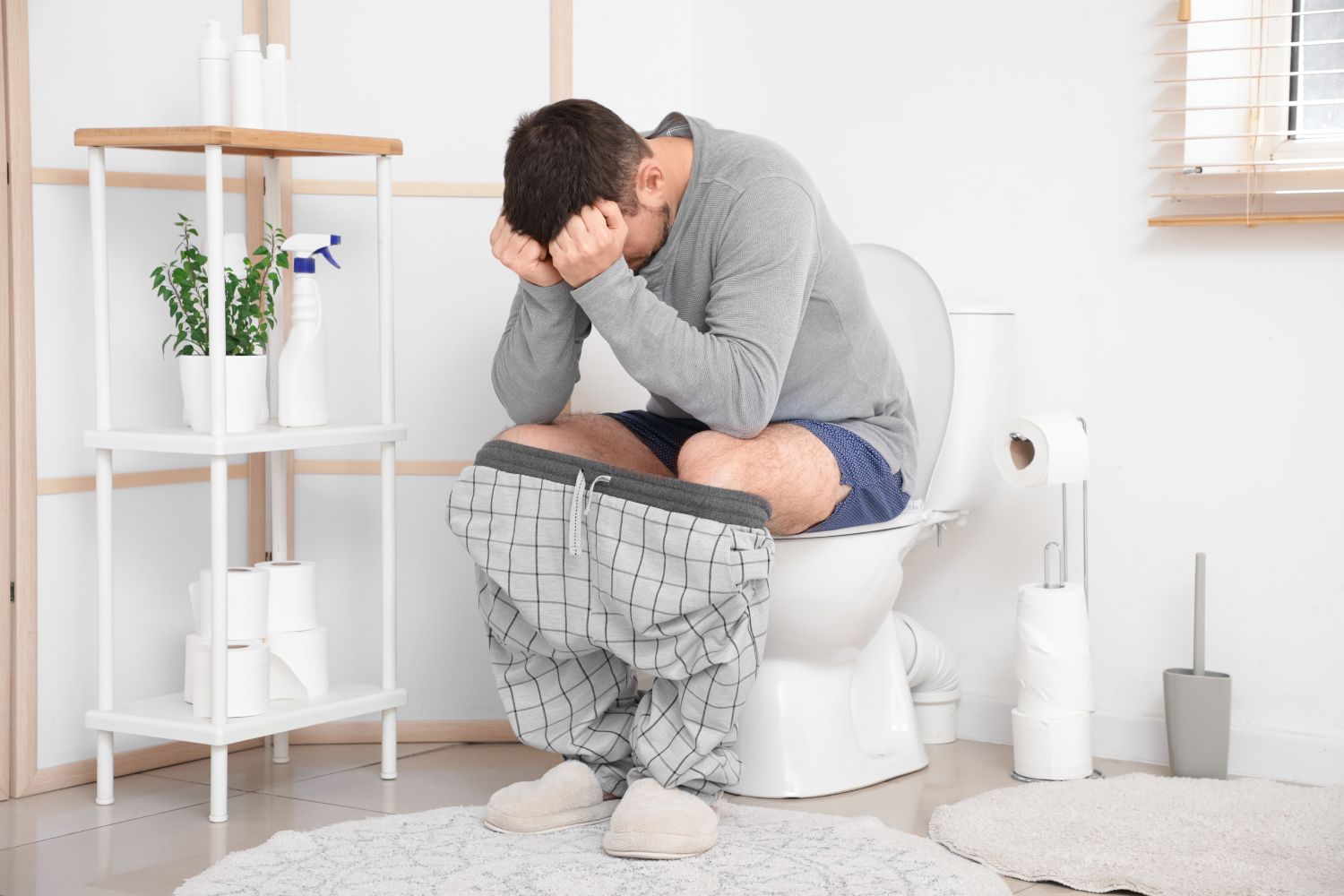
There are people who cannot defecate outside their home and it is not an impression: the condition is real and is often called “shy bowel syndrome”, but also “poop anxiety”. In scientific terms we talk about parkpresis and it should not be underestimated, as it can also lead to physical disorders, due to often retaining feces for too long.
In an article published on The Conversation, Vincent Hogastroenterologist at Western Sydney University (Australia), refers to as the condition, which the Germans call Heimscheißeris relatively common, and how it can even lead those who suffer from it to eat less or even give up some social activities that would involve defecating outside the house.
What is “shy bowel syndrome”
Those who suffer from it experience discomfort and anxiety at the mere thought of having to use a bathroom at school, at work or in any public place – writes the doctor – Some may even have difficulty defecating during holidays. If forced to use a bathroom outside the home, these people may experience rapid heartbeat, excessive sweating, nausea, tremors and difficulty passing a bowel movement. Those who suffer from poop anxiety sometimes eat less or even avoid certain social activities that could expose them to the need to use a public bathroom
A 2021 study of 714 Australian university students had found that more than 14% avoided public toilets due to anxiety-related concerns, while another 3% avoided public toilets for fear of being contaminated.
Poop anxiety is often triggered by an overwhelming fear of being perceived as an object of control. A study conducted in 2019 on 316 Australian university students found on this point that the most common cause of poop anxiety was the fear of being perceived negatively for their bowel movements: some had in fact declared that they feared that others would consider the time used to pass the stool excessive, while others worried about the sounds and smells produced during the bowel movement.
Psychologists consider poop anxiety a type of social anxiety disorder: research conducted in 2016 reported that Parcopresis is recognized as a form of social phobia by National Phobics Society. And these results prove it: after all, in fact, people with poop anxiety fear being judged by others.
What are the risks of this condition
Holding poop can cause it to become harder and drier in the colon, as it absorbs more water, and this can lead to chronic constipation problems.
As the gastroenterologist explains, this condition in turn increases the risk of problems such as:
And all of this, over time, can lead to fecal incontinence.
The remedies
Appropriate toilet training is part of the treatment for toilet anxiety. The time spent on the toilet is important, and must be as short as possible: one of the main risks of sitting on the toilet for too long is the appearance of hemorrhoids.
The toilet is, essentially, a seat with a large hole in the centre: this causes the perianal area to be suspended above the void and to be in constant tension. And this can also lead to back problems.
People with toilet anxiety are more prone to suffer from these complications of constipation, which can further worsen toilet anxiety, entering a dangerous spiral of problems.
Eating a sufficient amount of dietary fiber is important because it makes stool softer and easier to pass – advises Vincent Ho – This can reduce stress related to defecation
Being aware of correct bathroom behavior is important for those who suffer from toilet anxiety, as they generally tend to focus excessively on their bowel movements, ending up not taking fundamental lifestyle measures for easier bowel movements in general.
All of this should be combined with psychological treatment. According to the expert, cognitive behavioral therapy is recommended as the first line of treatment for those suffering from toilet anxiety, helping to identify and address negative thought patterns.
Often, people take a gradual exposure approach. This involves a structured, step-by-step process in which the patient faces increasingly difficult situations in public toilets to reduce anxiety and gain confidence
But where to start?
The most important thing to do to overcome poop anxiety is to seek help from a qualified healthcare professional – concludes the expert – Start by talking to your doctor, who can assess whether your symptoms are likely due to poop anxiety or potentially another digestive problem. She or he can help you prescribe medications that can help with constipation
