
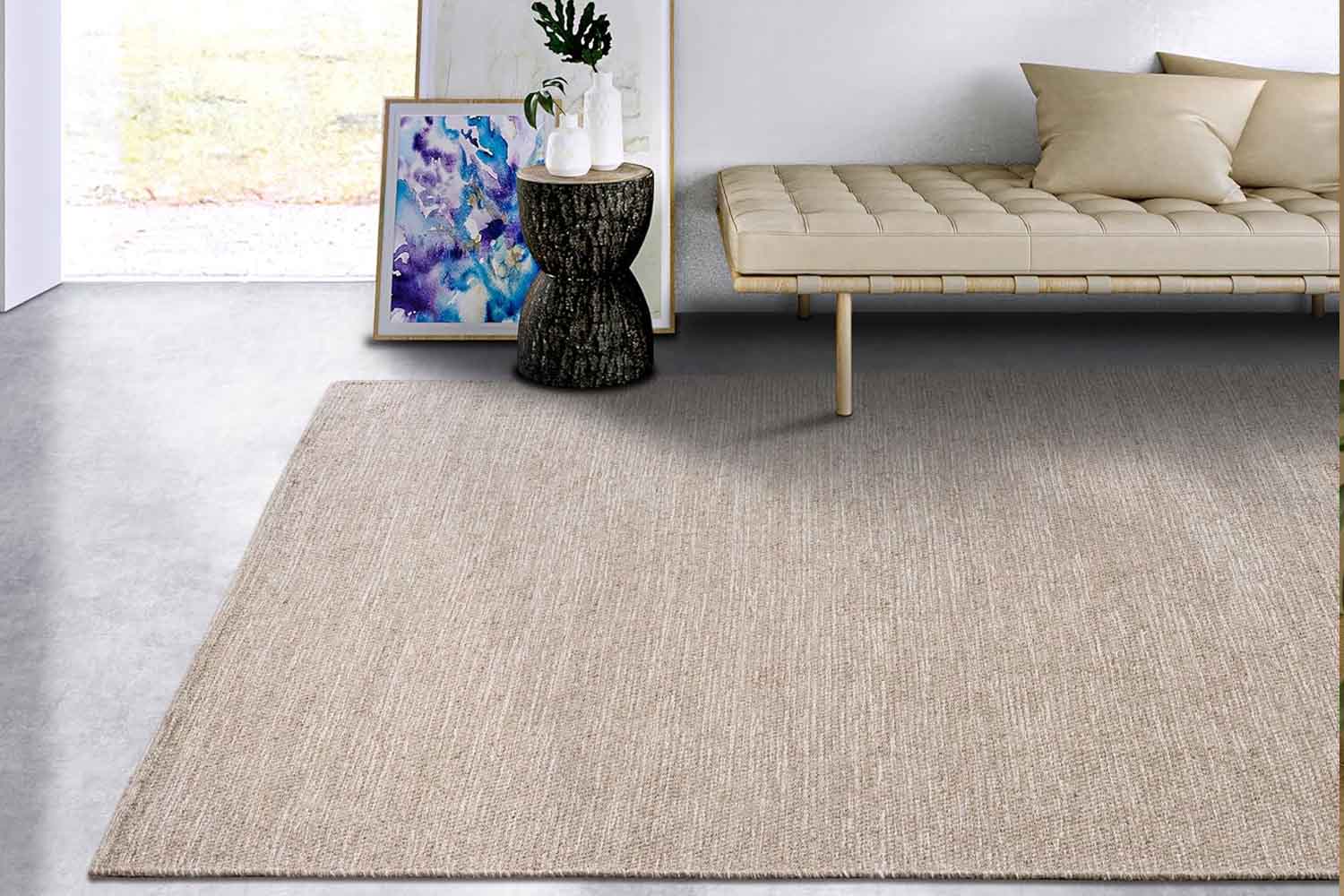
Sometimes domestic comfort does not depend on great revolutions, but on details that we ignore out of habit. Carpets, for example. We consider them part of the furniture, an aesthetic touch, a soft frame placed there to give character to a room. In reality, they hold a power that they don’t advertise: they slow down the escape of heat from the floor. And when the heat stays where it belongs, the thermostat can finally breathe.
The scene is familiar to everyone: you enter a room with a bare floor and a direct, dry cold comes over you, forcing you to shrug your shoulders. Then you step on a thick carpet and the pace changes. The floor becomes less hostile, the environment more welcoming. It almost feels like the room is holding its breath in a different way. This sensation, far from poetic, has a solid scientific basis.
What science says
One of the most interesting works on the topic is a study dedicated to the thermal properties of wool carpets, published in AgResearch. The authors analyze the structure of the fiber in detail: wool is not just a “warm” material in the sense that we have learned from sweaters and scarves, but a natural weave designed to retain microscopic pockets of air, which act as a barrier to the passage of heat. Still air, in fact, is one of the best insulators available. It’s a physical detail, but this is enough to explain why a wool carpet makes a room more thermally stable.
According to the study, wool shows low thermal conductivity and an excellent ability to adapt to environmental temperature changes without rapidly losing heat. In other words, it doesn’t just “heat”, but reduces the speed with which the heat goes away, with an effect that is felt especially on hard floors: tiles, marble, uninsulated parquet. Added to this is an often overlooked characteristic: wool remains elastic over time, does not crush permanently, therefore continues to retain air and act as an insulator even after years of use.
It is not the only source to support this idea. The Carpet Institute of Australia has published data showing an improvement in heating energy efficiency of between 8 and 12% in rooms with thick carpets. This is not a magic number, because every house has its own story, but the trend is clear: less dispersion from the floor means less need to raise the temperature. In some cases the perceived difference actually amounts to those famous two degrees less that circulate in popular articles; not as a universal law, but as a possible result when the environment “collaborates”.
The most surprising part is that the benefit isn’t just about physical warmth. It’s also a question of perception. If the floor does not transmit cold, we change the way we move in the domestic space: we no longer urgently look for slippers, we do not feel the immediate need to increase the heating “to feel better”. That feeling of micro-wellbeing, which arrives without us realizing it, changes our energy decisions. And he does it every single day.
The truth is that carpets have always played a more complex role than we admit. They accompany us while we live in the house, they dampen noises, protect us from the cold, reduce the feeling of emptiness in rooms that are too large. And now we know that they also contribute to making heating management more sustainable.
Elle Decor ation Pradesh Natural Wool Living Room Rug Handwoven Eco-Friendly Bohemian Wool Rug for Living Room Bedroom Dining Room Hallway Kitchen White 120 x 170 cm
€59.24

Buy on Amazon
You might also be interested in:
