
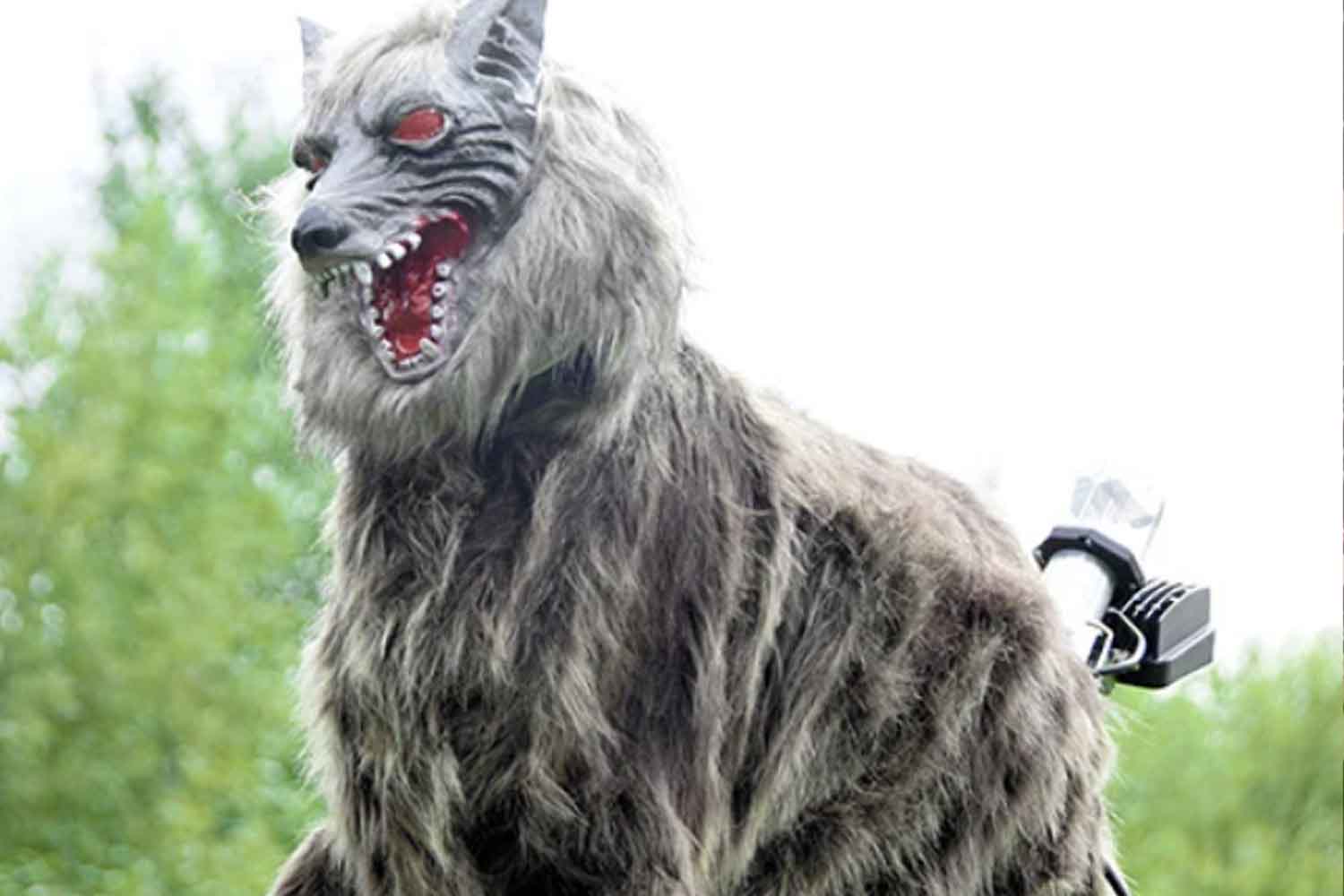
Something is happening in Japan that, until a few years ago, would have seemed little more than a technological curiosity. In the countryside, at the edges of the woods, along the hiking trails and even near the villages, a disturbing-looking mechanical sentinel has appeared: a monster wolfa robotic wolf with glowing red eyes, designed to scare away bears and other wildlife and reduce the number of dangerous encounters with humans.
The increase in bear attacks in Japan has reached unprecedented levels, forcing local authorities and communities to radically review defense strategies. We are no longer just talking about electric fences or expert hunters called to intervene, but about a real national emergency that calls into question the balance between man and nature. In this context, the monster wolf it has become a symbol of a new line of action: creating a buffer zone between inhabited areas and wild habitats without immediately resorting to culling animals.
Bears, especially Asiatic black bears and large brown bears, are increasingly approaching populated areas. The data speaks clearly: in 2024 alone, over two hundred injuries and thirteen victims were recorded in twenty-one different prefectures. Some attacks have even occurred in winter, a period in which bears traditionally hibernate, a sign that something in their behavior is changing in a profound and worrying way.
How monster wolf works
The monster wolf was born from the brainchild of Ohta Seiki, a small company specializing in precision machining based in Hokkaido. It is not a simple technological scarecrow, but a complex device that combines sensors, lights, sounds and a structure covered in synthetic fur. When infrared sensors detect movement nearby, the robot immediately goes into action: its eyes light up red, its head begins to move slowly from side to side, and a series of blue LED lights flashes on its body.
Sound is the key element. The monster wolf it emits noises reaching 90 decibels, comparable to a car horn. It is not a single repeated verse, but about fifty different sounds, reproduced randomly: howls, shouts, human voices and sudden noises. This variability is not random, but designed to prevent animals from quickly becoming accustomed to the threat, a real risk when it comes to intelligent and adaptable wildlife like bears.
According to Yuji Ota, president of Ohta Seiki, bears are extremely cautious and solitary animals. A sudden and unpredictable noise leads them to perceive the presence of something dangerous, pushing them to move away without getting any closer to areas frequented by humans.
From a derided invention to a solution adopted across the country
When the monster wolf made its appearance in 2016, the reactions were anything but enthusiastic. Many considered it a bizarre, almost ridiculous gadget. Electric fences were the norm and the idea of scaring a bear with a fake wolf seemed unlikely. Yet, as time passed, the results began to speak for themselves.
Farmers have reported a drastic reduction in intrusions into fields and orchards. The device has proven to withstand the harshest climatic conditions, including the harsh winter seasons of northern Japan, requiring minimal maintenance. Today they are active approximately 330 monster wolf throughout the country, used to protect farms, villages, mountain paths and wildlife corridors.
Demand has grown rapidly, with the number of requests tripling in recent months, in parallel with the increase in bear attacks. According to what was declared by the company, there were no returns or complaints related to the effectiveness of the device, a fact that contributed to strengthening its reputation.
An interest that goes beyond the borders of Japan
The success of monster wolf it did not stop at national borders. Ohta Seiki has received several requests from abroad, about ten, including one from India, where the use of the robot was hypothesized to discourage elephants from approaching inhabited areas. A clear sign of how this type of technology is attracting the attention of countries grappling with similar problems of coexistence between humans and large wild animals.
The causes of this escalation are multiple. One of the main ones concerns the availability of food. Beechnuts, a key food source for Asiatic black bears in autumn, follow erratic cycles of abundance and famine. In years of low production, animals are forced to move towards cities and countryside in search of alternatives. Experts warn that, after a bumper harvest expected in 2026, a new shortage is likely in 2027.
Another determining factor is the depopulation of rural areas. With fewer people manning the territory, bears face fewer obstacles to expanding their habitat. In Hokkaido, for example, over 1,800 brown bears were captured in 2023, the highest number since 1962, while damage caused to wildlife exceeded 5.6 billion yen in a single year.
Between deterrence and the limits of artificial fear
Faced with these numbers, the authorities have adopted increasingly drastic measures, involving the army in some capture operations and expanding the powers of the riot police, authorized in extreme cases to kill the animals. In this scenario, the monster wolf represents a less bloody alternative, based on deterrence rather than elimination.
However, experts urge caution. Fear, even when induced by a machine, is not a permanent solution. Animals learn and adapt. If they understand that there is no real danger behind the lights and noises, the effectiveness of the device may decrease over time. According to some zoologists, the instinct that leads bears to fear wolves has its roots in a long coevolution, but this balance can break if the stimulus is repeated too often.
The future of the monster wolf and robotic solutions
Aware of these limitations, Ohta Seiki is already working on new evolutions of the project. Mobile and semi-autonomous versions of the are being tested monster wolfmounted on vehicles developed in collaboration with Suzuki and researchers from the University of Tokyo. The company is also experimenting with new artificial “predators”, such as the monster eagledesigned to keep crows and other birds away from urban areas.
The direction seems clear: integrate technology with more careful territorial planning, made up of controlled wildlife corridors, targeted fences and buffer zones. The wolf robot alone cannot solve the problem, but it can become a useful tool in a broader strategy.
For now, as bears continue to push the edges of Japanese cities, the artificial howl of a monster wolf in the night it could be enough to make them return to the woods.
