
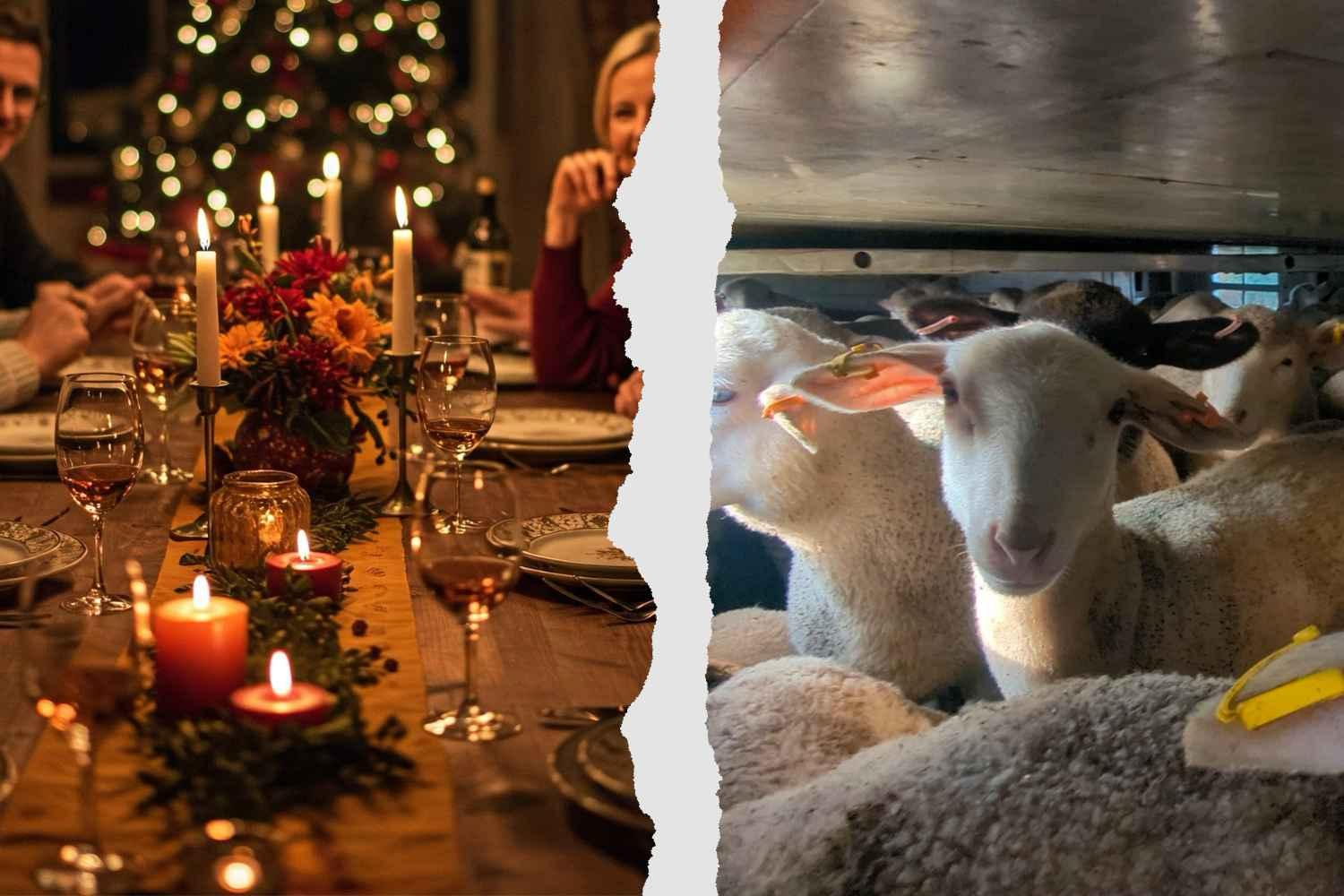
For us, Christmas is synonymous with celebration and joy, for thousands of animals it means a death sentence. Last year, Italian families spent 920 million euros to bring fish, meat and cured meats to the table during the holidays, spending around 3 billion euros spent on Christmas dinner alone. And no, the problem is not just ethical: the vast majority of meat, over 90%, comes from intensive farming which has a devastating impact on the environment and contributes to global warming, with consequences also on our health.
What if we changed the tune this year? A more sustainable and respectful Christmas is possible and there is no need to make who knows what sacrifices. The È Animali association offers us 5 tips for enjoying the holidays without cruelty, without giving up taste.
View this post on Instagram
Let’s say no to capon
Capon broth and stuffed capon stand out among the dishes that are not lacking on the table at Christmas, especially in Northern and Central Italy. But behind that specialty that smells of tradition there is an animal castrated without anesthesia, quickly fattened and often slaughtered without stunning, as also documented byessereanimali. And calling it “grandma’s recipe” doesn’t make it any less cruel.
One dinner is not worth the life of a lamb
For many Italians, lamb represents an indispensable tradition during the Christmas and Easter holidays. But behind this typical dish lies an inhuman background. Every year, hundreds of thousands of lambs are imported into Italy, often transported in appalling conditions, forced on grueling journeys aboard trucks and left for days without food or water. In 2024 alone, more than 600,000 lambs arrived from countries such as Hungary, Romania and Slovakia. Very often several specimens are unable to survive the odyssey and die even before reaching the slaughterhouse. Giving up lamb means opposing this bloody business.
Quails: when the gourmet hides suffering
On the menus of luxury restaurants we often find quails, served as a refined dish. But gourmet here is synonymous with suffering: generally, in fact, these come from intensive farms where the animals are crowded into cramped cages. Little is said about it, but every year in Italy 8 million quails end up slaughtered. Their meat is presented as a prized dish, but the highest cost is paid by these sacrificial victims.
You can make a difference starting from the menu
Eating vegetables is not a trend or a radical chic habit, as some claim: it is a concrete (and not just ethical) choice that can really help emissions, water consumption and land exploitation. The numbers prove it: according to a recent scientific study, adopting a plant-based diet can reduce CO₂ emissions by approximately 46%, cut water consumption by 7% and land use by 33% compared to a diet with animal proteins. . For this reason, Ère Animali proposes a Christmas without hypocrisy, made up of 100% plant-based dishes that have nothing to envy of tradition: puff pastry, “forest” tarts served with béchamel, mixed rice with vegetable ragout, pumpkin and mushroom ravioli, seitan and onion stew, chickpea meatloaf with roasted vegetables and parsley sauce and as dessert a star of chocolate and orange brioche or a tender bread with dates. An explosion of taste, but with minimal impact.
Start with the Veganuary challenge
If the new year is a time for good resolutions, why not adopt a more sustainable and cruelty-free diet? Veganuary (vegan + january) starts again from January 1st, the global campaign that encouraged over 2 million people to try plant-based nutrition for a month. Born 10 years ago in the United Kingdom, it arrived in Italy in 2020 thanks toessereanimali, the official partner of the initiative.
By registering on the Italian site created byessereanimali, you receive: quick and protein recipes: three of which are recipe books and two daily recipes (one is dedicated to proteins, perfect for those who train or are sensitive to the topic, another is a guide for beginners), but also support with 31 daily emails with nutrition and non-nutrition advice, as well as exclusive discounts on vegan products for the month of January. Sometimes a month is enough to change perspective and understand which side you are on. Try it to believe it.
For a sustainable and ethical Christmas we recommend:
