
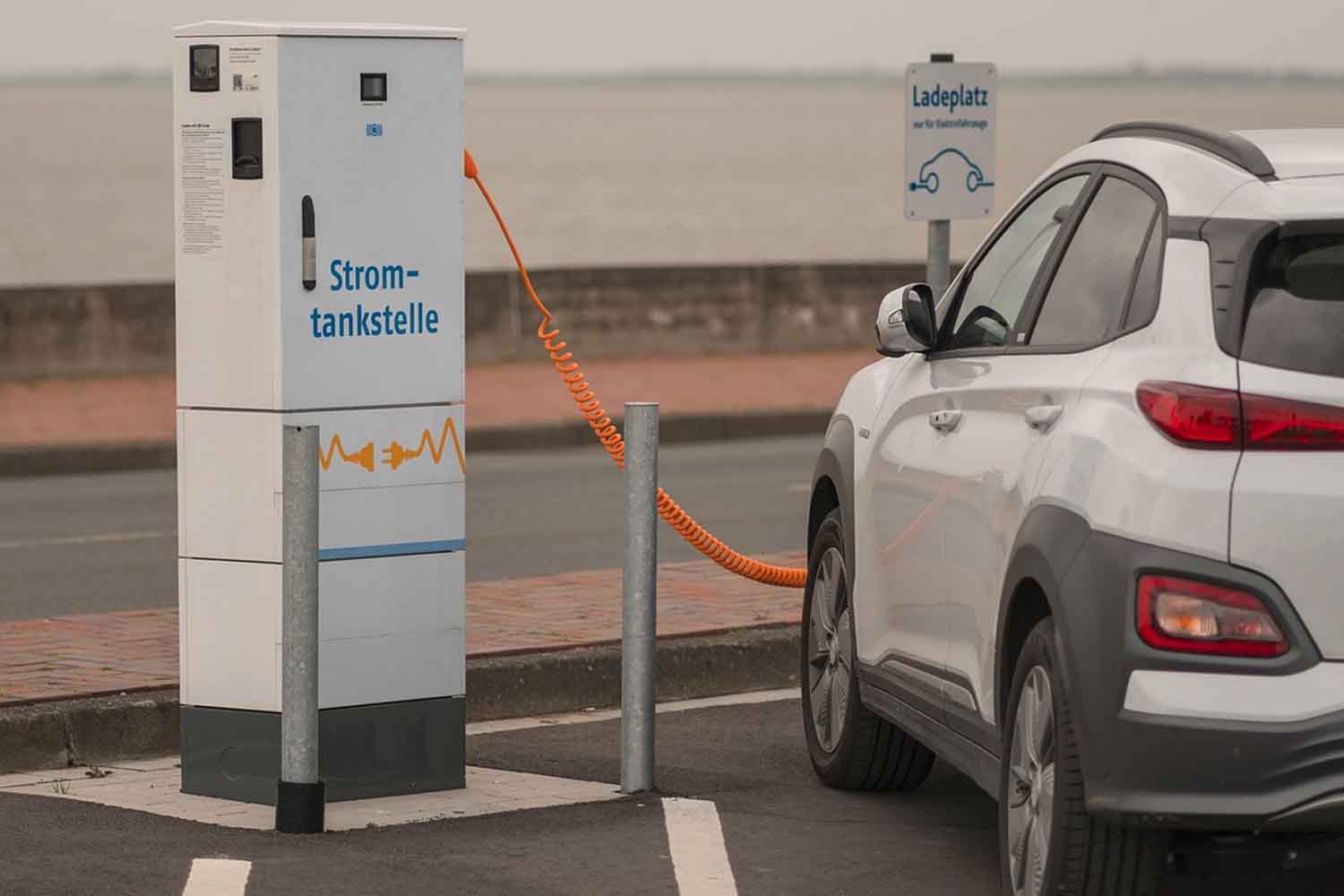
Electric vehicles are not just cleaner cars than traditional ones. In reality they represent real batteries on wheels, capable of playing an active role in home energy management. This is confirmed by new research conducted by the University of Michigan in collaboration with Ford Motor Company, which analyzes in detail the potential of the so-called vehicle-to-home (V2H), i.e. the possibility of connecting the electric car to the home to power it.
According to the study, published in Nature Energy, exploiting the energy accumulated in the car battery for domestic use can transform a common electric vehicle into an invisible but extremely effective energy manager, capable of reducing costs on the bill and significantly reducing the environmental impact of families.
The logic behind V2H is simple but powerful: the electric car is charged when electricity is cheapest and cleaner, then returns energy to the home when costs and emissions increase. In this way, the home can draw on the energy stored in the vehicle’s battery instead of drawing it directly from the grid.
Parth Vaishnav, co-author of the study and researcher at the University of Michigan’s School for Environment and Sustainability, explains that placing your car battery between the electrical grid and your home allows you to buy electricity at the best times, such as the afternoon, when solar production is high. The energy is thus stored and used later, for example in the evening, when demand increases and electricity is more expensive and polluting.
The result is twofold: in addition to reducing emissions related to transport, the electric vehicle also contributes to cutting emissions from the building sector, offering an overall environmental benefit.
Economic savings and environmental benefits throughout the entire life cycle of the vehicle
The numbers that emerged from the research are anything but marginal. Scholars estimate that the use of V2H can reduce overall charging costs by 40% up to 90% compared to traditional charging behaviors. In economic terms, this translates into savings that vary approximately between 2,400 and 5,600 dollars over the life of the vehicle, depending on the geographical area and the energy habits of the home.
On the environmental front, the impact is even more significant. Using a car battery as a home storage system can reduce the carbon emissions associated with a household’s electricity consumption by 70% to 250% over the life of the vehicle. In practice, this means avoiding the emission of 24–57 tonnes of CO₂.
In some cases, the reduction exceeds 100% because the V2H system manages to completely offset, and more than, the emissions related to the electricity needed for daily driving of the car.
A detailed coast-to-coast analysis of the United States
To avoid generalizations, the researchers divided the continental United States into 432 regions, each characterized by specific climate and electrical grid conditions. The study modeled the behavior of a medium-sized electric SUV, taking into account local variables such as electricity prices, time-of-day tariffs and the composition of the energy mix.
Factors related to homes were also considered, such as building characteristics and external temperatures, which influence consumption for heating and cooling. This approach allowed us to obtain an extremely detailed map of the economic and environmental benefits of V2H.
When charging your electric car becomes an advantage and not a cost
A clear picture emerges from the analysis: in some areas the benefits are moderate, while in others, such as several areas of Texas and California, the savings on the electricity bill can be so high that they fully cover, and in some cases exceed, the cost of the electricity needed for driving.
Jiahui Chen, PhD candidate at SEAS and lead author of the study, highlights how V2H overturns the common perception of EV charging, often seen only as an additional expense. With adequate technological integration, charging can become a real economic resource.
Electric cars as storage systems for the grid
The operation of V2H is based on the principle of energy time-shifting: consumption is not simply reduced, but the use of energy is shifted over time, exploiting the moments in which production from renewable sources is greater. In networks with a growing presence of solar and wind power, the central hours of the day or at night are often cleaner and less expensive.
With a two-way charger and automation system, the electric car absorbs energy in these good times and powers the home when demand and emissions increase. You don’t need additional photovoltaic panels or large stationary batteries: just use the one already in the garage.
This approach also helps stabilize the electricity grid, reducing the most expensive and polluting peaks of demand. As Robb De Kleine, life cycle analyst at Ford, notes, vehicles are parked most of the time and therefore represent an already available storage resource, which simply has wheels.
The technological challenges and the future of V2H
Despite the promising prospects, some aspects remain to be perfected. Hardware standards, utility programs and smart charging software are still under development. In the United States, the technology is not yet fully “plug-and-play,” but it is already being tested with several local power companies.
Hyung Chul Kim, researcher at Ford, explains that the goal is to arrive at a completely automatic system, in which the driver does not have to change his habits: just park and plug in the car, while the technology autonomously decides when to charge and when to return energy, also optimizing battery life.
The costs of enabling V2H, such as installing bidirectional chargers and home system upgrades, vary from market to market, as do the rates that make shifting consumption more convenient.
Electric vehicles as home batteries: a new vision of energy
The message that emerges from the study goes beyond technology. V2H represents a new way of thinking about energy flexibility, transforming the electric vehicle from a simple consumer to an active partner for the home and community.
In regions home to about 60% of the US population, the system can fully offset charging-related emissions. In a growing number of areas, it can also transform charging from an expense item to a source of savings.
From this perspective, V2H is not a simple optional, but a concrete step towards a cleaner, more stable and accessible electricity grid. The researchers’ conclusion is clear: the technology works, the benefits are real and the obstacles still present can be overcome. If you buy electric vehicles to reduce emissions, V2H shows that they can do even more, while also helping to make home energy more sustainable and less expensive.
You might also be interested in:
