
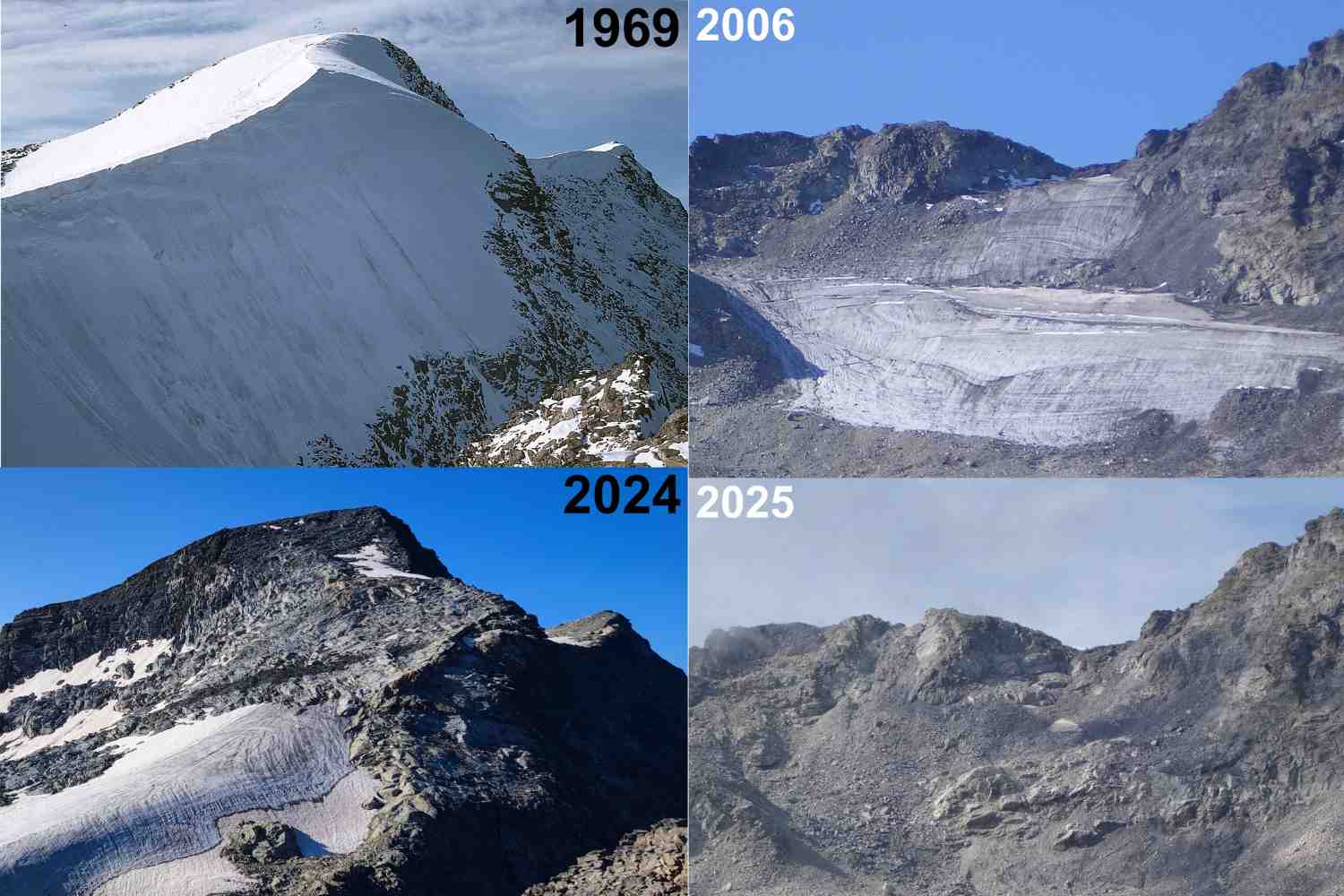
In the coming decades, many of the mountain glaciers that mark the landscapes and lives of billions of people will retreat and disappear. The world is preparing to reach the peak of glacier extinction, a historical moment in which the pace of their disappearance will be at its maximum. This is revealed by a new study published in Nature Climate Change, which analyzed over 200,000 glaciers around the world, revealing worrying scenarios that are still influenced by our choices.
An unprecedented acceleration
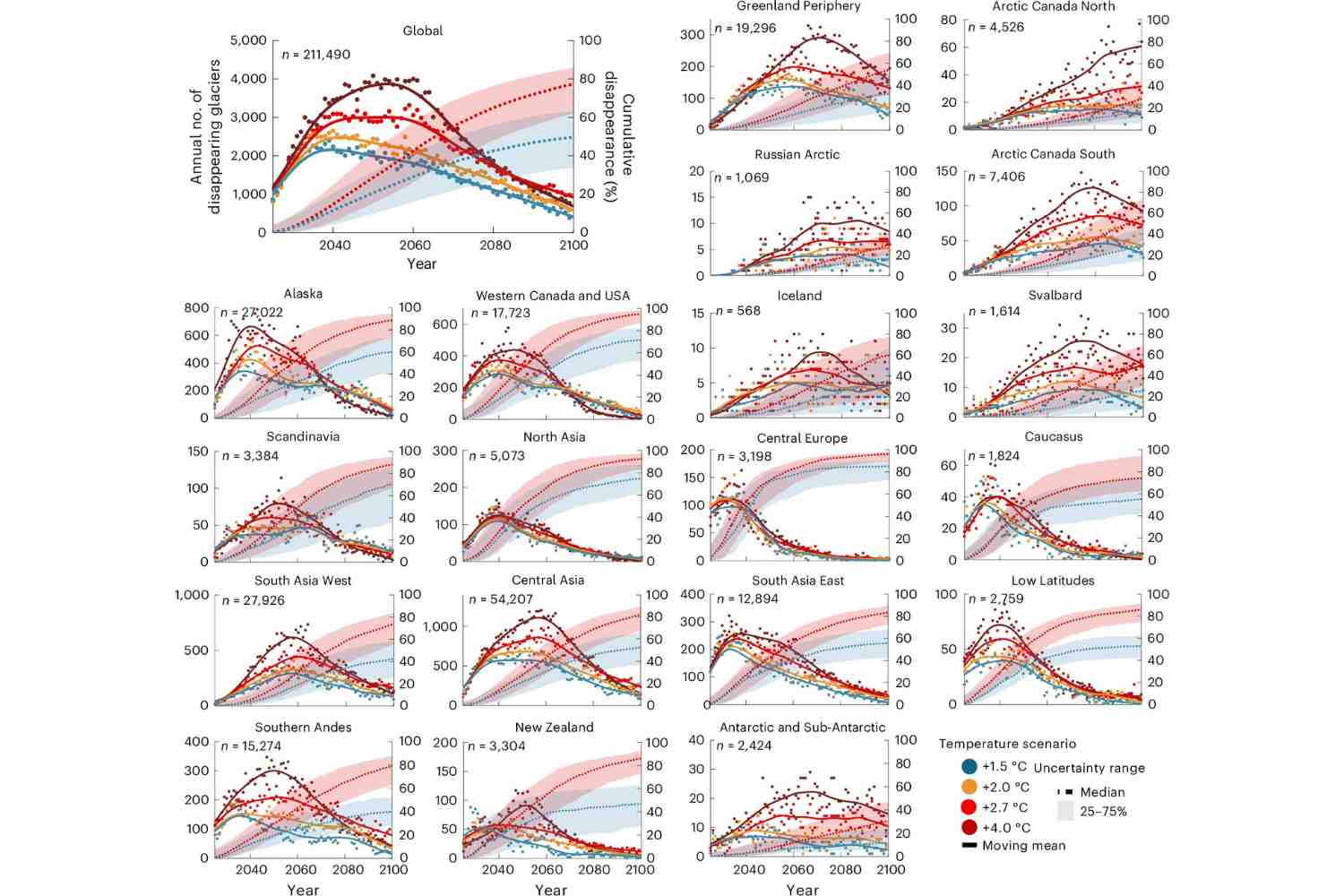
According to analysis by Lander Van Tricht and colleagues, between 2041 and 2055 the Earth could see up to 4,000 glaciers disappear every year, a rate five times higher than today. The Alps will be among the most vulnerable areas: by 2033 over one hundred European glaciers are destined to melt irreversibly. Small glaciers and those that melt more rapidly, such as those in the western United States and Canada, will disappear sooner than others.
New paper alert!
How many glaciers will exist by 2100 at +1.5 °C vs +4 °C warming? Excited to share our new research in we project the extinction year of ~200,000 glaciers worldwide. Hard you believe that the Alps will be almost #glacier free in 2100.https://t.co/r6IN9cTwSl pic.twitter.com/aUDJ2TLc5B
— Lander Van Tricht (@LanderVanTricht) December 15, 2025
What is at stake is not just environmental. Around two billion people depend on the water that comes down from mountains that host glaciers, which is essential for agriculture, energy and food security. Each lost glacier changes landscapes, interrupts daily activities and erases centuries-old traditions. For some communities, such as the Māori people in New Zealand, glaciers are living ancestors: Nā leader Lisa Tumahai, visiting Kā Roimata o Hine Hukatere in 2022, described them as “subdued, humiliated by the actions of humans,” tangible symbols of the costs of industrialization.
Funeral ceremonies for retreating glaciers are held all over the world. In 2019, over 250 people climbed the Pizol Glacier in Switzerland to say goodbye. Matthias Huss, a glaciologist at ETH Zurich, recently had to declare four glaciers extinct, bringing the number lost in Switzerland in the last thirty years to around a thousand.
Today’s decisions, tomorrow’s glaciers
The future of the frozen mountains is closely linked to political choices and emissions in the coming years. If global warming continues on current plans, with an increase of 2.7°C, annual loss will reach 3,000 glaciers between 2040 and 2060, leading to 80% of today’s glaciers disappearing by 2100. A more ambitious scenario, with an increase limited to 1.5°C, would reduce losses to around 2,000 glaciers per year, slowing the pace of their extinction.
The difference between the two routes is clear: one thousand more or fewer glaciers every year during the peak, with direct effects on billions of people and on the conservation of a unique natural and cultural heritage. Larger glaciers, such as those in Greenland, will peak later, but their melting will continue well beyond 2100.
Every political and consumer choice therefore affects the fate of these ice giants, silent witnesses of the history of the Planet and of humanity’s collective responsibility. The Alps, and other sensitive regions, offer a test case today: decisions made now will determine whether these mountains will continue to tell their story or vanish without a trace.
