
There is a place, a Oplontiswhich after centuries continues to tell stories with surprising clarity. It’s there Villa of Poppeaand in recent months it is returning to the spotlight thanks to an excavation and restoration site that is giving new life to one of its most fascinating environments: the hall of the Mask and the Peacock.
It’s not just about recovering walls and decorations. Here a piece of landscape, history and ancient everyday life is being reconstructed, with a view that brings together protection, research and future public use.
For a long time the famous salon was only partially known. Today, thanks to the excavations underway along the western side of the villa, which runs under the current Via dei Sepolcri, the real extension of the environment and the relationship with the surrounding spaces. A delicate work, also necessary to solve conservation problems, but which is offering unexpected results.
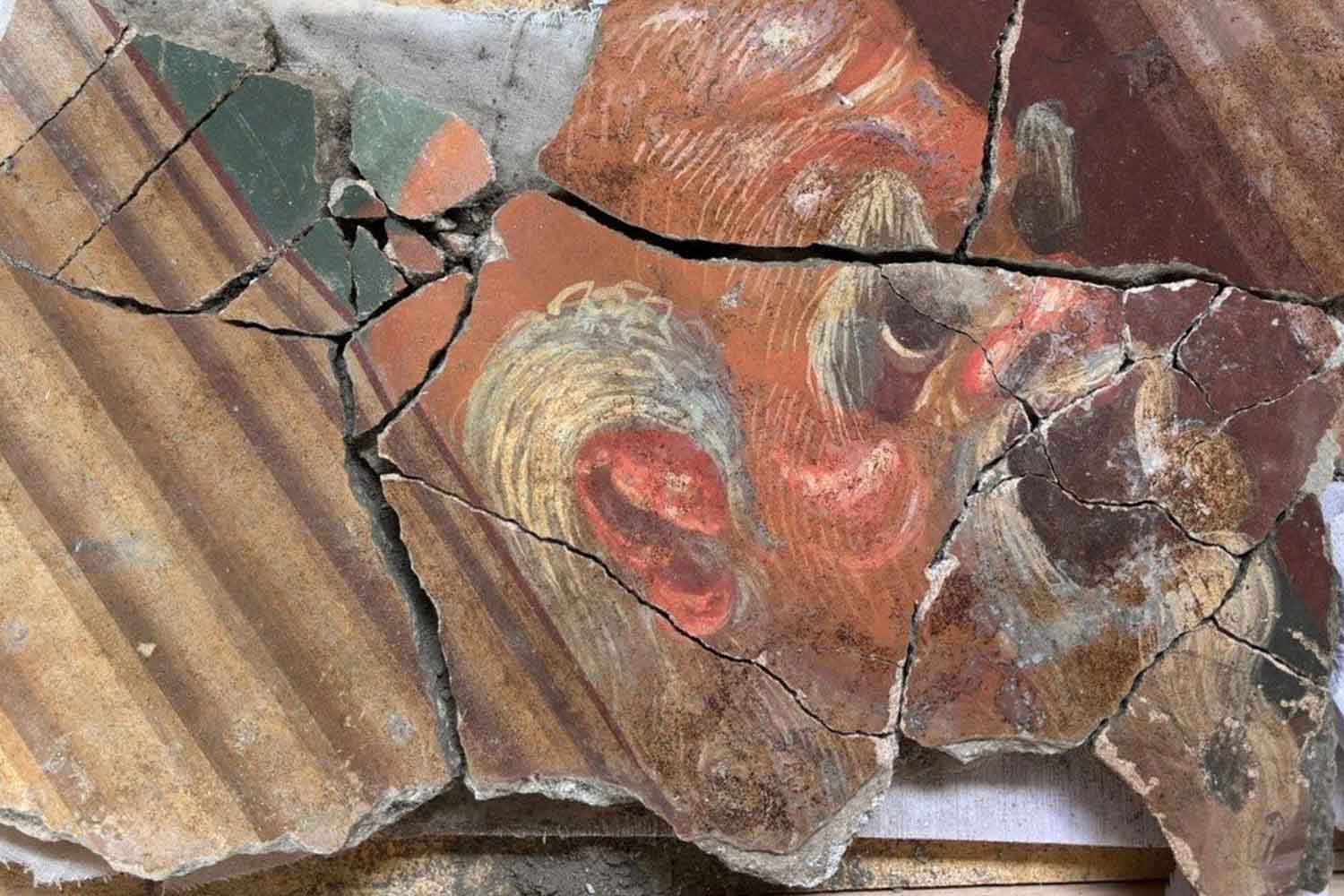
They emerge from the stratigraphies new fragments of frescoeswith still intense colors and surprisingly legible details. Among the most recognizable images appear painted peacockssymbols of prestige and refinement, and theatrical masks which refer to the world of ancient entertainment. It is a cultured but immediate figurative language that tells of the taste and imagination of those who inhabited these spaces.
The first data from this investigation were published in the e-journal of the Archaeological Park of Pompeii, marking an important transition: from discovery to shared story.
Peacocks, theater and symbols: what the new frescoes tell us
Among the most interesting findings there is one painted peahenperfectly preserved, which visually communicates with the male peacock already known on the opposite wall. A choice that is anything but random, which reinforces the symmetry and symbolic value of the environment.
Even more curious is the discovery of fragments with a mask from the Atellan Comedyidentifiable with Pappusthe naïve old man often mocked on the scene. A presence that stands out from the other masks in the environment, linked instead to tragedy, and which suggests a more multifaceted reading of the space, where different registers, cultured but also ironic, coexist.
The picture is completed by the remains of a golden tripod inserted in an oculusa ritual element that refers to the sacred world and which finds a direct comparison with another tripod, in bronze, already known on a wall of the hall. Details that help to understand not only the aesthetics, but also the symbolic function of this large representative environment.
Ancient gardens and landscapes that re-emerge from the ground
The excavation isn’t just yielding paintings. Thanks to the cast technique, the tree footprints which once decorated the garden overlooking the hall. The trees were arranged according to a precise pattern, in dialogue with the colonnade of the portico, in a balance between architecture and nature that often occurs in Roman villas.
The analyzes suggest the presence of species already known in other areas of the villa, such asolive treereinforcing the idea of a designed, non-spontaneous landscape, designed to be experienced and observed.
During the work they were also identified four new environmentsincluding one probably linked to the spa sector, and an element that tells an even longer story: a ancient seasonal stream bedformed after the eruption of 1631. This watercourse has carved the oldest deposits, helping archaeologists today to better understand the evolution of the landscape around the villa.
The restoration that brings the colors back to light
Alongside the excavation, the restoration of two small rooms intended for rest, i cubicleoverlooking the south-western area of the villa. Here the work is almost completed and the results are evident. The frescoed walls, stuccos, painted vaults and floor mosaics are recovering a .
In one of the rooms, painted architecture and fake marble from the 2nd style dominate, designed to visually expand the space. In the other, more sober one, the monochrome backgrounds and floral motifs of the III style emerge, with clear signs of work left unfinished at the time of the eruption in 79 AD. Here too, as in the hall, the detail tells an interrupted story.
After almost a year of interventions, the restoration is giving back colours, contrasts and details which were no longer visible, including the use of precious Egyptian blueconfirming the very high technical level of the ancient workers.
The Villa di Poppea thus continues to re-emerge, one fragment at a time. And each new discovery does not only speak of the past, but of the way in which we choose to take care of it today, making it understandable and accessible even to those who simply want to be intrigued by the beauty that resists time.
