
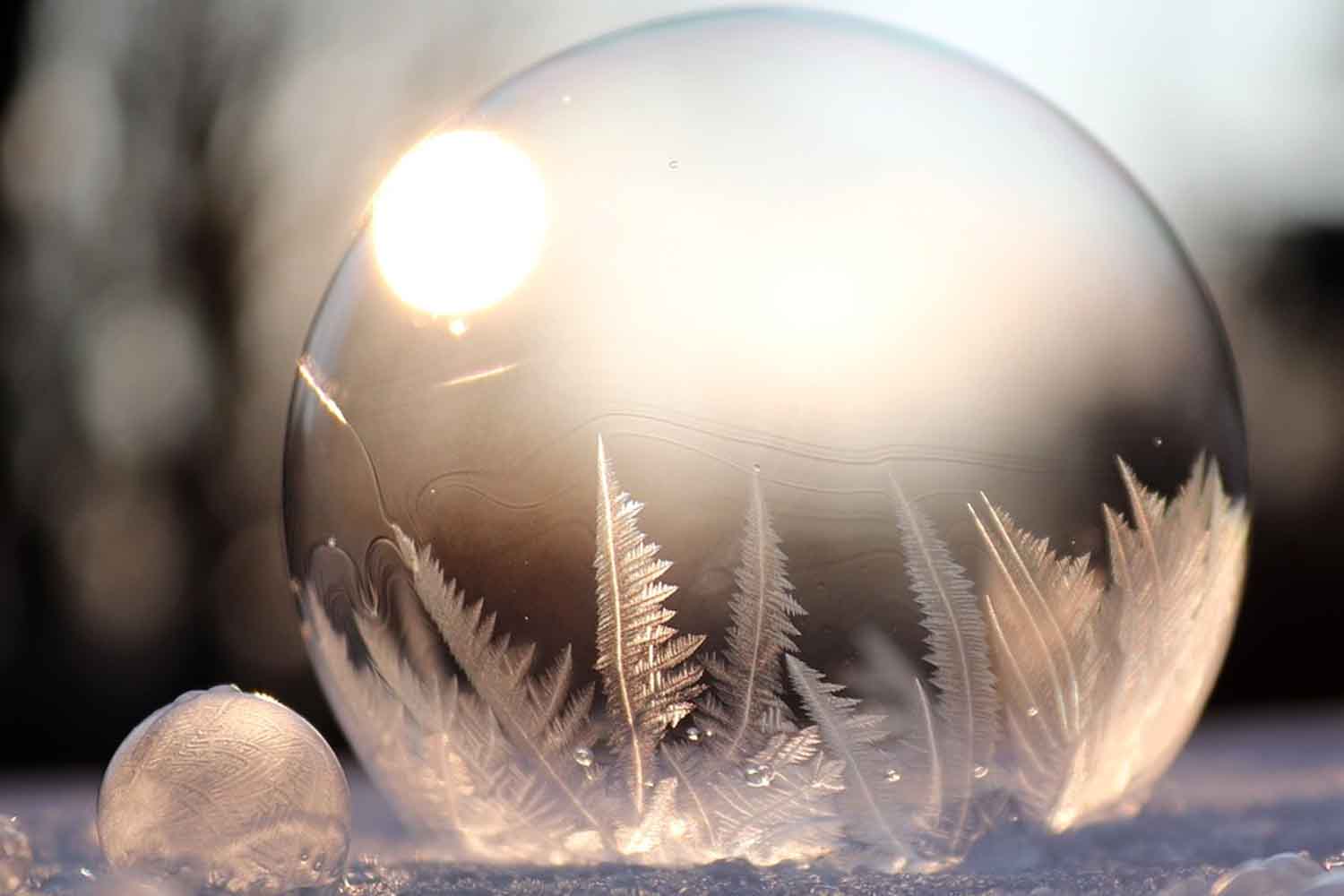
The period between 21 and 22 December in our hemisphere coincides with the winter solstice, the day on which the coldest season of the year astronomically begins. A particular night, the longest of the year but from the next day the days will get longer again.
Day of popular traditions throughout the northern hemisphere (in the Germanic world the winter solstice corresponds to Yulewhile in the druidic tradition we speak of Alban ArthanKing Arthur’s festival of Light), this year the astronomical solstice falls on December 21st at 4.03 pm Italian time.
But what is the solstice? Why is it the day winter begins in our hemisphere and the day summer begins in the southern hemisphere? Is it always December 21st?
Here are 7 things to know about this very special day.
What is the winter solstice?
The winter solstice is the moment in which the sun is exactly “above” the Tropic of Capricorn (point called Zenith), as if the imaginary line connecting the sun to the tropic formed a right angle with it. In our hemisphere it corresponds to the beginning of winter, as in the north the rays arrive very inclined. In the Southern Hemisphere, of course, it is exactly the opposite.
Photo credits: NASA
Why is it the longest night of the year?
The Earth rotates around its imaginary axis which “pierces” the two poles, but which is inclined by 23° 27′. Therefore, since our planet is tilted, the North Pole and the entire northern hemisphere (from the equator to the north pole) are bent “outside the sun” and form an angle of approximately 23 degrees with its rays. And this is why, by rotating around itself, the earth in winter is exposed to fewer hours of light, which reach the minimum at the winter solstice in the northern hemisphere, while it is exactly the opposite in the southern hemisphere, where summer begins on December 21st.
Is it the day the Sun is furthest from the Earth?
Absolutely not. Indeed, the Earth reaches aphelion (i.e. the point of maximum distance from our star) during our summer, usually in July. The typical cold of winter is due to the inclination of the rays, not their distance.
Has it always been the longest night of the year?
Actually no. The current calendar dates back to the reform introduced by Pope Gregory XIII in 1582. Over 10 centuries, approximately 10 days of phase shift had been accumulated due to the “loss” of approximately 6 hours each year.
Therefore with the reform the solstice moved to December 21st, while previously it was on the day of Saint Lucia, which continues to be remembered on the 13th of the month, when previously it fell close to the winter solstice. From there the famous saying ‘Saint Lucia, the shortest day there is’ was born.
Is it always December 21st?
Actually no. The solstice delays each year by about 6 hours compared to the previous year (more precisely 5h 48min 46s), but this is because the solar year is not exactly 365 days, but 365 days 5h, 48m, 45s, effectively making us “lose” about 6 hours a year. This is why the winter solstice can also occur on December 22nd.
Everything is forcibly realigned every four years corresponding to the leap year, introduced precisely to avoid “losing too many days” compared to the calendar (one extra day every 4 years corresponds exactly to the 24 hours lost in the four years themselves).
What happens at Stonehenge on the day of the winter solstice?
Stonehengethe famous archaeological site that dates back to prehistoric times about 130 km south of London, is perfectly aligned on the days of the solstices (winter and summer). At dawn the sun enters exactly “through the front door”. In reality, it is not yet known what the original Stonehenge was, but this peculiarity has led some scholars to think that it could be a sort of “astronomical observatory of ancient times”.
The phenomenon, in itself, is very fascinating, and a tourist destination as well as home to popular festivals.
A link between Christmas and the winter solstice?
Well yes: the date of Christmas Day was set at December 25th by Pope Julius I precisely for reasons linked to the solstice, as an ancient pagan festival of the sun. In fact, the winter solstice, although marking the beginning of the coldest season of the year, is also the day on which the rebirth of the sun begins, lengthening the days again starting from the following day. Probably the intention was to replace the traditions of the past with Christian celebrations.
So let’s get ready for this long night.
For more information on the winter solstice read also:
