
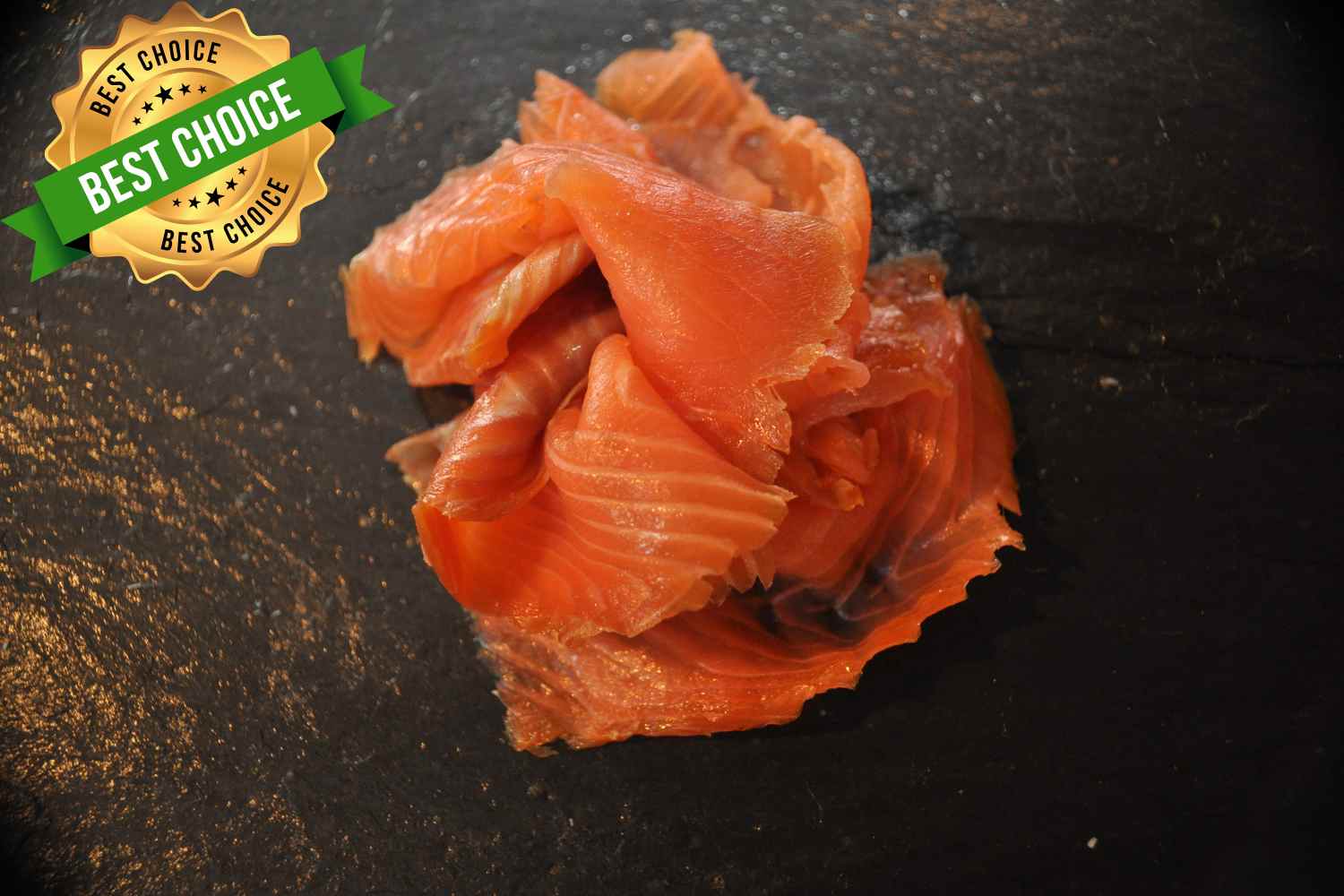
On the refrigerated shelves of our supermarkets, smoked salmon has become a regular product, but behind those appetizing slices there are important problems. From an ecological point of view, intensive farming of this fish requires large amounts of resources, makes extensive use of antibiotic drugs and raises questions about the treatment of animals. Furthermore, on the nutritional side, these products often contain excessive quantities of sodium, as well as possible additives and traces deriving from industrial processes.
For those who do not intend to eliminate this food from their diet, it may be useful to consult the ranking drawn up by Gambero Rosso, which examined the most widespread references in Italian large-scale retail trade.
The methodology of the investigation
This new research, conducted six years after the previous one, was based on a blind evaluation of 54 samples found in supermarkets in the capital: 48 from farming and 6 from wild fishing.
The tasting panel was attended by chefs and professionals from the seafood sector: Claudio Farinelli (chef of Umami – Trattoria Japanesee, Rome), Eugenio Marini (editorial staff of Gambero Rosso), Mara Nocilla (journalist of Gambero Rosso), Antonio Putignano (chef trainer for Gambero Rosso Academy, food consulting), Emanuele Smimmo (owner of the restaurant, seafood gastronomy and fish street food Il Pescatorio, Rome), Elvan Uysal (food and wine journalist).
The experts judged exclusively the sensory characteristics: visual appearance, fragrance, taste and texture. Elements such as labelling, type of production, certifications or geographical origin were not taken into consideration.
The aim was solely to verify the overall quality of the products available in modern distribution. The result is a limited selection of products that stand out for their superior quality compared to the market average.
Wild salmon: only two promoted
Surprising fact: among the wild-caught salmon, only two references deserved inclusion in the final shortlist. This data highlights how wild origin does not automatically guarantee excellence: the final goodness depends on the processing, the freshness of the raw material and the mastery of smoking.
1. Consilia – Smoked wild Alaskan salmon
Made with Sockeye salmon caught in the North Pacific waters (FAO area 67) and MSC certified, this product is processed by Foodlab using beech wood smoke and sea salt. It has meat with a characteristic intense red color and low lipid content, a strong and long-lasting flavour, with perceptions of natural smoking, citrus notes and tropical reminiscences.
2. Seafood – Wild smoked sockeye salmon
This reference also uses MSC certified Sockeye salmon, caught in the north-eastern Pacific and processed by Mowi in Poland for the Lidl chain. The preparation produces an aromatically rich article, with a creamy consistency and a well-calibrated flavor between smokiness and salinity.
The complete ranking of smoked salmon
Here is the ranking of the best smoked salmon products available:
1 – Esselunga Top
The overall winner of the test: carefully treated and delicately smoked Norwegian salmon. The meat is firm, compact and bright in color, with a harmonious flavor between marine scents and smoky notes, free from excesses or aromatic imperfections. The absence of defects makes it the most harmonious ever.
Cost: 100 g – €5.90
2 – Fumara – Foodlab (Scottish)
Of Scottish origin but processed in Parma, it is the result of an artisanal preparation without preservatives, sugars or flavourings. Moderate lipid content, olfactory freshness, with a marked and clear iodine flavour. Firm and juicy texture, aromatic refinement and a light smoky hue.
Cost: 100 g – €6.59/8.99
3 – Norita
Made in Lithuania from sustainably farmed Norwegian salmon. The taste profile is well balanced: salinity, delicate smoking, marine and vegetal nuances. Fresh, lively and pleasantly tasty flavour, well-structured texture.
Cost: 100 g – €4.99
4 – Fumara – Foodlab (Norwegian)
Smoked Norwegian salmon – Superior slice. Another excellence of Foodlab from Parma: artisanal processing from fresh raw materials, manual dry salting, gentle smoking and absence of additives. Refined and genuine aroma, elegant and balanced taste, soft but compact consistency. Pronounced flavor.
Cost: 100 g – €5.99/8.99
5 – The Icelander
Smoked Patagonian silver salmon. Norwegian brand, fish raised in Chile without the use of antibiotics. Processed in Poland, it is dry and compact, with sweet and natural smoky notes. On the palate it is creamy, marine taste with slight chemical nuances, but overall very pleasant.
Cost: 100 g – €5.70
6 – Consilia
Smoked Norwegian salmon. Produced by Foodlab for large-scale retail trade in central-northern Italy. Dry salted, from never frozen fish. Thin slices, faint aroma, fresh but very tasty taste. Soft texture that melts easily, good chewiness.
Cost: 100 g – €4.99/5.99
7 – The Nef – King Salmon I LOVE you
Smoked Scottish salmon. Product distributed in large-scale distribution but with high quality standards: fresh processing, smoking on beech wood, without additives. Broad but delicate aroma, pale and slightly fruity taste. However, the consistency is not always uniform.
Cost: 140 g – €4.99
8 – Seafood – Lidl
Smoked Norwegian salmon. Lidl line created by Mowi. Already portioned, it shows a lively color and a tenacious consistency. Marine taste, savory and with perceptible smokiness. Complex perfume with umami and vegetal nuances, but the structure appears slightly fibrous.
Cost: 100 g – €3.49
The Gambero Rosso ranking offers a useful guide to orient yourself among the numerous offers from large-scale retail trade, but it is essential to remember that consuming smoked salmon still involves critical issues that cannot be ignored.
If you really don’t want to give up this product, at least choose consciously: favor products with artisanal processing, without preservatives and additives, and look for sustainability certifications (such as the MSC for wild salmon). Also pay attention to the salt content, which is particularly high in many smoked products.
Occasional and conscious consumption, oriented towards the higher quality products that emerged from this analysis, can represent a reasonable compromise for those who appreciate this food. The most responsible choice is always to limit consumption or to opt for alternatives that are more sustainable from an environmental point of view and healthier from a nutritional point of view.
The quality of the product does not erase the environmental impact of intensive farming nor the problems related to animal welfare: these are considerations that should accompany every informed purchase
