
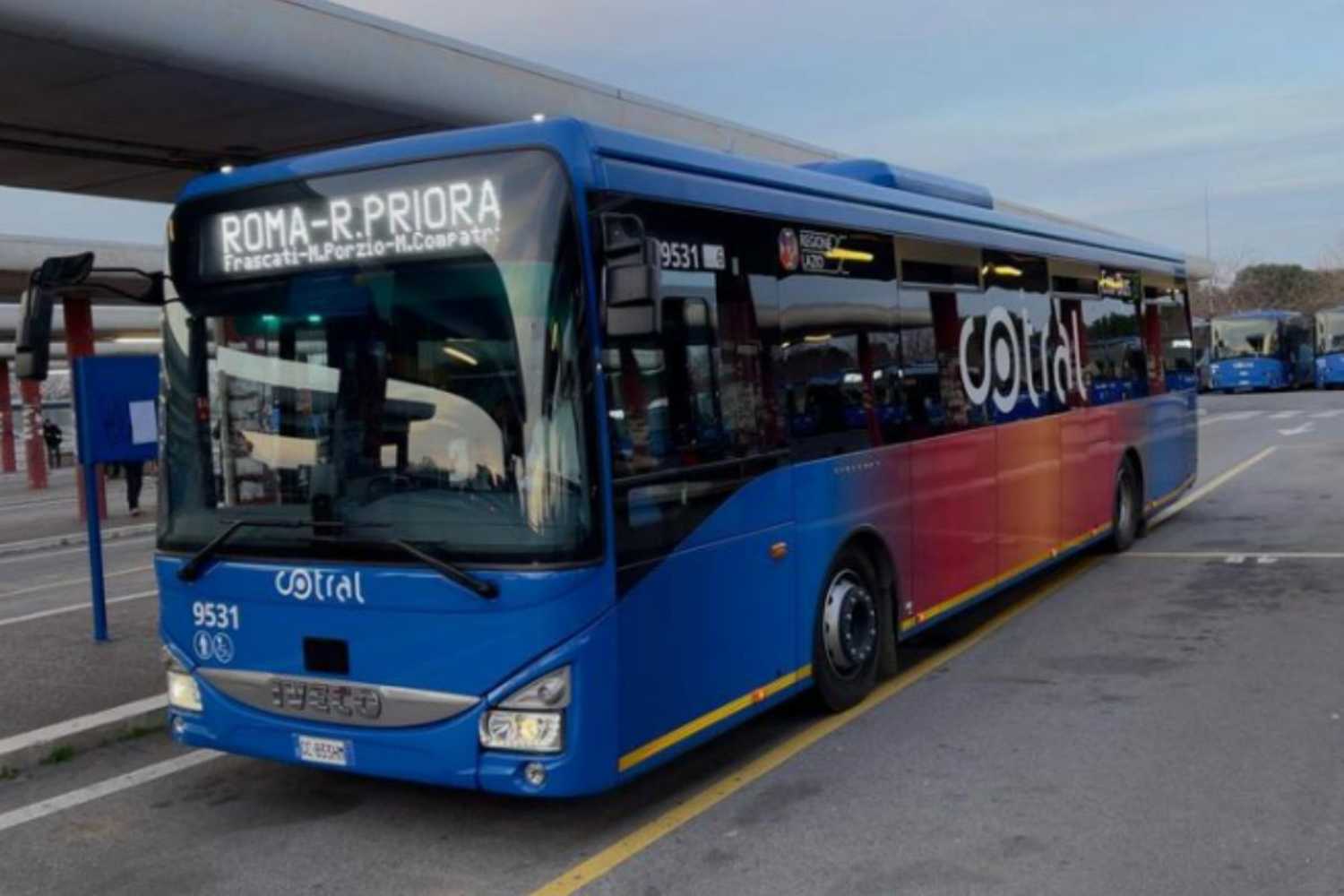
A new amendment to the Lazio regional budget reignites the debate on free mobility for under 19s. The initiative, presented by the opposition in the Regional Council in the signatories Zuccalà (M5S), Ciarla (Pd), Tidei (IV), Marotta (SCE), D’Amato (Azione), Zeppieri (Pp), aims to allow girls and boys resident in the region to travel without costs on buses, metro and regional trains, overcoming the model of subsidized season tickets that exist today.
An investment of 30 million euros per year
The measure would have an estimated cost of 30 million euros per year, necessary to compensate for the lost revenue of public transport companies such as Atac, Cotral and Trenitalia. The plan, if approved, would be financed until 2028, for a total allocation of approximately 90 million euros. A significant figure, which makes the measure politically ambitious and technically complex, especially in a phase of strong attention to budget balances.
Who does the amendment concern and what does it provide
The objective is to guarantee total free public transport to all residents under 19, without limits linked to income or ISEE. The benefit would include both urban transport in Rome and extra-urban and regional rail transport, allowing free travel between the capital and the provinces. Alternatively, “modular” amendments have also been filed which provide for discounts from 25% to 75%, in the event that total free payment is not sustainable.
The Roman precedent and the institutional comparison
The regional proposal is inspired by the experience already started by the Municipality of Rome, where an annual subscription for under 19s is available for 50 euros, supported by municipal funding of over 19 million euros per year. An initiative which has seen widespread support but which, in the past, has also generated tensions between Capitoline Hill and the Region over cost coverage and the service contract with Atac.
Mobility, environment and social inclusion
According to the promoters, free transport for young people would have positive effects on several levels: reduction in the use of private cars, reduction of emissions, greater access to study, work and social life, especially for those who live in peripheral areas. The measure is presented as part of a broader strategy of environmental sustainability and social inclusion, with the aim of making Lazio a more connected, equitable and livable region.
If approved, the measure would make Lazio one of the first Italian regions to guarantee free public transport for very young people. However, the path remains uncertain: everything will depend on the political will of the majority and the ability to identify resources compatible with budget constraints. The confrontation has just begun.
You might also be interested in:
