
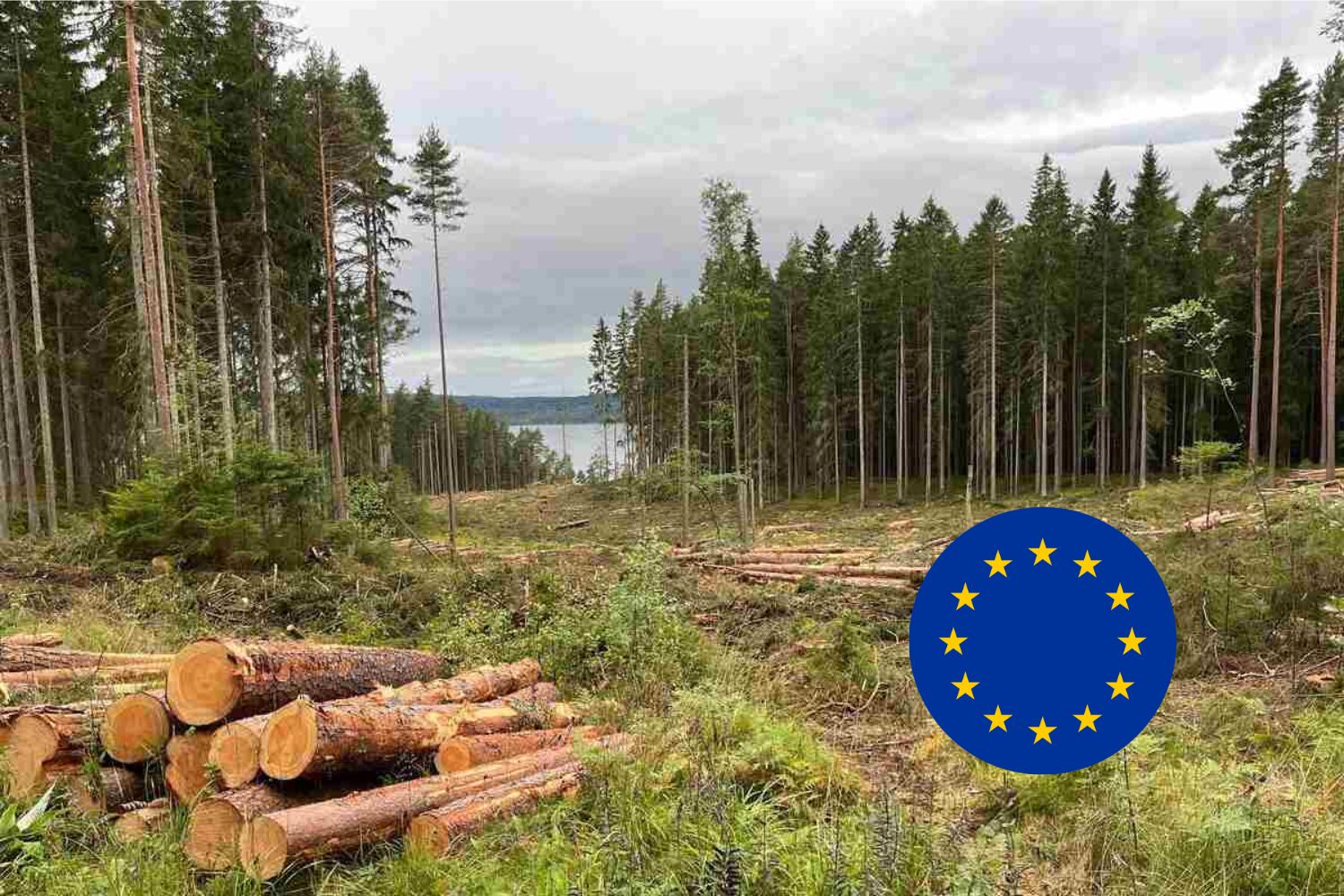
From the protection of forests to the protection of wildlife, through climate, water and agriculture: 2025 risks going down in history as the year in which the European Union made an abrupt U-turn on environmental policies.
According to the budget released by WWF Italy, community institutions are progressively abandoning the Green Deal to make room for an agenda that favors rearmament, industrial interests and deregulation, to the detriment of the environment and public health.
And it is no wonder if, under the pressure of some national governments – including the Italian one – the large economic lobbies and external geopolitical pressures, Europe has begun to dismantle piece by piece the protections built in recent decades. All disguised behind the word “simplification”, which in fact translates into fewer rules, fewer controls and less protection for citizens and territories.
The eight key choices that mark the retreat
The first concerns the regulation against deforestation (EUDR), created to prevent products linked to the destruction of forests from entering the European market. After subsequent postponements and weakenings, the text was effectively voided, with dramatic consequences: every year of delay means millions of trees cut down and new climate-changing emissions, despite scientific evidence on the role of European consumption in global deforestation.
We talk about it here: Europe in reverse: the law that was supposed to save the forests has been scuttled
Another heavy blow comes with the so-called Environment Omnibus, which calls into question historical pillars of EU legislation such as the Habitats, Birds and Water Directives. A setback that puts biodiversity, water quality, public health and the ability of territories to resist droughts and floods at risk.
We talk about it here: Sensational step backwards: with the Omnibus package the EU sends corporate sustainability obligations to the attic
Among the most controversial choices is also the downgrading of wolf protection, decided despite scientific evidence demonstrating that culling does not reduce damage to farms. A symbolic and political decision, which paves the way for a more permissive management of wildlife.
We talk about it here: Wolf hunting: Europe sanctions the downgrading of protection (after 54 years of absolute protection in Italy)
On the agricultural front, the Common Agricultural Policy definitively bids farewell to the green transition: environmental constraints have been abolished, protections in Natura 2000 sites have been reduced and key strategies such as Farm to Fork and Biodiversity 2030 have been ignored. And while cuts to future resources are announced, competition between agriculture and other sectors is expected to access European funds.
Climate policies are also disappointing. Emissions reduction targets are scaled back, the phase-out of internal combustion engines is weakened and key instruments such as the ETS undergo postponements and revisions that compromise their effectiveness. The result is a Europe increasingly distant from the commitments of the Paris Agreement.
To make the situation worse, the cancellation of the LIFE programme, the only EU instrument entirely dedicated to climate and biodiversity. Without specific and binding financing, environmental projects risk being marginalized.
The green light for pesticides is also worrying, with the indefinite extension of authorizations and the elimination of time limits. A choice that drastically reduces guarantees for the environment and health, despite sentences and scientific studies that point to concrete risks.
Finally, the rules on corporate responsibility are weakened, reducing transparency, obligations to prevent environmental damage and protection of human rights along the production chains.
The message is clear: the European Union must return to defending common goods, applying existing laws and strengthening – not dismantling – the protection of nature and health.
