
This is nothing new: chicken meat can be contaminated with bacteria, even types resistant to antibiotics. Several tests and investigations had already demonstrated this, but now further confirmation arrives from Germany.
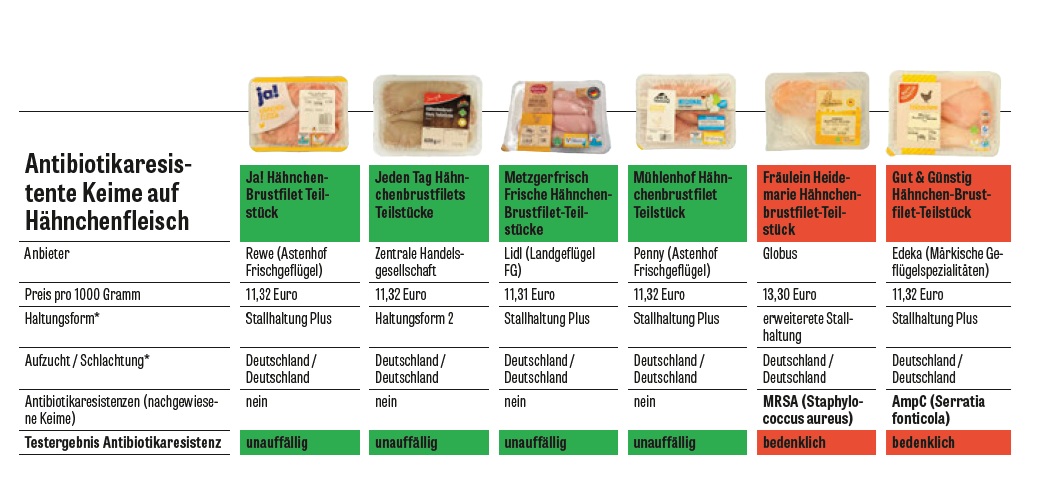
The laboratories appointed by Oeko-Test analyzed 23 fresh chicken breast fillets purchased in supermarkets and discount stores and coming from different farming systems, including organic.
Microbiological analyzes looked for the presence of various pathogenic and potentially antibiotic-resistant germs, with worrying results. In fact, the contamination affected more than half of the samples examined, without significant distinctions between organic and conventional. This data is particularly worrying because in organic farming the use of antibiotics is highly limited, one would therefore expect a lower presence of resistant bacteria, while the results show levels of contamination similar to those of conventional meat.
Among the bacteria identified, some that are particularly feared in the healthcare sector stand out:
It is not the first time, among other things, that a test has discovered the contamination of chicken meat by resistant bacteria. Even Greenpeace had achieved similar results a few months ago, again in Germany.
Although the test concerned chicken meat sold in German supermarkets, the problem is international and also involves Italy. In 2022, a survey conducted by the Lifesaver out of 24 samples of fresh chicken meat purchased in Italian supermarkets and discount stores, it had detected the presence of salmonella in 7 samples, almost a third of the total. It was about Salmonella infantisa strain known for its high resistance to antibiotics.
A system to be rethought
One of the main causes behind this widespread contamination lies in the conditions of conventional intensive farming, where the use of antibiotics is not an exception but a common practice. Although there is a concept of antibiotic minimization enshrined in law, which should constantly reduce the use of these drugs to the therapeutically necessary minimum, according to a report by the German Federal Institute for Risk Assessment, no decrease in absolute consumption quantities was recorded in 2024.
High-performance husbandry, which forces animals to grow rapidly in overcrowded conditions, creates an ideal environment for the spread of infections and, consequently, the development of resistance.
Another problem concerns slaughterhouses, where animals from all types of farming are processed. The bacteria do not distinguish between organic and conventional sources, and the transmission of resistant germs can occur during the slaughter process, for example when germs from the animals’ intestines are transferred to meat.
This explains why even organic chicken, coming from farms where antibiotics have not been used, can be contaminated. As confirmed by some suppliers contacted after the test, germs can easily spread during carcass processing.
The German Federal Institute for Risk Assessment points out that ESBL- and AmpC-producing bacteria can also enter poultry farms via other routes: chicks from hatcheries, rodents, equipment and even humans. This complexity makes it difficult to precisely trace contamination routes and requires a systems approach to the problem.
A problem that goes far beyond our plate
On Eco-test we read regarding the contamination of meat:
While it poses no immediate health risk, it is unpleasant to the appetite and a global problem that extends far beyond our plates.
Suppliers point out that by maintaining good hygiene in the kitchen and cooking meat thoroughly, there is no acute health risk for consumers, but this is no reason to let their guard down.
Antibiotic resistance represents one of the greatest threats to public health worldwide. Every time we use antibiotics – on farms as in human medicine – we favor the selection of resistant bacteria, which are then released into the environment through feces and urine and, in the case of farms, through manure, spreading in the soil, water and air.
Resistant germs make normally easily treatable infections increasingly difficult to treat. In the worst case scenario, important drugs for treating bacterial infections can become completely ineffective, leaving doctors without treatment options.
According to the German Federal Institute for Risk Assessment, there are two main strategies to reduce the presence of resistant bacteria in chicken meat: drastically reduce the use of antibiotics in chicken farming, which is still too high, and improve hygiene during slaughter to prevent germs from being transmitted from the animals to the meat.
We need systemic change involving producers, slaughterhouses, health authorities and consumers.
Practical tips for handling chicken safely
While waiting for structural interventions, it is essential to take precautions when handling raw poultry in the kitchen:
This test once again places us face to face with an uncomfortable reality: our food production system, based on intensive farming and massive use of drugs, is creating a health time bomb. Antibiotic resistance is not a future problem, but a present threat that requires immediate action.
As consumers, we can do our part by choosing carefully, reducing our meat consumption and demanding greater transparency from the supply chain. But above all we need a decisive intervention from the institutions to radically rethink the way in which we raise the animals intended for our food.
