
For decades we have called them forever chemicals because they seemed destined to stay with us forever. THE PFASchemicals used in nonstick pans, waterproof fabrics and food packaging, are among the most difficult pollutants to remove from the environment. Now, however, a new one eco-friendly technology promises to radically change the scenario, making it possible not only to catch them from the water, but destroy them quickly and without producing new toxic waste.
The news comes from an international collaboration between the United States and South Korea, but also affects our country closely. PFAS, in fact, are at the center of serious cases of environmental contamination in Italy too, with consequences that are still the subject of health studies and legal battles. Precisely for this reason, a solution that unites speed, effectiveness and sustainability it is not just a laboratory result, but a concrete sign of hope.
PFAS were introduced in the 1940s for their extraordinary heat, water and fat resistant properties. The problem is that that same toughness makes them nearly indestructible in the wild. Once dispersed in the environment, they end up in the aquifers and, from there, in our taps. Several studies have linked prolonged exposure to these substances with liver damage, hormonal disorders, immune system problems and some types of cancer.
From the laboratory to reality
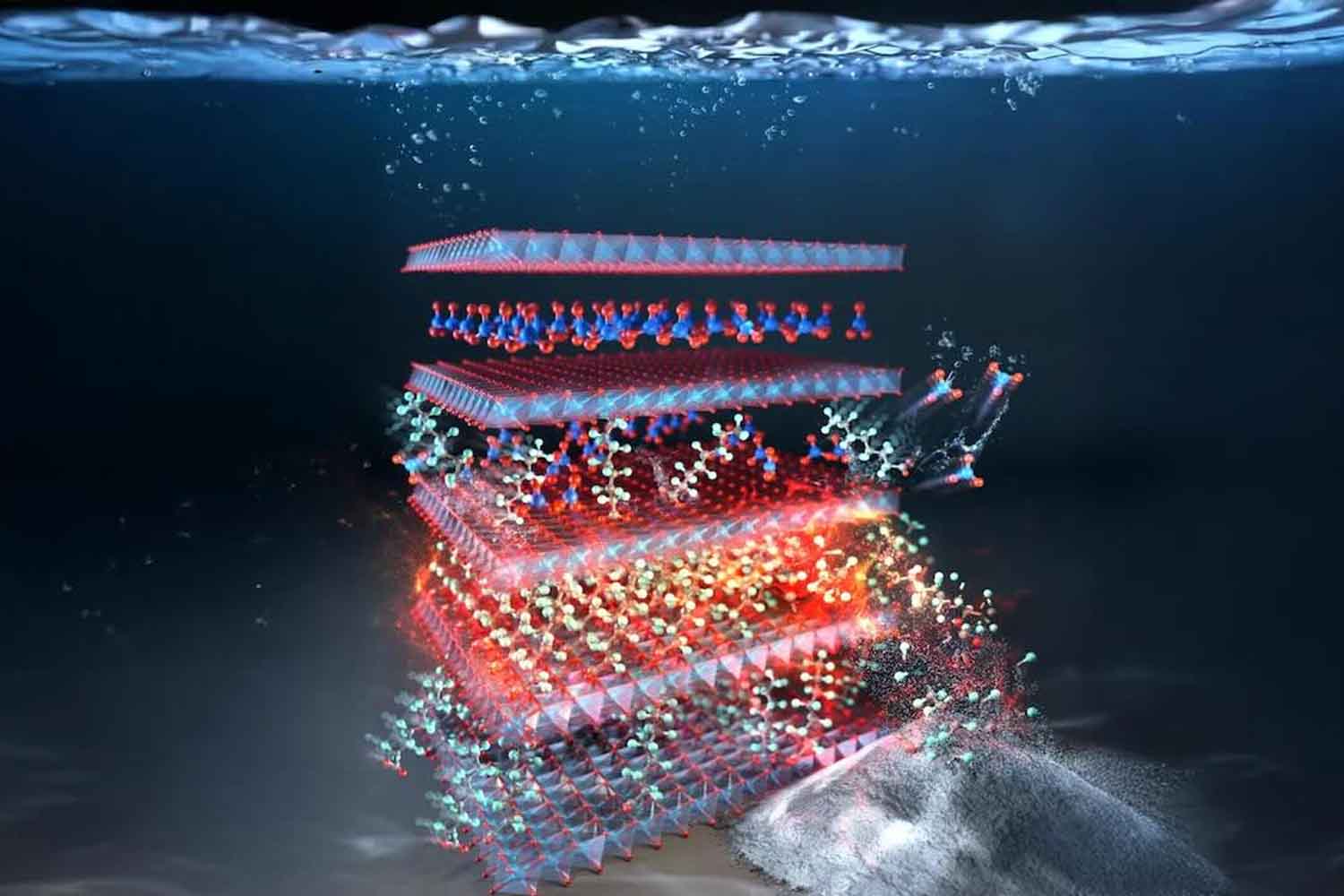
The heart of the discovery is a new material called layered double hydroxidea layered structure based on copper and aluminium. It was developed through the joint work of researchers from Rice University and the Korea Advanced Institute of Science and Technology. During testing, this material demonstrated an ability to absorb PFAS over a thousand times higher compared to the systems most used today, such as activated carbon filters.
Not only that. Speed is another key element. While traditional methods take hours, sometimes days, to reduce the concentration of PFAS in water, this new material works within a few minutesshowing an efficiency that surprised the researchers themselves. The secret lies in its internal structure: the ordered layers and slight differences in electrical charge create a perfect environment to attract and retain PFAS molecules.
It also works outside the laboratory
One of the most interesting aspects is that this technology does not only work in ideal conditions. The tests were carried out on river water, drinking water and waste waterobtaining constant and reliable results. The system has proven to adapt to both static systems and continuous flows, a fundamental characteristic when considering real use in aqueducts or industrial purification systems.
The results, published in the scientific journal Advanced Materialssuggest that the transition from experimentation to concrete application may not be that far away. And this is where the discovery becomes really interesting also for Europe and Italy, where the need to reclaim contaminated water is increasingly urgent.
Don’t just remove, but destroy PFAS and reuse the material
However, there is another crucial issue that is often ignored: what to do with PFAS once removed from water. Traditional systems trap them, but then generate hazardous waste to be disposed of. In this case, however, researchers have developed a process that thermally decomposes PFASeliminating them without releasing toxic by-products.
The material, once “saturated”, is heated together with calcium carbonate. The result is surprising: a significant part of the PFAS is destroyed and the material itself it regeneratesready to be reused. Early tests have shown that it can deal with multiple consecutive capture and destruction cycles, making this system one of the first concrete examples of circular economy applied to water purification.
According to scientists, it is a rare combination: quick cleaning and sustainable solutiontwo elements that rarely coexist when talking about such persistent pollutants.
