
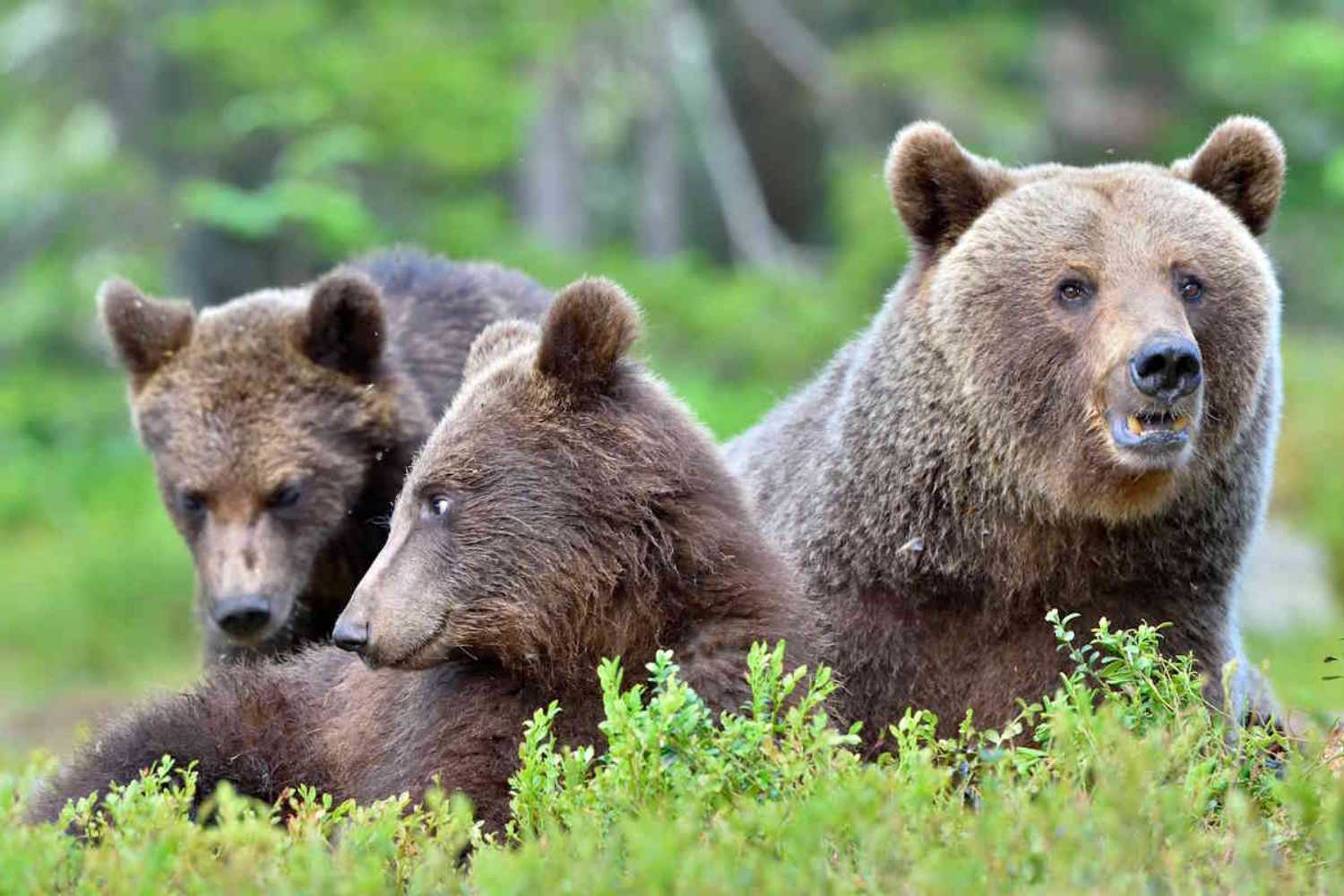
In the mountain landscape of central Italy lives a population of bears that is attracting the attention of the scientific community. The brown bear of the Apennines is not just a geographical variant, but the result of an evolution guided by coexistence with man. A recent genetic study shows how centuries of anthropic pressure have contributed to shaping its body and behavior, giving rise to a smaller, more cautious and surprisingly less aggressive animal.
Isolation and adaptation over time
This subspecies, present exclusively in the Apennines, has remained genetically isolated for thousands of years. The separation from other European bears dates back to a period between two thousand and three thousand years ago, with a definitive separation already consolidated in Roman times. In the meantime, the territory has transformed: deforestation, agriculture and human settlements have reduced and fragmented the natural habitat, forcing bears to adapt to an environment increasingly shared with people.
By analyzing the complete genomes of multiple individuals, the researchers compared this data with that of bears from other areas of Europe and North America. A clear picture has emerged: the Apennine population shows low genetic diversity and high inbreeding, a typical consequence of small numbers. However, alongside these limitations, selective signatures linked to genes that influence behavior have been identified.
Less aggression as a survival strategy
The most surprising fact concerns temperament. Bears from the Apennines are less prone to aggression than their counterparts from other regions. The explanation is evolutionary: the more daring and confrontational individuals, over time, have been more likely to collide with humans and be killed. This process has favored the survival of more cautious bears, capable of avoiding conflict in an environment dominated by human activities.
The hidden risks of isolation
While this evolution has facilitated coexistence, on the other, isolation poses serious risks. Reduced genetic variability makes the population more vulnerable to diseases, environmental changes and sudden crises. Evolution toward smaller bodies and distinctive traits reflects a delicate balance between limited resources, genetic drift, and natural selection.
These findings raise crucial questions about wildlife management. Interventions such as genetic rescue or reintroductions must be carefully planned: introducing new individuals could increase diversity, but also dilute those behavioral traits that made coexistence possible. The goal is not just to save the bear, but to preserve a population compatible with the human context.
You might also be interested in:
