
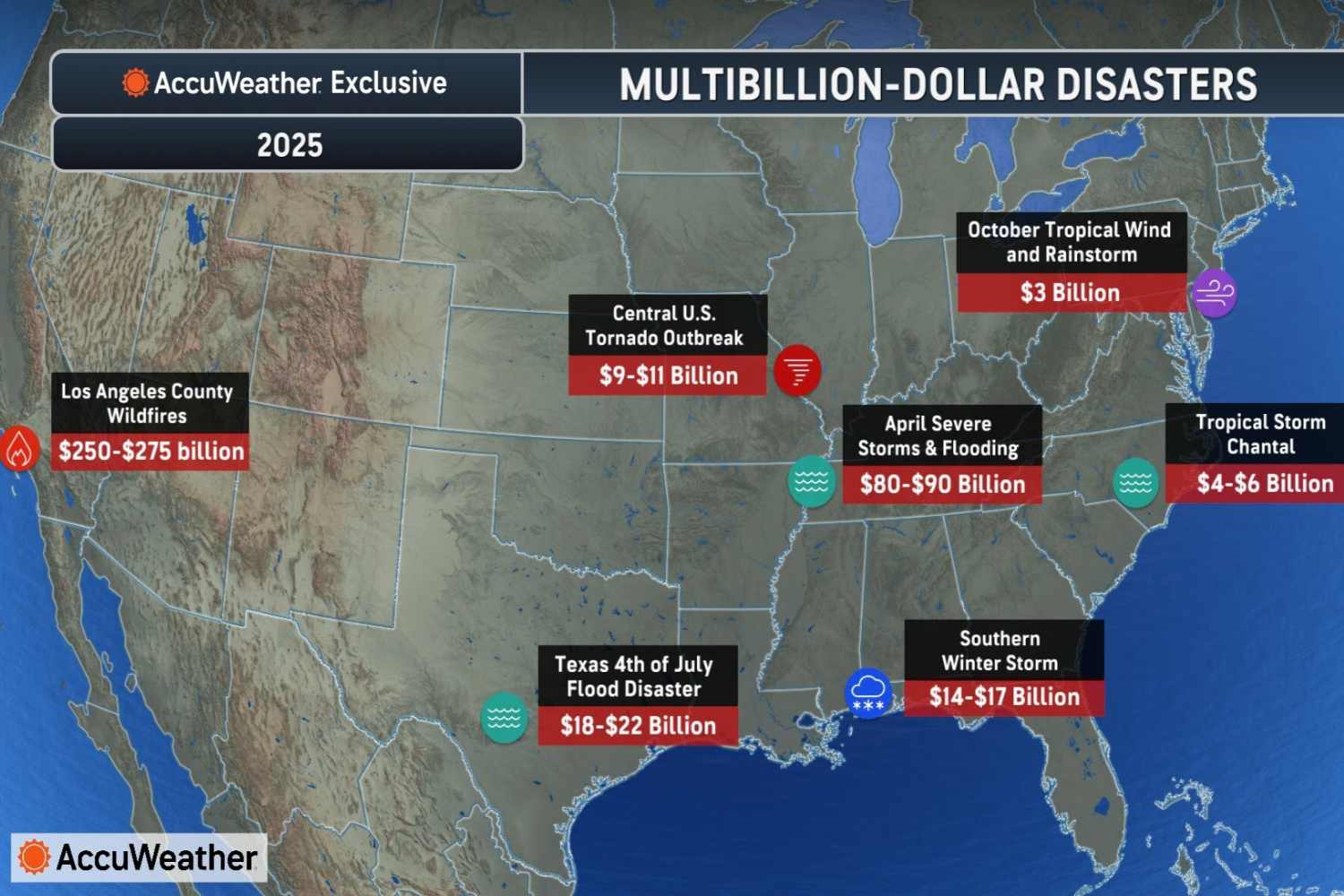
2025 will be remembered as one of the most extreme years from a meteorological point of view. According to experts at the AccuWeather® Global Weather Center, ten exceptional climatic events have marked the planet with broken records, victims, environmental destruction and enormous economic losses, especially in the United States, where overall damage is estimated between 378 and 424 billion dollars. A picture that confirms the intensification of the effects of climate change. Between fires, floods, hurricanes and global climate anomalies, the toll is dramatic.
January
The year opened with catastrophic forest fires fueled by extreme winds gusting up to 160 km/h. Entire neighborhoods in Los Angeles County were destroyed, including luxury homes in one of the most expensive neighborhoods in the world. Estimates are of $250–275 billion in damage, making these fires among the costliest ever.
Between January 20 and 22, an anomalous winter storm brought snow, ice and freezing temperatures to usually mild areas such as New Orleans, Mobile (Alabama) and Pensacola (Florida), where historic records were broken. Economic damages are estimated between 14 and 17 billion dollars.
At the end of the month, a generation bomb cyclone hit the British Isles with gusts over 160 km/h. In Ireland, a new wind record of 183 km/h was recorded and over 715 thousand users remained without electricity.
February
In February, the European Union’s Copernicus climate change service certified the lowest ever observed level of global sea ice. The main cause was an Arctic heat wave that prevented normal seasonal ice growth.
March
Nearly every city east of the Rockies experienced the windiest March on record. Winds peaked on March 14, causing destructive wildfires, dust storms that blotted out the sun, and several traffic accidents in the central United States. In March alone, 164 high wind warnings were issued across the country, setting new records.
June
On June 20, the first E5 tornado since 2013 was confirmed near Enderlin, North Dakota, with winds exceeding 340 km/h. At 1.60 km wide and set amidst a night of devastating tornadoes and derechos, it had peak winds estimated at more than 337 km/h.
Then, between June 19 and 25, a powerful heat wave hit much of the country, with over 3,000 daily temperature records broken, particularly in areas from the Midwest to New England.
July
Torrential rains caused flash floods in the Texas Hill Country in July. The Guadalupe River near Hunt, Texas, rose nearly 30 feet in six hours, overwhelming campsites and communities and causing more than 100 deaths. The economic loss caused by the flash flood disaster in the Texas Hill Country is estimated to be between $18 and $22 billion.
October
In October, Hurricane Melissa, the only Category 5 hurricane to hit Jamaica, set a new record for the highest wind speed recorded by a dropsonde, a meteorological instrument released by Hurricane Hunter aircraft with a gust of 405 km/h. Economic losses in the Caribbean are estimated at between $48 and $52 billion.
November
2025 was the first year in a decade without any major hurricanes to make landfall in the United States. Three of the five hurricanes that formed in the Atlantic basin in 2025 intensified into powerful Category 5 hurricanes, and only Tropical Storm Chantal hit the country. A rare Fujiwhara effect between Hurricanes Humberto and Imelda likely spared the southeastern United States from a disastrous flood in September.
