
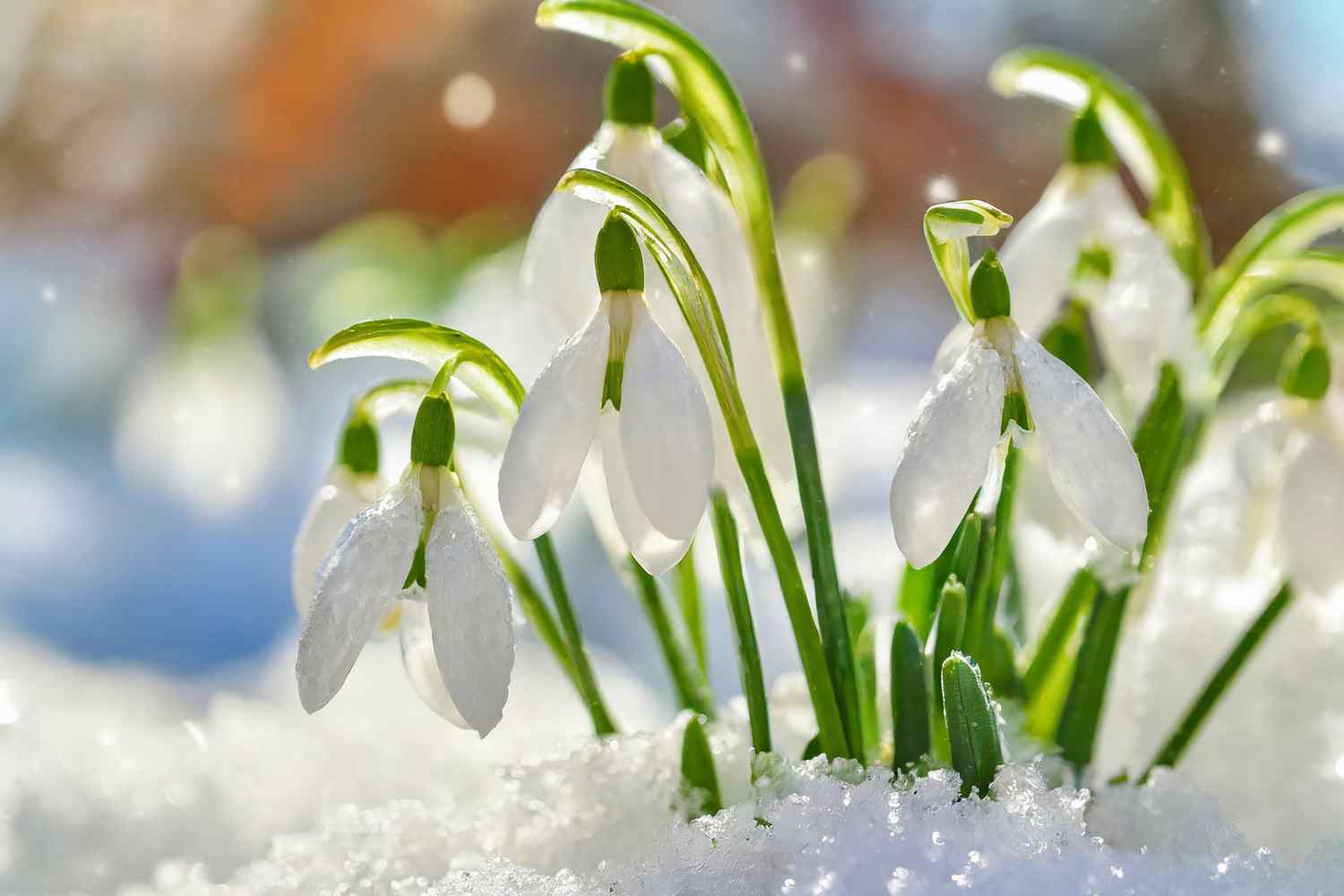
The snowdrop is one of the few flowers that doesn’t wait for spring to show itself. It blooms when it is cold, often with the ground still frozen, and for this reason it does not go unnoticed. It is a simple, resistant plant and suitable even for those with no experience, but behind its essential appearance there is a long history and surprisingly easy cultivation. In this guide you will find everything you need to plant it, care for it and make it flower again every year.
Snowdrop, or Galanthus, is a genus of bulbous plants known for its white, bell-shaped flowers. There are several varieties, but they all share the same charming simplicity. Over the centuries, the snowdrop has acquired a symbolic meaning of hope and purity, often found in poems and works of art.
Characteristics and origins of the snowdrop
The snowdrop, scientifically known as Galanthus nivalisis one of the first plants to flower when spring arrives, bringing with it a symbolism of rebirth and hope. The origins of this small and delicate plant date back many hundreds of years, the name of the genus (“Galanthus”) derives from two Greek words: “gala” = milk (white like milk) and “anthos” = flower. The specific epithet (“nivalis”) refers to its early flowering in the snow.
Historical references to the snowdrop are lost in the “mists of time”, it is called the “Morning Star” because it is one of the first flowers to appear in the new year.
The snowdrop is native to Europe, where it grows wild in woods, meadows and gardens, but has been cultivated and appreciated throughout the world for its beauty and symbolic meaning. The history of the snowdrop is steeped in folklore and legends, which connect it to different cultures and traditions, giving life to a flower that represents hope, purity and renewal.
How to grow snowdrops
Growing snowdrops can be a rewarding experience for anyone, from the experienced gardener to someone new to gardening. These little winter plants require minimal attention and are notoriously hardy.
Where to place the snowdrop
Snowdrops prefer partially shaded or shady locations, finding their natural habitat in forests and meadows in Europe, where they receive indirect sunlight. So make sure you select a location in the garden that receives the right amount of diffused light.
What type of soil do they prefer
For planting in the garden or in a pot, be sure to use soil enriched with humus and guano. Compost is a great option for improving the quality of the soil in your garden.
How and when to plant snowdrop bulbs
The snowdrop is a fascinating winter plant and, if you want to enjoy its beauty in your garden, the ideal period for planting is from September to November. To do this, follow these steps.
Plant snowdrop bulbs in the fall, usually in September or October. Separate the bulbs and plant them about 5-8 centimeters deep and 5-8 centimeters apart from each other. This plant often forms dense clumps, so several bulbs can be planted in close proximity to each other for a more dramatic effect.
Plant snowdrop bulbs at a depth that is three times the diameter of the bulb itself. Make sure you space them about 10 centimeters apart. This distribution will allow the flowers to thrive and create an eye-catching visual effect.
Snowdrop can be grown both in the garden and in pots. If you opt for the pot or a windowsill, make sure the container has good drainage to avoid water stagnation.
For an even more eye-catching visual effect, consider combining snowdrops with other spring flowers, such as eranto or crocus. These plants pair perfectly with snowdrops, creating a spectacle of colors and scents in spring.
How much to water snowdrops
The soil where you plant snowdrops must remain moist, but not too soggy. After the first year, snowdrops require little watering, as they get moisture from rain in the spring.
How to Propagate Snowdrops
The snowdrop offers several options for its propagation, although it requires a little patience to see the new adult plants bloom. Here are some common methods:
- Spontaneous sowing: a simple way to allow the snowdrop to reproduce is not to cut the withered flowers, when the flower opens, it spreads the surrounding seeds. These seeds can then germinate, giving life to new snowdrop specimens.
- Bulbils: After flowering in April, the bulbils can be carefully removed from the mother bulb. Alternatively, you can separate groups of bulbs that have grown too large and transplant them to another area of the garden, these bulbils can grow and develop into new snowdrop plants.
Snowdrop propagation is a time-consuming process, but it is a rewarding way to expand the presence of these charming winter plants in your garden. With patience and care, you can create new generations of snowdrops that will bring the beauty of spring to your outdoor space.
How to protect snowdrops from diseases and pests
The snowdrop is a plant that combines beauty and delicacy, and it is important to pay attention to its daily care to preserve its health. The snowdrop is a mountain plant, but it is not immune to natural risks such as the attack of fungi such as Pythium and Phytophthora, which can cause rotting of the roots and collar. These problems usually occur when the soil does not drain adequately, leading to waterlogging that favors the onset of invasive infections that are difficult to fight. Although the snowdrop is typically hardy, it is important to pay attention to these threats to protect its flowers and ensure the plant’s survival over time.
This flower can sometimes fall victim to gray mold, an annoying problem that often appears when the plant begins to sprout. This mold, also known as “botrytis galanthina,” appears as white fuzz wrapped around the tips of snowdrop shoots. When you notice this presence, it is a sign that the plant is struggling with a threat to its health and requires timely intervention.
If not addressed promptly, this type of fungus can spread rapidly, invading the plant and forming an aggressive mold that must be removed. The first measure to take is to remove the parts affected by the infection. Next, applying a fungicide mixed with a detergent or soap is recommended. This intervention will help prevent further damage to the plant, ensuring that you can enjoy the beauty of the snowdrop without problems.
When snowdrops bloom

The snowdrop is a flower that blooms at an unusual time, between January and February, when the cold season is still very present. This makes the snowdrop a symbol of rebirth and represents the long-awaited and joyful return of spring. Its early appearance is like a messenger announcing the awakening of nature after the rigors of winter, bringing with it a message of hope and rebirth for all those who admire it.
Is snowdrop toxic?
In the past it was thought that the snowdrop had healing properties, references were found in the Odyssey, in which the flower was described as the magical herb that helped Ulysses overcome the poisoning by Circe. Subsequently, the first studies demonstrated its toxicity, although the active ingredient, galantamine, is found in some drugs to combat Alzheimer’s, muscular dystrophy and multiple sclerosis.
Frequently asked questions about snowdrops
Is snowdrop resistant to frost?
Yes. The snowdrop is a rustic plant and tolerates temperatures below freezing, snow and late frosts without problems. It is made to flower in winter.
How long does a snowdrop plant live?
Many years. If the soil is suitable and not disturbed, the snowdrop tends to naturalize and flower every winter.
What should be done after flowering?
Allow the leaves to dry naturally. They serve to store energy in the bulb for flowering the following year.
Should snowdrops be watered often?
No. After taking root it requires little watering. Rainwater is generally sufficient, especially in winter and spring.
What is the symbolic meaning of the snowdrop
The snowdrop is much more than just a flower. Its ability to bloom at the height of the cold season makes it a powerful symbol of rebirth and hope. This plant represents virtue, purity and life itself. Since 2007, the snowdrop has even had its own festival in Scotland called the “Scottish Snowdrop Festival”. This special event is held in Scotland’s most beautiful snowdrop gardens, celebrating the beauty and profound meaning of this fascinating plant, which continues to inspire hope and rebirth around the world.
The legend of the snowdrop
The snowdrop is shrouded in numerous legends that give further charm to this simple flower. One of the most fascinating stories tells that the snowdrop bloomed at the feet of Adam and Eve when they were punished and exiled from Eden. This flower became a symbol of consolation and the promise of a new spring of hope. Legend holds that it was the breath of an angel that transformed the snowflakes into elegant bell-shaped flowers, bringing a sign of consolation and rebirth.
In Moldova, a different story is told: spring is personified as a powerful and beautiful woman. It is said that one day, when he injured his finger, a few drops of blood fell on the snow. From that moment the first snowdrops were born, bringing with them not only spring but also a profound connection between nature and human life.
These legends help give the snowdrop a symbolic meaning that goes beyond its simple beauty, representing hope, rebirth and the connection between man and nature.
The snowdrop is a plant that asks for little and gives back a lot. It resists the cold, naturalizes easily and returns to flower every year without particular attention. Whether it is grown in the garden or in a pot, it is a practical as well as aesthetic choice, capable of giving a clear signal when winter is not yet over but is about to give way. Planting it means investing in reliable, discreet and long-lasting flowering, ideal for those who want concrete results without complicating their lives.
You might also be interested in:
Other bulbous plants to grow:
