
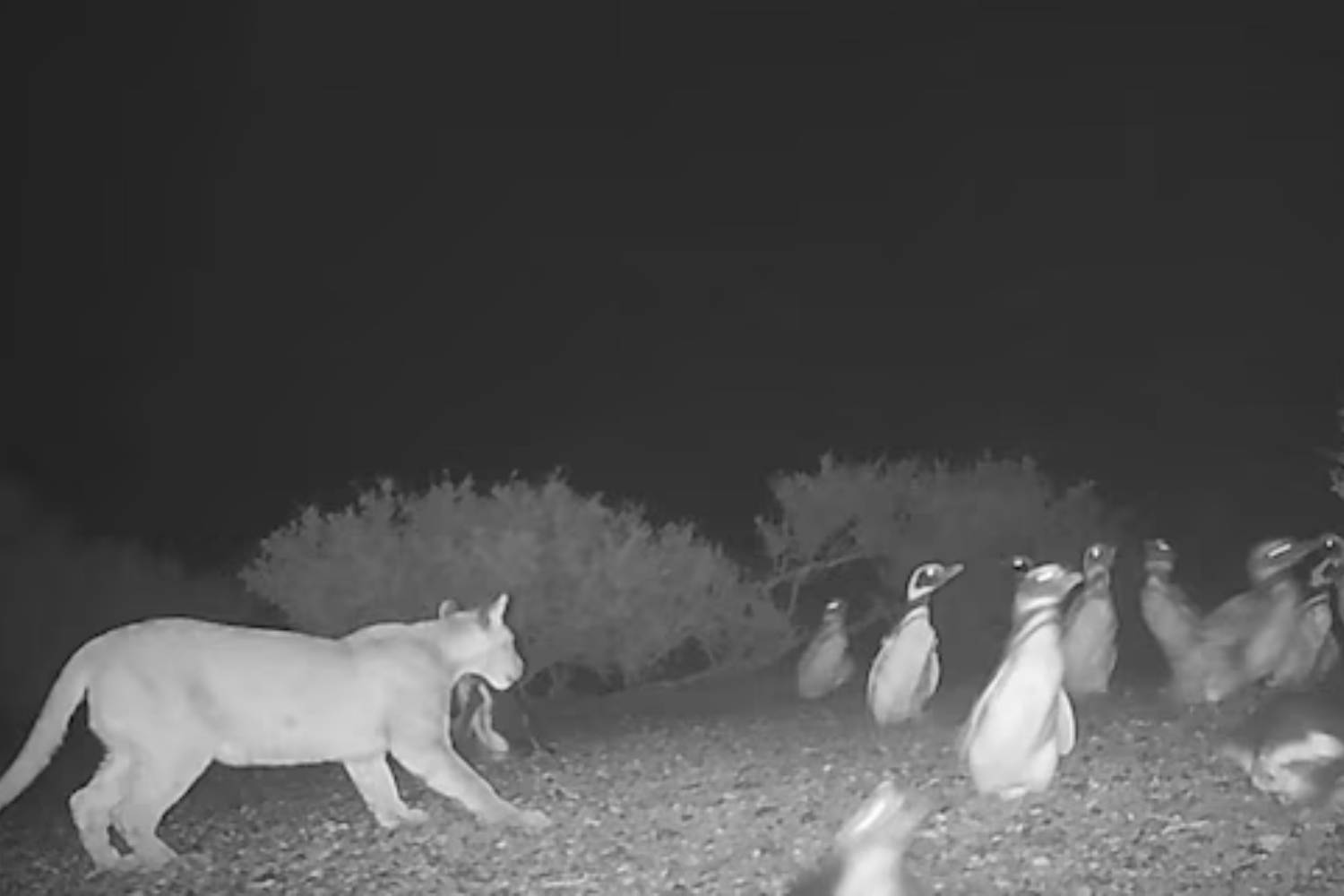
In Patagonia, Argentina, pumas are experiencing a new phase in their history. After decades of persecution and hunting, these large felids had almost disappeared from the coasts and steppes of the region, leaving room for species that previously lived under their threat. The creation of the Monte León National Park in 2004 allowed pumas to gradually repopulate the area, giving rise to new ecological dynamics.
Penguins become prey
During the absence of predators, Magellanic penguins (Spheniscus magellanicus) had settled along the coast, forming a breeding colony of around 40,000 pairs. The lack of terrestrial threats had allowed them to nest on land, an unusual choice for a species accustomed to safe islands. With the return of the pumas, the researchers observed the first signs of predation: penguin remains in the felines’ feces indicate that some pumas have begun to integrate these birds into their diet.
The study published on Proceedings of the Royal Society B documents unprecedented behaviors. Between 2019 and 2023, fourteen pumas were monitored using camera traps and GPS collars. Nine of them regularly hunted penguins, while five stuck to other prey. The abundant availability of food has led pumas to modify their mobility: during the breeding season, they remain concentrated near the colony, while in other periods they expand their range of action.
Less solitary pumas: impacts on ecosystem and conservation
Traditionally solitary, pumas have shown mutual tolerance near the penguin colony. 254 encounters between predators were recorded within a few kilometers of the colony, compared to only four between pumas that did not hunt penguins. The explanation seems simple: when food is abundant and concentrated, competition decreases and coexistence between individuals increases. The density of pumas in the park is thus higher than double the historical values recorded in Argentina.
The return of the pumas does not mean an automatic return to the ecological balance of the past. The presence of the cats introduces new interactions with the penguins, creating a complex situation for the management of the area. Future colonizations may be hindered, and species conservation requires strategies based on how ecosystems actually function, not how they were in the past. The coexistence between pumas and penguins thus becomes a natural laboratory for understanding the ecological changes caused by human activities.
You might also be interested in:
