
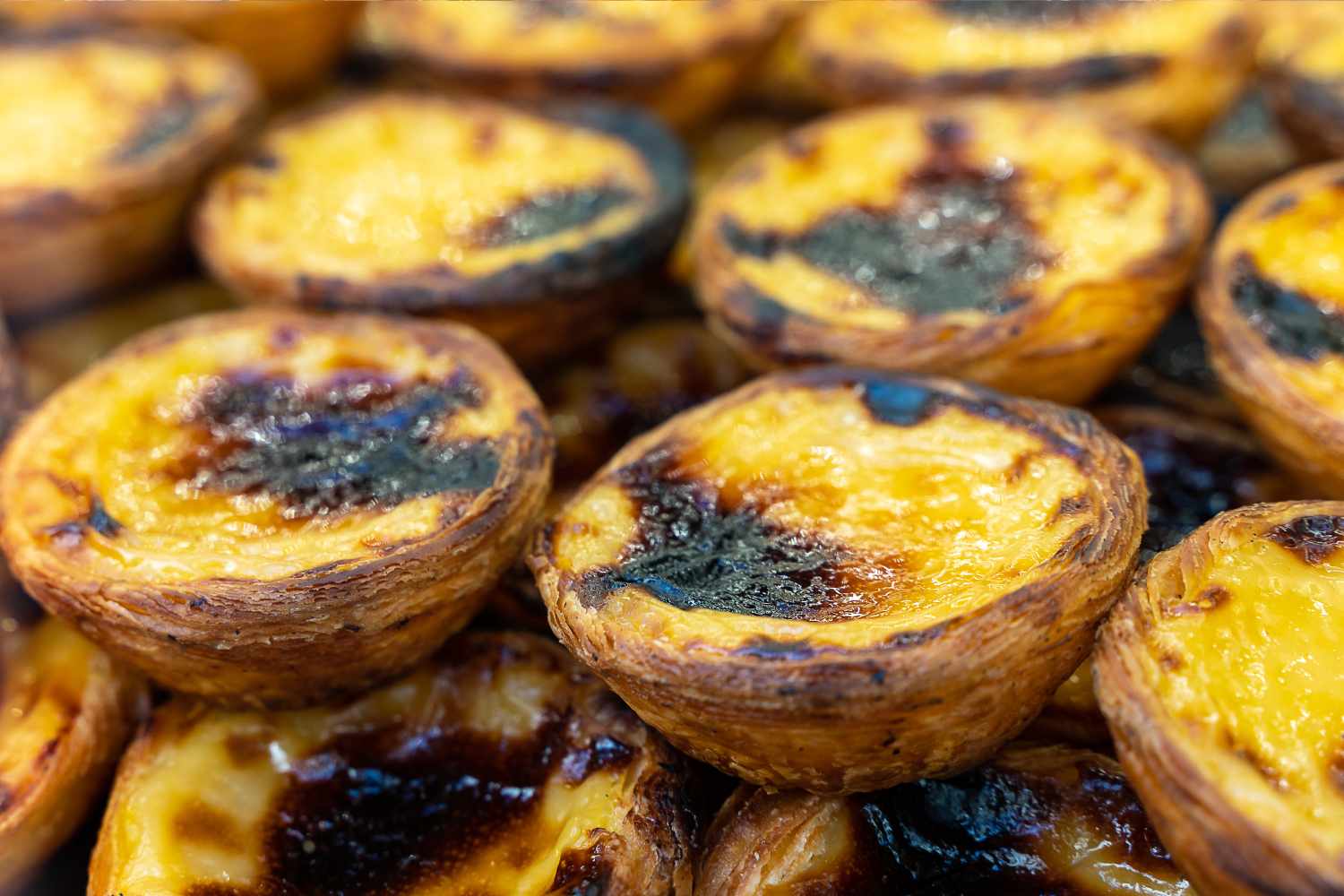
The Pastel de Belém, the famous Portuguese tart filled with custard, recognizable for its caramelized surface and the crumbly pastry made up of thin layers, has won the title of Sweet Pastry No. 1 in the World 2025/26 according to TasteAtlas. The ranking comes from the evaluations expressed by users of the platform at a global level, all referring to desserts actually tasted.
View this post on Instagram
TasteAtlas’ control systems exclude unreliable votes, automated interventions and judgments influenced by parochialism, aspects that determine the preparation of a transparent and representative ranking, built exclusively on consumer opinions.
The origins of Pastel de Belém date back to the 19th century, when the monks of the area of the Jerónimos Monastery, in Lisbon, gave life to this specialty. Even today the dessert is prepared in the historic Belém pastry shop following a secret recipe, guarded with great care. Each tart is cooked at a very high temperature, a choice that allows the cream to thicken in a few moments while the thin dough reaches a crunchy consistency. From this balance arise the typical caramelized browning on the surface and the contrast with a warm and velvety interior, elements that continue to make Pastel de Belém a symbol of the Portuguese confectionery tradition.
The top 10 ranked
Here are the top positions in the TasteAtlas ranking:
- Pastel de Belém, Portugal
- Trigona panoramatos, Greece
- Pastel de nata, Portugal
- Antakya künefesi, Türkiye
- Bougasta, Greece
- Gaziantep baklavası, Türkiye
- Fıstıklı sarma, Türkiye
- Croissants, France
- Polish donuts (Pączki), Poland
- Kunāfah, Egypt
And Italy?
Present in the ranking with various preparations, starting from the highest one, the Tuscan Bomboloni (23rd place), passing through the Leccese Pasticciotto (28th place) and the inevitable Sicilian Cannoli (32nd place).
Also finding space in the ranking are the Sfogliatella from Campania (34th place), the Cornetto (39th place), the Zeppole (42nd place), the Neapolitan Graffe (81st place), the Castagnole (93rd place), the Seadas (106th place), the Chiacchiere (161st place), the Chiacchiere Campania (162nd place), the Sicilian Genovese (171st place), the Struffoli (203rd place), the Apulian Cartellate (210th place), the Cassatelle (211th place), the sweet Tortelli (275th place), the Sfincia di San Giuseppe (277th place), the Messina Pignolata (282nd place), the Bolognese Pinza (283rd place), the Sicilian Crispelle (287th place), the Procida Tongues (290th place), the Sofgliatella from Abruzzo (298th place), the Bocconotto from Castel Frentano (313th place), the Sicilian Pignolata (315th place), the Fruttone from Lecce (316th place), the Sfogliatelle from Canosa (327th place), the Testa di Turco (342nd place), the Sicilian Ciarduna (344th place), the Baci from Pantelleria (359th place), the Collorelle from Caltagirone (362nd place), the Orecchie di Ammann (370th place) and the Rocciata Umbria which closes in 371st place.
