
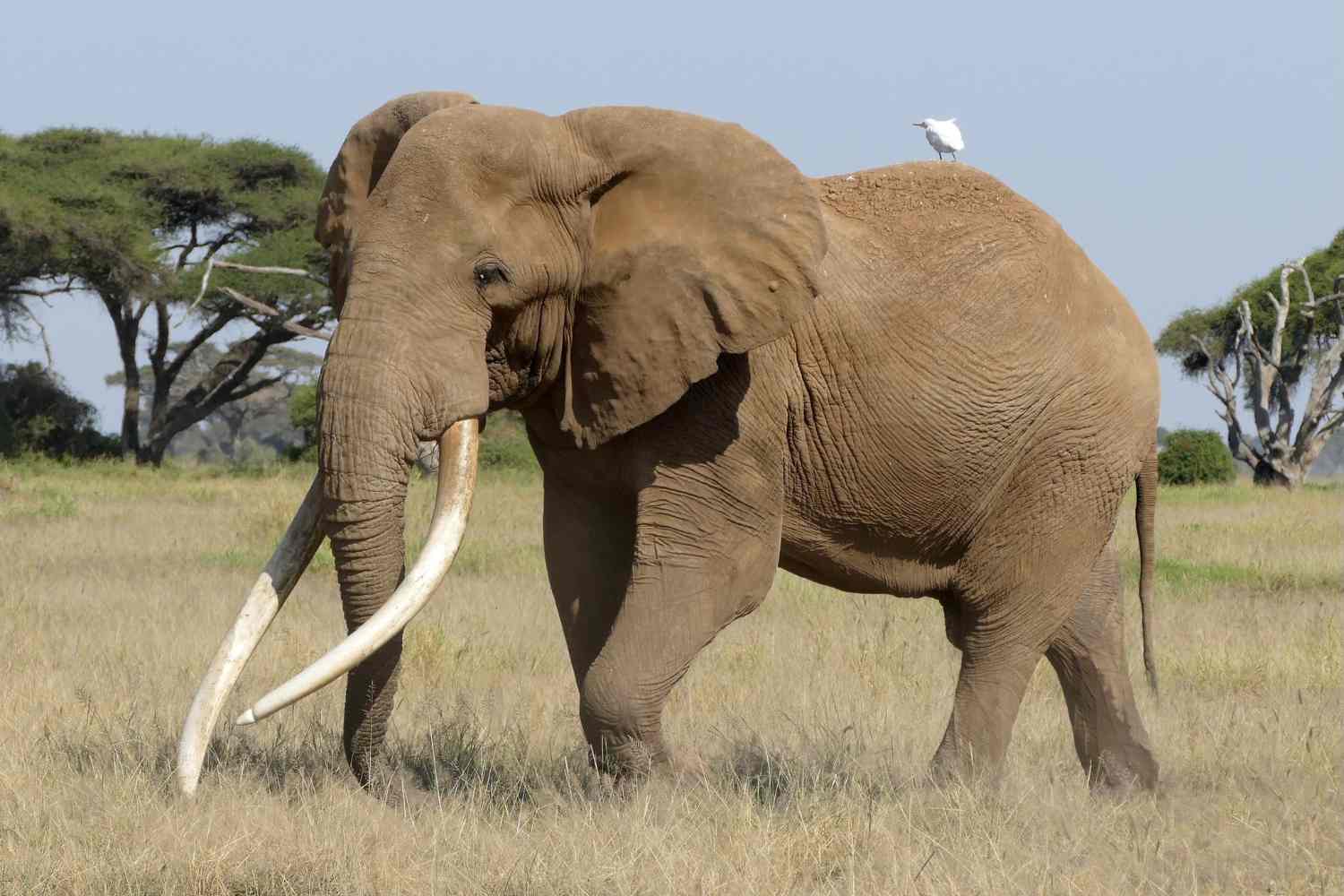
The death of Craig, one of the last African super tuskers, marks the passing of a symbolic figure for Kenya and the entire continent. The elephant, who died at the age of 54 from natural causes, lived in the Amboseli National Park, on the border with Tanzania, and had over time become one of the most recognizable and photographed animals in Africa. Its gigantic tusks, so long that they almost touched the ground, made it immediately identifiable even from a great distance.
Who were the “super tuskers”
The term super tusker refers to very rare male elephants with exceptional tusks, each of which can weigh more than 45 kilograms. Tusks, which are modified upper incisors in elephants, grow throughout life and play a vital role in communication, mate-finding, defense and daily activities such as digging or moving objects. Today very few examples of this type exist and Craig was considered one of the last representatives of this extraordinary category.
A protected life between research and conservation
Born in 1972, Craig had reached an advanced age for a male elephant living in the wild. His long life was possible thanks to the constant protection guaranteed in one of the most monitored parks in Kenya. Researchers and rangers from the Amboseli Trust for Elephants had been following him for decades, observing his movements and behavior. He was known not only for his imposing appearance, but also for his calm character, which led him to tolerate the presence of tourists and photographers without showing signs of agitation.
The impact of poaching on the evolution of the species
Elephants like Craig have become increasingly rare due to poaching for ivory, which for decades has mainly affected individuals with larger tusks. This pressure has had a double effect: the drastic reduction of large males and the indirect selection of elephants with smaller or absent tusks, less attractive to poachers. A clear example of how human intervention can influence the evolution of a wild species.
A symbol for Kenya and for tourism
The Kenya Wildlife Service has called Craig a symbol of the country’s conservation successes. In 2021 he was also chosen as ambassador of a well-known national brand, confirming his iconic value. His loss also weighs on a cultural and economic level: nature tourism, which represents around 10% of the Kenyan GDP, is also based on the emotion of meeting extraordinary animals like him. With Craig, not just an elephant goes away, but a piece of the history of the African savannah.
You might also be interested in:
