
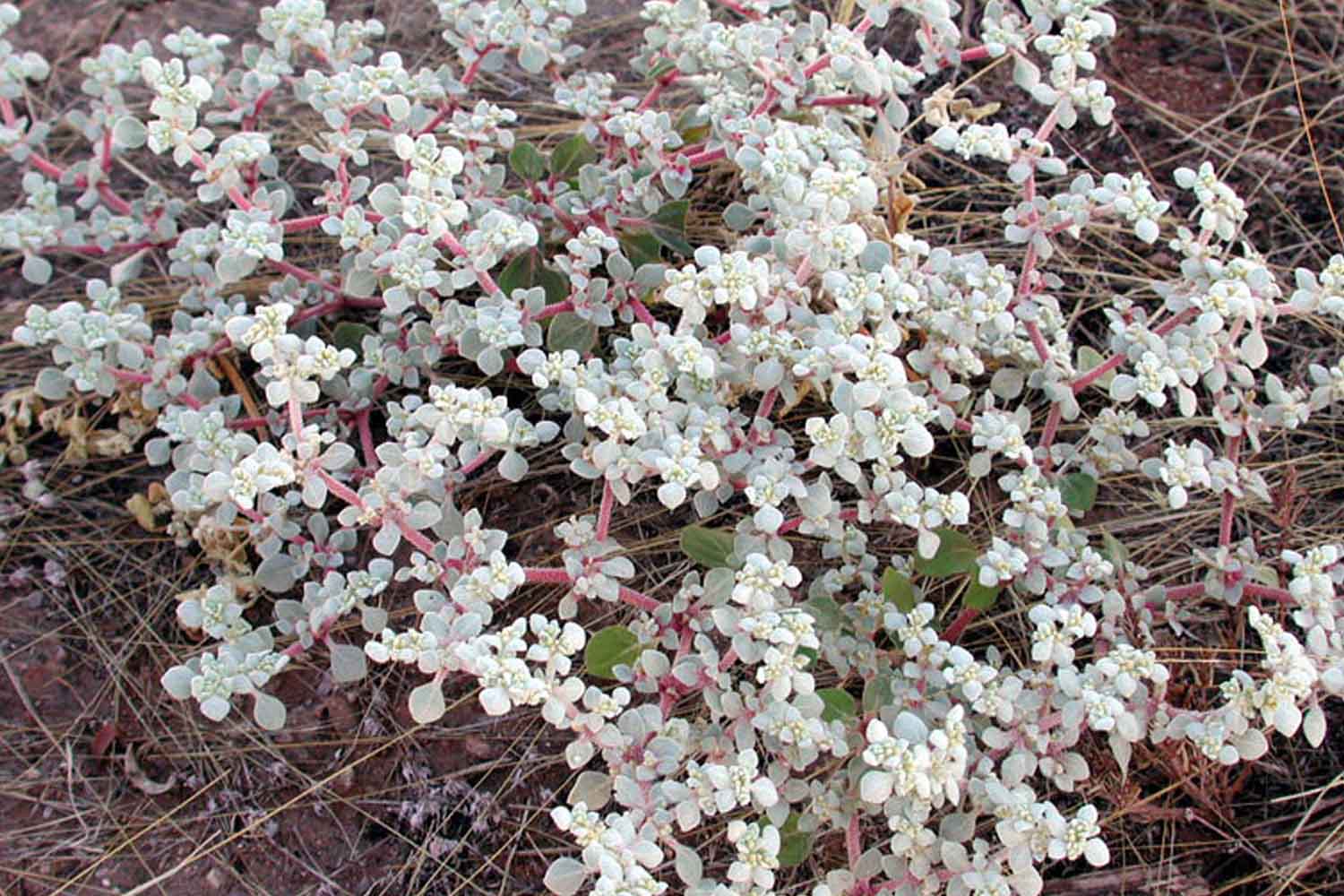
In the heart of Death Valley, one of the most inhospitable places on the planet, where summer temperatures regularly exceed 49 degrees Celsius, life seems to have very little chance. Yet, precisely in this hell of sand and sun, a plant grows undisturbed, capable not only of surviving, but of accelerating its growth when the heat becomes extreme. Is called Tidextromia oblongifoliaalso known as Arizona honeysweet, and has been officially recognized as the most heat-tolerant plant ever documented.
According to researchers, this desert species has developed a unique biological strategy: it has rethought the process of photosynthesis from the inside, turning lethal temperatures for most plants into a competitive advantage. A discovery that could change the future of global agriculture, increasingly threatened by climate warming.
Like a desert plant, it can grow better when the heat rises above 49
The study was born from a seemingly simple question: how can a plant remain green, productive and rapidly growing in conditions that kill almost all other plant life in a matter of hours? At first, the laboratory results seemed disappointing. The seeds of Tidextromia oblongifoliagrown in controlled environments, grew with difficulty, almost as if they were unfit for life.
The problem, however, was not the plant. It was the context. Classic laboratory conditions were too “gentle” compared to the climatic brutality of Death Valley. The researchers therefore decided to artificially recreate the plant’s natural environment, building special growth chambers capable of simulating intense sunlight, strong daily temperature variations and extreme temperatures.
When the context became realistic, the true nature of the plant emerged forcefully. In just ten days, the biomass of Tidextromia oblongifolia tripled, while other desert plants, already considered resistant to the heat, completely stopped growing. A behavior never observed before with this intensity.
The secret of the most heat-resistant plant
The heart of this extraordinary resistance lies in the rapid adaptation of photosynthesis. After just two days of exposure to extreme temperatures, the plant changes its “comfort range”, continuing to produce energy efficiently. After two weeks, the optimal temperature for photosynthesis reaches 45 degrees Celsius, which is higher than that of any known agricultural crop.
Going even deeper, the researchers observed dramatic changes at the cellular level. Mitochondria, responsible for energy production, physically move closer to the chloroplasts, where photosynthesis occurs. At the same time, the chloroplasts take on a cup shape, never before documented in vascular plants. This configuration allows for more efficient reuse of carbon dioxide, keeping energy production stable even under extreme thermal stress.
At the same time, within 24 hours, thousands of genes modify their activity. Many of them are involved in protecting proteins, cell membranes and photosynthetic systems from heat damage. The increase in the production of Rubisco activase, an essential enzyme that prevents photosynthesis from blocking when temperatures become prohibitive, also plays a key role. In this way, the heat is no longer suffered, but transformed into a biological advantage.
Because this discovery can change the future of agriculture
The implications of this study, published in the scientific journal Current Biology, go far beyond desert botany. With global temperatures rising, which are estimated to rise by up to 5 degrees Celsius by the end of the century, heat stress is already reducing yields of key crops such as wheat, corn and rice.
To date, research has struggled to make cultivated plants more resistant to heat, also because studies have focused mainly on species that are easy to grow in the laboratory, but not very representative of extreme conditions. Tidextromia oblongifolia overturns this perspective, demonstrating that plants are capable of much more advanced adaptations than previously thought.
By identifying the genes, enzymes and cellular structures responsible for this resistance, scientists now have concrete goals for developing more resilient crops. Transferring these mechanisms to food plants will take time and careful experimentation, but the direction is set. In a future where heat waves are no longer an exception, lessons learned from a desert plant could safeguard global food security.
You might also be interested in:
