
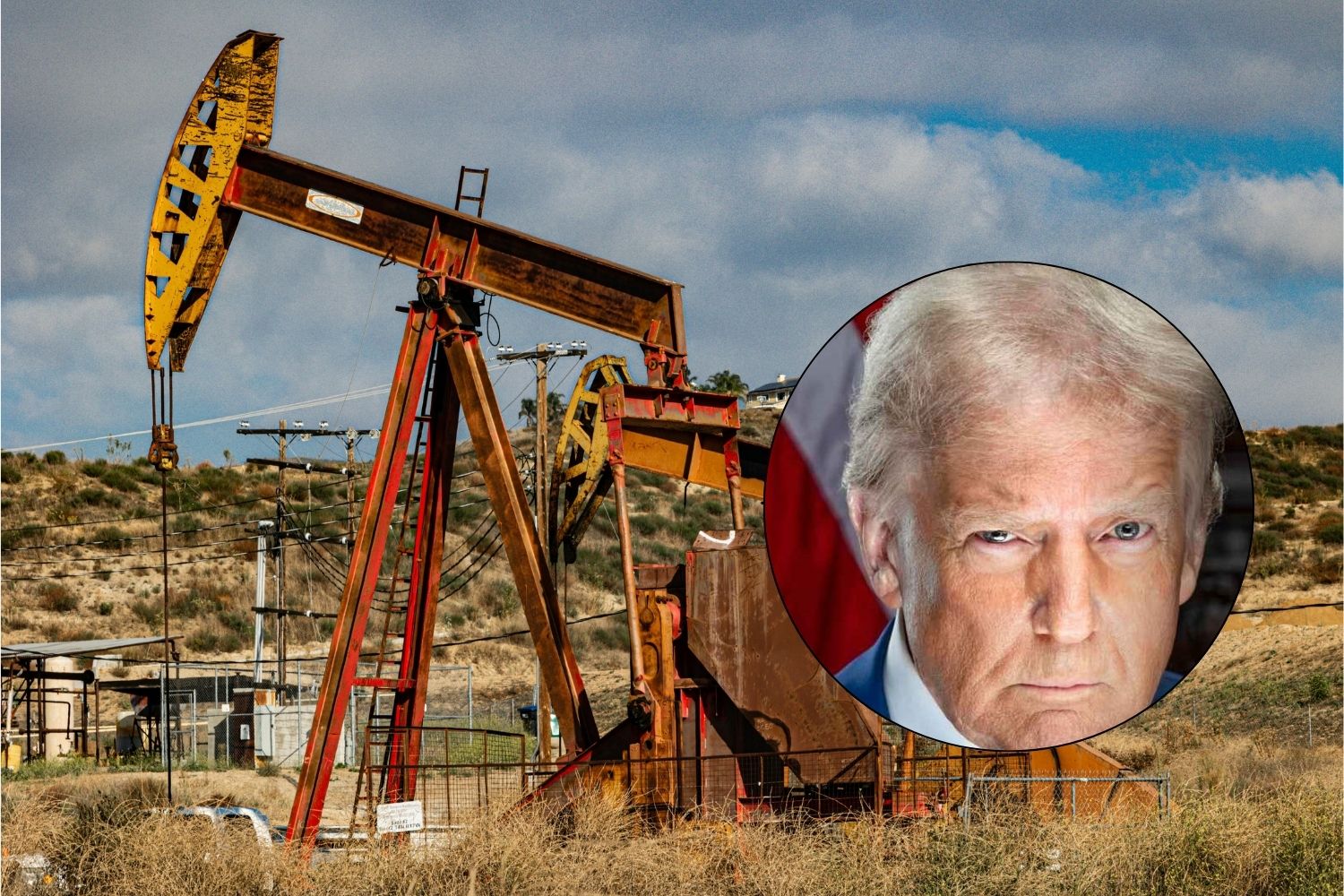
Venezuela would be ready to “deliver” to the United States between 30 and 50 million barrels of oil, for an estimated value of 2.8 billion dollars, after the military operation that led to the removal from power of Nicolás Maduro.
Donald Trump is convinced of this and announces it himself on Truth Social, explaining that oil – defined as “of high quality” and so far not subject to sanctions – will be sold at the market price, while the proceeds will be managed directly by the President of the States. Money which, according to the tycoon, will be used to “benefit the Venezuelan and American people”.
The statements come the day after the inauguration of Delcy Rodriguez as President interim of the country and Maduro’s move to the United States, where he will face charges related to drug and weapons trafficking.
Venezuela that is convenient for the USA
Trump did not hide the strategic objective of the operation. In an interview with NBC News he stated that “having an oil-producing Venezuela is good for the United States, because it keeps oil prices low.” According to the president, the American oil industry could return to operation in the South American country within 18 months, attracting huge investments.
A forecast that many analysts consider unrealistic. According to experts cited by the BBC, restoring past production levels would require tens of billions of dollars and up to ten years, even in the presence of a stable government.
Despite the enthusiasm of the White House, the main US oil companies are moving with caution. Currently, the only American company still operating in Venezuela is Chevronwhich reiterated that it acts in compliance with the law and is focused on the safety of its employees.
ConocoPhillipswhich no longer operates in the country, said it was “monitoring developments,” while Exxon provided no official comment.
The reason for the skepticism is clear: Venezuelan oil is very heavy, difficult to refine and expensive to extract. Furthermore, companies ask for political and legal guarantees before committing capital to a country marked by chronic instability.
“Stolen oil”?
Trump justified the operation against Maduro by claiming that Venezuela had “stole American oil”. But the reality is more complex. US companies operated in the country through concession agreements for decades, until the oil industry was nationalized in 1976 and further reorganized in 2007 under Hugo Chávez.
In 2019, a World Bank tribunal ruled that Venezuela owes $8.7 billion to ConocoPhillips in compensation for those expropriations. A debt never paid. However, as BBC Verify made clear, talking about “stolen oil” is misleading: oil has never been owned by foreign companies, but by the Venezuelan state.
Furthermore, with the largest proven oil reserves in the world (303 billion barrels), Venezuela remains a key target in global energy geopolitics. But the idea of relaunching production through military intervention and external resource management raises enormous questions: about sovereignty, international law and – once again – about the environmental price of a model that continues to rely on fossil fuels.
In a planet that should accelerate the exit from oil, the rush for Venezuelan black gold appears like a return to the past, where the climate crisis is ignored in the name of strategic and short-term interests. And citizens and the environment risk paying the bill, as often happens.
