
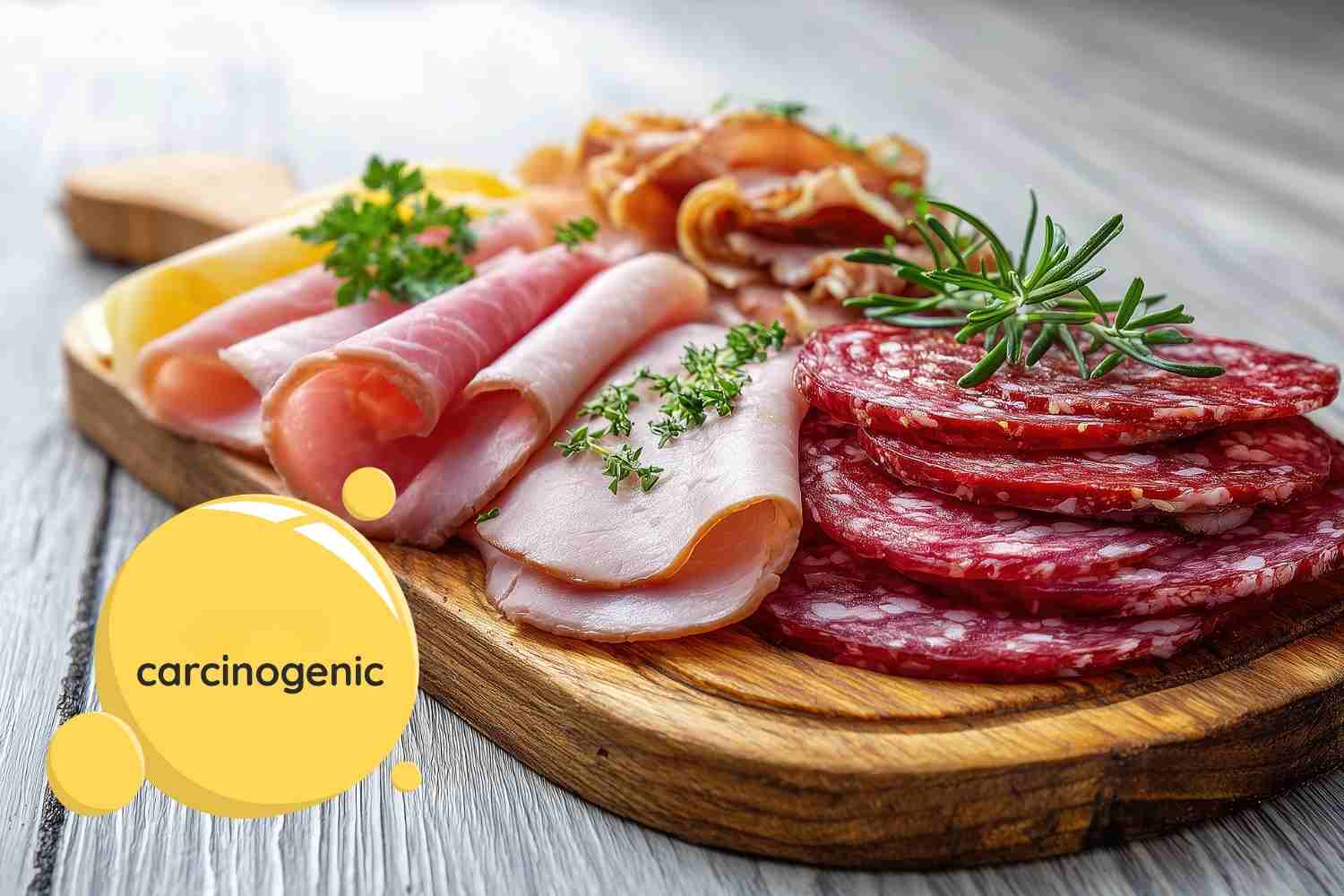
Cooked ham and other cured meats, sausages, frankfurters and more generally processed meats are part of the daily routine of many families, yet these foods carry with them a scientific label that is anything but flattering. The International Agency for Research on Cancer (IARC) of the World Health Organization has classified them in Group 1, i.e. certain carcinogens for humans.
And it’s not new in recent days, just think that this classification has been valid since 2015, even if it still continues to be little known or misunderstood today.
This is not alarmism or a moralistic crusade against food. It is an evaluation based on solid scientific evidence, which certifies a causal link between the consumption of processed meat and the development of some tumors. But there’s one key thing to understand: Being in Group 1 means the food can cause cancer, not that it will definitely cause it. The actual risk depends on many variables.
What it really means to be part of “Group 1”
When IARC places a food or substance in Group 1, it is certifying the robustness of the available scientific evidence, it is not making a direct comparison of hazards. Tobacco, asbestos and processed meats share the same category because for all three there is sufficient evidence of carcinogenicity in humans, but this does not mean that they have the same impact on health.
The concrete risk depends on multiple factors: how much we consume, how often, in which dietary context and with which overall lifestyle. A ham sandwich every now and then is not the same as smoking a pack of cigarettes a day. However, the problem arises when that “every now and then” becomes “every day”, perhaps at breakfast, snack and dinner.
Which tumors are cured meats associated with?
The strongest association documented by research concerns colorectal cancer. Epidemiological studies estimate an increase in risk of approximately 18% for each 50 gram portion of processed meat consumed daily. Fifty grams correspond more or less to two slices of cooked ham or a frankfurter.
This may seem like a small increase, but on a large scale it becomes a significant public health problem. If millions of people consume these products regularly, even a “moderate” increase in individual risk translates into thousands of additional cancer cases every year.
More recent research has broadened the picture. A meta-analysis published in Nature Medicine in 2025 analyzed the dose-response relationship between processed meats and three major health outcomes: type 2 diabetes, ischemic heart disease and colorectal cancer. The results show an average increase in risk of at least 11% for type 2 diabetes and 7% for colorectal cancer, for consumption of up to approximately 55-57 grams per day.
Some studies have also highlighted possible links with breast and prostate cancers, although the evidence in these cases is less definitive than in colorectal cancer.
The “safe threshold” problem
One of the most discussed aspects concerns the existence or otherwise of a “safe” quantity of consumption. The current scientific answer is uncomfortable, in fact there is no reassuring threshold supported by the available data. Even low but repeated consumption over time shows the same direction of effect, i.e. an increase in risk.
This does not mean that any quantity will certainly make us ill, but that it is precisely daily consumption, even if in small portions, that represents the critical variable, more than the occasional weekend sandwich.
What’s inside cured meats that’s dangerous
The main culprits are nitrites and nitrates, preservatives used in salting and preserving meat. These compounds, under certain conditions, can give rise to nitrosamines, chemicals with carcinogenic potential.
Nitrosamines can damage the DNA of cells, irritate the intestinal lining and promote inflammatory processes which over time increase the risk of developing tumors, particularly colon cancer.
The European Food Safety Authority (EFSA), in its 2017 reassessment, confirmed that the levels authorized as additives are considered protective, but also underlined the need to monitor overall exposure and processes that can generate these substances.
It is a delicate balance: reducing preservatives too much could open up food safety problems linked to bacterial proliferation, but keeping them uncontrolled is not acceptable from the point of view of cancer prevention.
Sodium and saturated fat
The nutritional profile of many cured meats also presents other critical issues. Cooked ham, salami, mortadella and similar products are often rich in sodium and saturated fat, a combination that negatively impacts cardiovascular health.
The WHO recommends a maximum limit of 2,000 mg of sodium per day for adults, equivalent to approximately 5 grams of salt. Many cured meats, however, can provide significant amounts of sodium even in moderate portions, making it difficult to respect this limit, especially when the diet includes other processed foods already rich in salt.
Excess sodium is a recognized risk factor for hypertension, stroke and kidney problems. Saturated fats, for their part, contribute to the increase in LDL cholesterol (the “bad” one), favoring atherosclerosis and cardiovascular diseases.
How to orient yourself in daily choices
All this does not mean having to completely eliminate cured meats from your diet. The key word remains awareness. Processed meats should only be consumed occasionally, avoiding them becoming a daily habit. Reducing frequency is already a concrete step to limit potential risks in the long term.
Another fundamental aspect is learning to read labels. Whenever possible, it is best to choose products with short ingredient lists, without added nitrites and nitrates, and with lower sodium contents. In fact, even within the same category, there are significant differences in terms of quality.
Even better is to focus on fresh and minimally processed proteins, which do not undergo industrial treatments and retain a more favorable nutritional profile. Eggs, fish, legumes, meat (not from intensive farming) are better alternatives.
Finally, the role of fruit and vegetables remains central, to be consumed in abundance every day. A diet rich in fiber, antioxidants and phytochemicals supports gut health, helps counteract cellular damage and can help reduce overall cancer risk.
The challenge of scientific communication
One of the major obstacles in managing this information is the difficulty of correctly communicating the concept of risk. Saying that a food is “carcinogenic” understandably raises concern, but without the appropriate context it can generate both excesses of fear and dangerous minimizations.
Just because processed meats are in Group 1 doesn’t mean they’re as deadly as tobacco, but it doesn’t mean you can ignore the problem either. It means that the evidence for causation is strong and that on a population scale the impact is measurable and relevant.
Oncology prevention also involves the table, and scientific evidence offers us precious tools to protect our health. It’s up to us to decide how to use them.
Sources: WHO / Nature Medicine
