
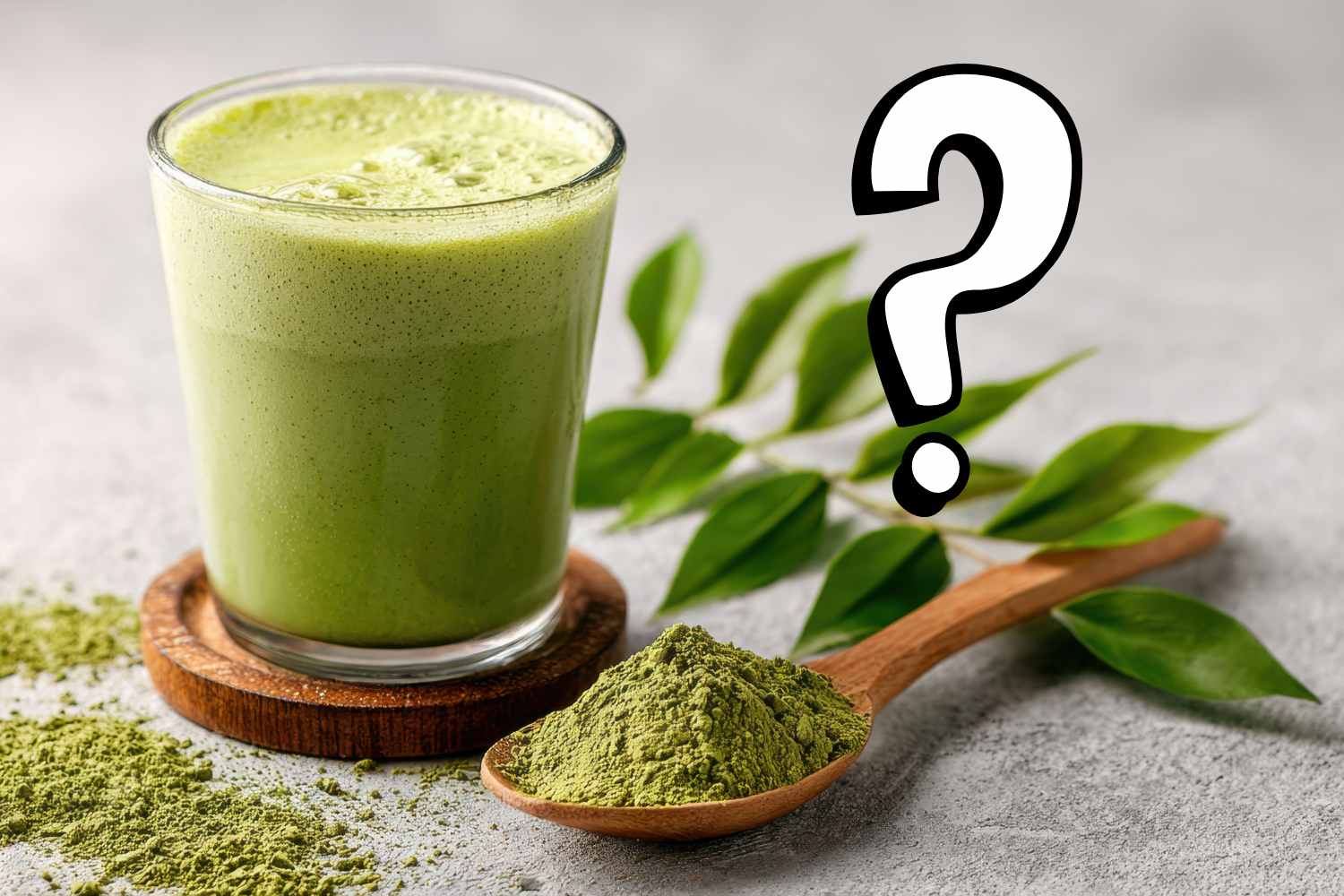
Bright green, with an intense flavor and incredibly versatile, we are talking about the matcha that has conquered everyone, from trendy coffee shops to supermarkets. We find it in foamed milk, smoothies, biscuits and even the most sophisticated desserts. But behind this powder that promises energy, concentration and well-being, what is really hidden?
The experts at the CVUA in Stuttgart (Chemisches und Veterinäruntersuchungsamt), the German public laboratory for food control, tried to answer this question by analyzing 11 samples of matcha on the market.
Not all matcha is the same
The investigation compared products with different origins and cultivation methods: 9 organic samples from Japan and 2 conventional ones from China. A distinction that, as we will see, makes the difference.
Matcha, unlike traditional tea, is not filtered, the leaf is reduced to a very fine powder and consumed entirely. This means that everything the plant has absorbed – for better or for worse – ends up directly in our body.
The good news concerns Japanese organic matcha where no traces of pesticide residues have been found. A result that confirms the attention of this production chain and the quality of the traditional product.
Different scenario for the two conventional Chinese samples, in which residues of active substances were detected. In the first sample traces of two substances, in the other of 4. Among these, bifenthrin (insecticide) and chlorfenapyr (acaricide and insecticide), in non-alarming quantities, but still present.
The most critical case concerned one of the conventional samples where the maximum permitted limit was found to be exceeded for TMA-octadecyl and cetrimonium chloride, quaternary ammonium compounds used as disinfectants. According to German experts, they may have entered during the leaf washing phase in industrial processing.
Environmental contaminants
In addition to pesticides, the analyzes looked for contaminants that may arise from the environment or production processes.
Perchlorate, for example, was found in all samples with an average value of 0.16 mg/kg – higher than pesticide residues but still below the European limit of 0.75 mg/kg. This substance, present in soil and water, can interfere with the absorption of iodine in the thyroid, but the levels found in matcha do not represent an immediate risk for those who consume it occasionally.
Trimesio emerged in seven out of eleven samples. It can result from glyphosate products or form during drying of plant material. Also in this case, the quantities were within the legal limits.
The real problem: aluminum
And here we are at the most delicate point of the investigation. Aluminum is naturally present in the soil and the tea plant absorbs it in a particular way, accumulating it in the leaves.
With classic tea, much of the aluminum remains in the leaves which we then throw away. But with matcha the situation changes completely, by consuming the entire powdered leaf, we ingest all the aluminum it contains.
CVUA analyzes revealed contents between 512 and 2085 mg/kg, with an average of 1112 mg/kg. Significant numbers, already evaluated in the past by the German Federal Institute for Risk Assessment (BfR).
The European Food Safety Authority (EFSA) has established a tolerable weekly dose of 1 mg per kg of body weight. And here comes the warning from experts: with regular consumption of matcha, especially if you choose products that have a high aluminum content, this threshold can be reached or even exceeded.
Aluminum, taken long-term, can accumulate in the body and affect the nervous system, bones and reproductive capacity.
What does this mean for those who love matcha?
Don’t be alarmed, if you take matcha occasionally there are no problems, the habit of drinking it every day is different, perhaps in several cups, which requires a little more attention.
German researchers suggest:
The aluminum present in the leaves cannot be completely avoided, nor can we know with certainty how much there is in each product, but following these precautions still reduces the risk.
