
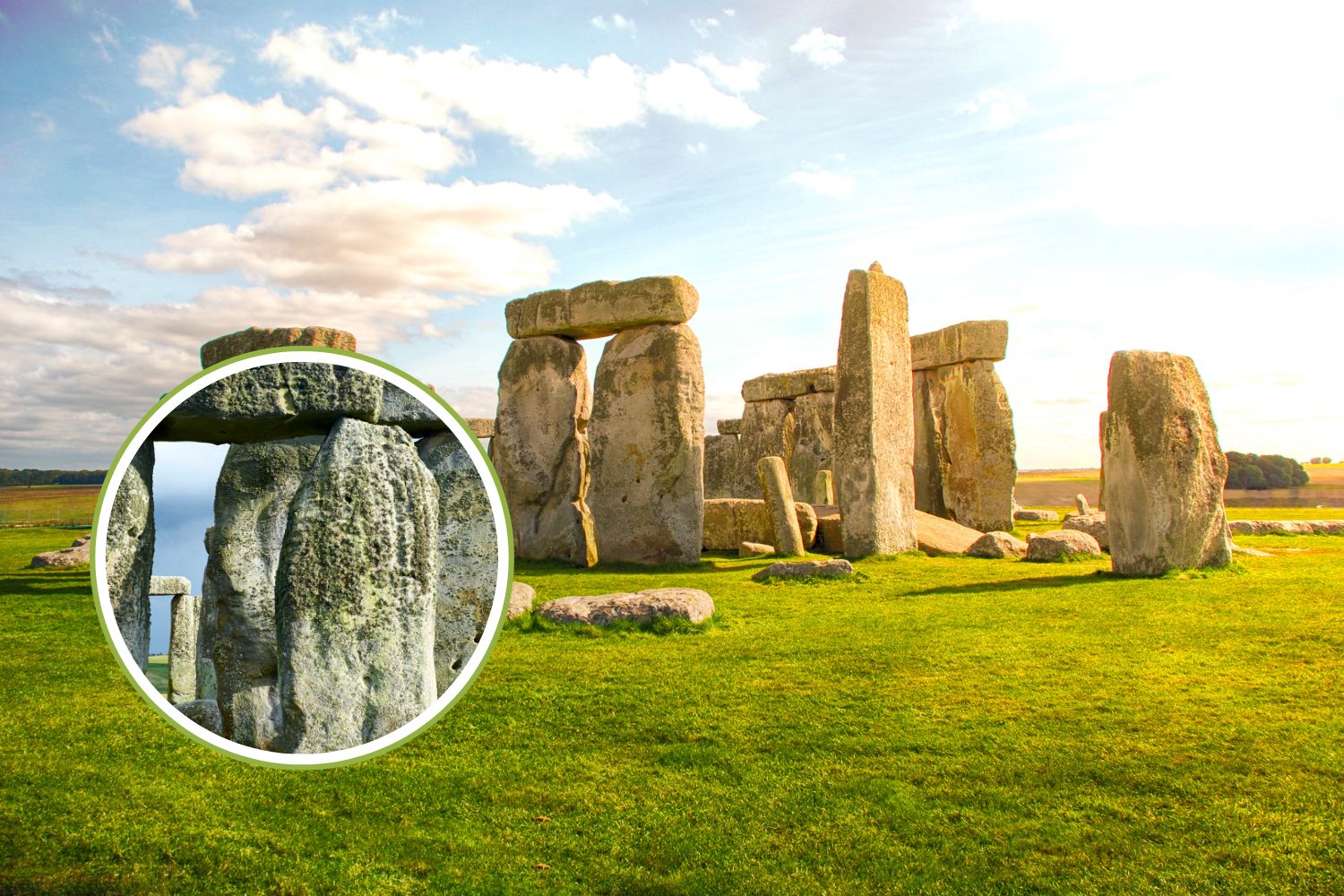
There is a fascinating idea that often comes up when we talk about Stonehenge: What if it wasn’t humans who transported those huge stones, but nature itself? Gigantic glaciers, slow and inexorable, sliding for hundreds of kilometers and leaving behind boulders ready to be assembled. A suggestive, almost reassuring theory. It’s a shame that today, thanks to new research, we know that this wasn’t the case.
A study just published on Communications Earth and Environment it tells a very different story, made not of imposing blocks but of tiny details. Grains of sand, invisible to the naked eye, which however retain an ancient and surprisingly precise memory. And it is precisely from there that a clear answer comes: the farthest stones of Stonehenge did not arrive by chance.
When history is not written in stone, but in the sand of the rivers
For years, the glacial transport hypothesis has found its way into documentaries and online discussions. The idea was simple: during the great glaciations, the ice would tear stones from the mountains of Wales and Scotland, dragging them southwards to the Salisbury Plain. Prehistoric men, at that point, would only have taken advantage of what nature had already done.
The problem is that glaciers, when they pass, always leave clear signs. Rocks piled up without order, scratched surfaces, landscapes shaped by the weight of ice. Around Stonehenge, however, these signals are absent or unconvincing. Hence the decisive question: if the big clues are not there, are there smaller traces?
The answer came from the rivers that flow around the monument. The researchers collected sand samples and analyzed them for minerals such as zircon and apatite. They are microscopic but extraordinary crystals, because they work like tiny geological clocks. Radioactive uranium is trapped inside them which, over time, turns into lead. By measuring this process, it is possible to understand when and where they formed.
A geological imprint that tells of a human choice
If glaciers did indeed carry the stones to Stonehenge, the rivers in the area should contain some sort of mineral “signature” from Wales or Scotland. But that’s not what emerges. After analyzing over seven hundred grains, scientists found that almost none of them match the typical ages of the rocks from which the bluestones or the so-called Altar Stone come.
The zircon present in Salisbury’s rivers tells a much more ancient and local story, linked to sediments that covered the south of England millions of years ago, well before the last ice age. Apatite also confirms this picture: its ages do not refer to distant rocks, but to transformations that occurred when this part of Europe was influenced, indirectly, by the formation of the Alps. In other words, those minerals have been there for tens of millions of years. They didn’t arrive with ice.
The message that emerges is powerful in its simplicity. The more “exotic” stones of Stonehenge are not a gift from nature. Someone chose them. Someone moved them. Someone decided that it was worth taking on a huge undertaking to get them there.
And perhaps this is precisely the detail that makes Stonehenge even more human. Not a monument born by chance, but the result of a precise will, a shared vision and a collective effort that today we can rebuild starting from a handful of sand.
