
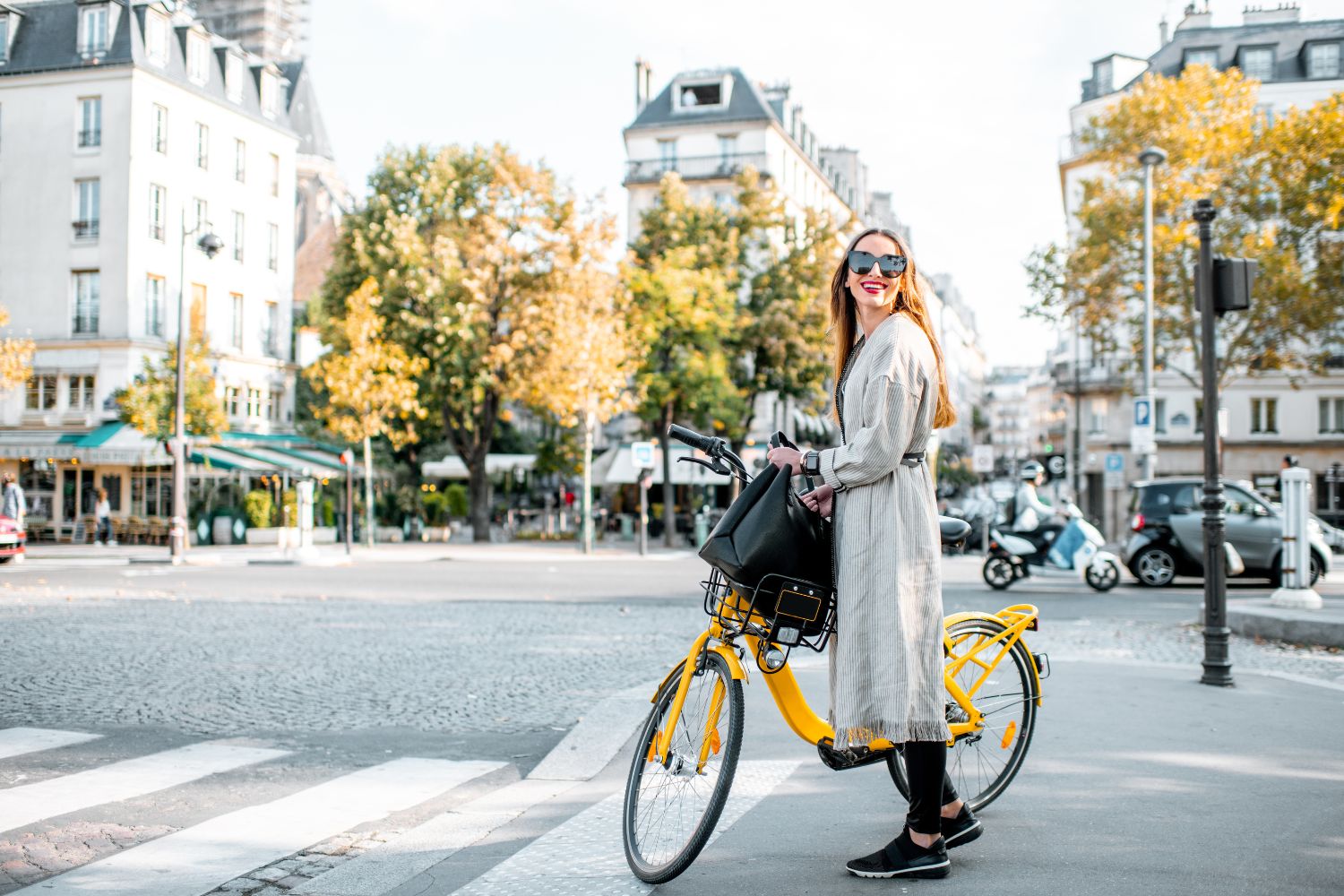
There was a time, not too long ago, when Paris meant above all traffic. Endless queues, nervous horns, wide lanes designed for cars and little else. Riding a bike in the center was a test of character: buses that brushed the handlebars, scooters stuck everywhere, improvised crossings. Cycling was not a practical choice, but almost a declaration of intent.
Today, walking or cycling along the Seine, the sensation is different. Not because Paris suddenly became a perfect paradise, but because he stopped taking for granted that the car was the only possible answer. Without epic proclamations and without spectacular revolutions, the city did something simple and at the same time very rare: it changed priorities.
The result is there for anyone to see. Parents accompanying their children to school on cargo bikes, workers moving orderly along protected lanes, elderly people pedaling without the worry of having to defend themselves from traffic. And no, it’s not just a Parisian weekend impression.
It’s not just a feeling. A recent scientific study shows that cycling traffic in Paris increased by 240% between 2018 and 2023, while private car use steadily decreased. In the central districts, today, more than one in ten trips take place by bicycle. Numbers that, until a few years ago, seemed unrealistic.
What really made the difference
The study doesn’t just say that cyclists have increased. Try to explain why. And the answer is less spectacular than you think, but much more interesting. The researchers analyzed years of data collected from over one hundred automatic meters spread across the city, capable of recording only the passage of bicycles. They then cross-referenced this information with the weather, holidays, strikes and lockdown periods. Everything that could distort the result was put aside.
At that point, the focus shifted to urban choices. Not a single measure, not an isolated intervention, but a coherent sequence of decisions: protected cycle paths made permanent after the pandemic, less space for cars, school streets closed to traffic at critical times, reduced speed zones, greener and less noisy neighbourhoods.
The key point is that many of these measures came together. For this reason, the study uses advanced statistical models, capable of distinguishing overlapping effects. The conclusion is clear: Paris has not changed due to a brilliant idea, but through perseverance.
The bike as an everyday object, not as a symbol
One of the most obvious signs of change is not found in graphs, but in habits. Helmets resting on bar tables. Shopping bags in baskets. Work backpacks attached to roof racks. The bicycle has ceased to be an identity symbol. It has become an ordinary object, like an umbrella or a bag. Vélib’ bike sharing is also part of this normality: not a special experience, but a practical solution, used to go to work, to run errands, to return home.
An aspect emerges from the data that those who live in the city immediately recognize: people started using bikes when they stopped feeling out of place. When the streets started to seem predictable, calm, legible. Perceived safety made the difference more than any communication campaign. Families, students, workers, elderly people started cycling not because they were “convinced”, but because it had become the easiest way to get around.
This has had effects beyond mobility. Roads with less traffic are also roads where you stop more. Neighborhood shops have benefited, as has the quality of daily life. Less noise, less heavy air, more time spent outdoors without the feeling of having to defend yourself from traffic.
And it is precisely here that the change consolidates. When a medium stops being told and starts being used without thinking about it. The history of Paris is not an urban fairy tale and it is not even a model to be copied literally. However, it says one thing clearly: people change habits when the space in which they live stops hindering them.
It was not a journey without resistance. There are those who feared chaos, those who predicted collapse. The collapse has not come. Traffic has been redistributed, some of the journeys have changed time, some have changed means. In the meantime, the city has become quieter, more breathable, more lived-in.
Paris today aims to make cycling accessible in all neighborhoods. But the most important step has already happened: it has changed the way it moves, without making too much noise. And maybe that’s why it worked.
You might also be interested in:
