
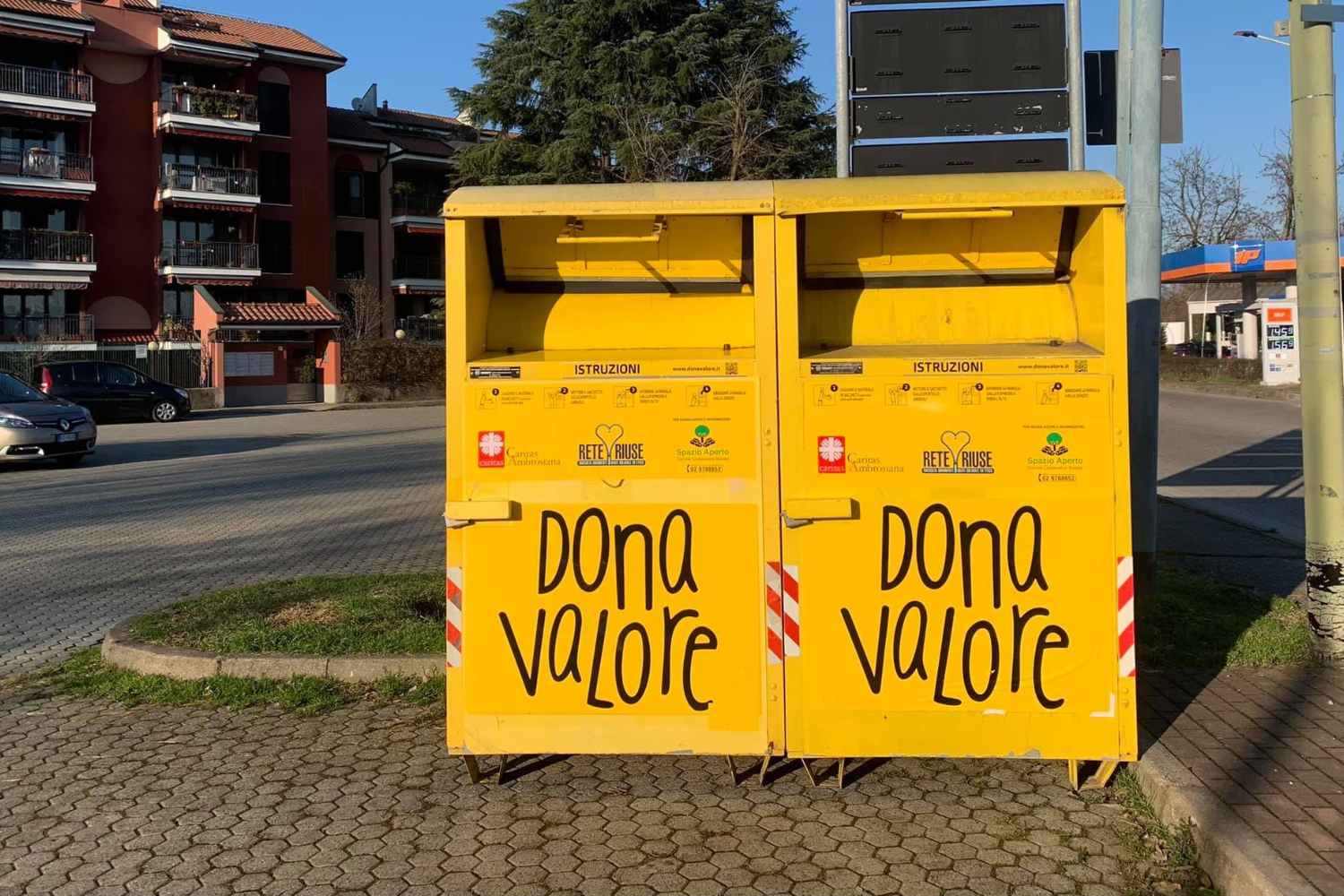
For years the yellow Caritas bins, in Milan as in many other Italian cities, have been a staple for those who wanted to give a second life, and in solidarity, to used clothes. A gesture perceived as right, almost obvious: not in the undifferentiated, but within a circuit that promised reuse, recycling and social consequences. That circuit creaks today. Not from a lack of clothes, but from an excess of the wrong ones.
When the system worked
The solidarity textile collection chain was based on a precise balance. A limited portion of the clothing was allocated to the parish wardrobes; the rest fed second-hand markets, industrial selections, fiber recovery. A model capable of reducing waste, creating employment and generating economic resources for social projects. The final disposal was residual, marginal in costs and volumes.
That model entered into crisis within a few years. The bins continued to fill, but their contents changed radically.
The hidden weight of fast fashion
What clogs up the collection are not “old” clothes, but garments created to last very little. Synthetic fabrics, composite materials, very low-cost clothes that cannot last a second life cycle and cannot be recycled effectively. They end up in the bins anyway, because European legislation requires the separate collection of textiles. But once collected, they become a problem.
According to data released by Caritas Ambrosiana and the social cooperatives operating in the supply chain, the quantity of non-recoverable material has grown to represent a significant share of the total. It costs money to dispose of it, and those costs are not covered by any public or producer responsibility mechanism.
More clothes, fewer resources
The paradox is evident: the volumes collected increase, the economic value decreases. In 2024, for example, the Vesti Solidale cooperative recorded a 15% increase in quantities and a 7% decrease in revenues compared to the previous year. More work, more trucks, more selection. And fewer resources available.
Caritas Ambrosiana clarifies this clearly in a public document: the clothes placed in the almost 1,800 “Dona Valore” bins of the diocese do not end up with the poor except in a small part. The collection has a predominantly industrial outcome, made up of reuse and recycling. But that doesn’t make it any less ethical. On the contrary, it is precisely that transition that generates employment and funds for the social sector.
Social impact at risk
In 2023, the cooperatives belonging to the Riuse Network gave work to 118 people between Milan, Bergamo and Brescia, many of whom were in fragile conditions. From 1998 to 2024, in the diocese of Milan alone, the proceeds of the collection supported hundreds of social projects and thousands of beneficiaries. A heritage built over time, today called into question.
The crisis in the textile supply chain is no longer a hypothesis, but a reality that is already producing downsizing and blockages in various Lombardy areas, with effects destined to spread.
A responsibility that cannot remain invisible
If solidarity collection stops, the alternatives are known: incinerators and landfills, more pollution, more costs for citizens. To avoid this, we need collective responsibility. Institutions must accelerate the introduction of systems that force producers, importers and sellers to take responsibility for the end of life of garments. Municipalities can economically recognize the environmental service performed by cooperatives.
But part of the answer also comes from daily choices. The yellow bins are not rubbish bins, reminds Caritas Ambrosiana. And above all, continuing to buy clothes designed to become waste in a few weeks means passing on the environmental and social costs to those who have been trying to manage them for years.
