
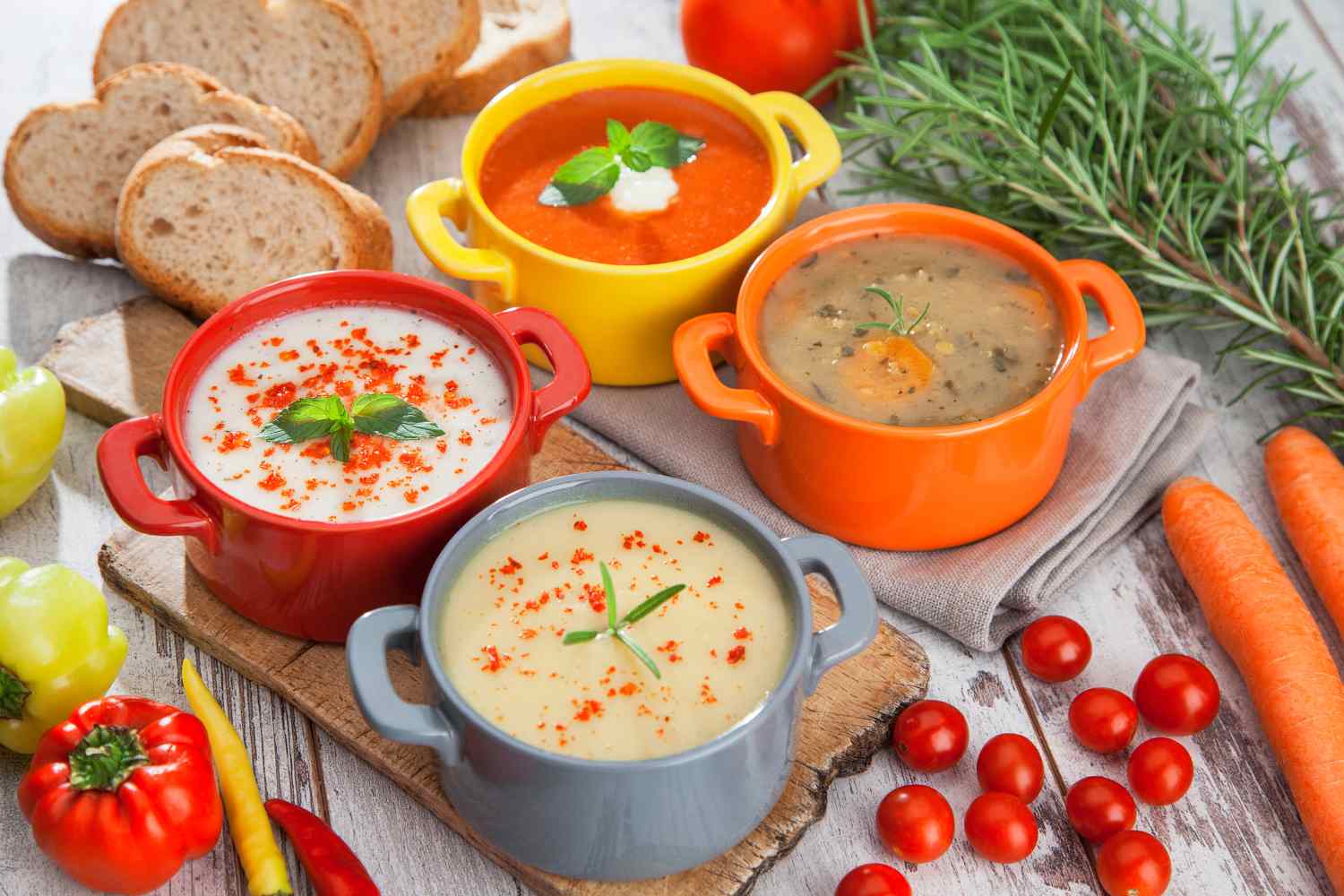
When the cold weather arrives, a hot dish is what we often need, a real “comfort food” for many of us. Soups and purees are the ideal choice as they often contain a good dose of vegetables and are rich in fibre. But which are the best among the ready-made ones we find at the supermarket?
The two winners tied with 100/100
In first place we find two products that have achieved the maximum score according to the analysis of Yuka, the free application that allows you to scan the barcode of food products by analyzing their composition:
1. Velvety soup with courgettes and peas – Alce Nero
This organic velouté obtained the perfect score of 100/100. The combination of peas and courgettes guarantees a good supply of fiber and proteins, while the extra virgin olive oil enriches the nutritional profile of the product.
2. Peasant soup – Vallericca (Lidl)
The soup from the Lidl brand tied for second place, also with a perfect score of 100/100. The traditional recipe combines legumes, vegetables and cereals in an organic preparation that provides 3.2 grams of protein per 100 grams.
The complete ranking of the best soups
Here are all the other soups that got great scores:
- Soup with quinoa and chickpeas – Zerbinati (90/100) – The richest in proteins of the entire selection thanks to the combination of quinoa, legumes and vegetables
- Light minestrone – Orogel (90/100) – Frozen formulated without legumes or potatoes, with reduced calorie content and high presence of fiber
- Tuscan soup – Conad (90/100) – Classic combination of beans, lentils, vegetables and cereals with excellent protein content
- Creamy carrot, ginger and cannellini beans – Esselunga (90/100) – Single portion that combines carrots, ginger and cannellini beans, a source of iron and rich in fiber and proteins
- Tuscan soup with 7 legumes – Coop (90/100) – Seven different types of legumes, reduced salt content and significant protein intake
- Traditional minestrone – Findus (90/100) – Recipe with potatoes, vegetables and DOP Genoese basil, rich in fiber and low in calories
- Soup with escarole, beans and artichokes – Dimmidisì (90/100) – Trio of Mediterranean ingredients with particularly appreciable fiber content
- Minestrone 16 vegetables – Delizie dal Sole (90/100) – Frozen with extraordinary variety: 16 different types of vegetables and legumes, without adding salt
ATTENTION: how to consume them safely
Before consuming ready-made refrigerated soups and purees, it is essential to pay particular attention to the heating method.
The Ministry of Health has introduced a new recommendation: boil products for at least 5 minutes before consumption. But according to a survey conducted by Il Salvagente, this is not enough.
The actual cooking times needed
To ensure that boiling is effectively achieved, the heating time varies from 7 to 11 minutes, depending on the composition of the product. Consequently, to comply with the ministerial recommendation, ready soups must be heated for at least 12 to 16 minutes.
The tests conducted by Il Salvagente have shown that the microwave oven, with these parameters, is not suitable: the soups are dry, unappetizing and, in some cases, almost inedible.
The critical points highlighted by the survey
The analyzes highlighted several weak points in the supply chain and in the preparation of refrigerated ready-made soups (technically called REPFEDs – Refrigerated Processed Food with Extended Durability):
1. Insufficient cold chain: the microbiological safety of these products is guaranteed only if they are kept at a temperature below 6°C for the entire duration of their shelf life. However, domestic refrigerators often record average temperatures between 8.5°C and 9.5°C, making these foods vulnerable.
2. Inadequacy of heat treatments: the pasteurization processes used (90°C for 10 minutes) do not eliminate Clostridium botulinum spores. The only solution is a cooking that guarantees the complete thermal destruction of the botulinum toxin. Health authorities recommend boiling the product for at least 5 minutes, but according to Il Salvagente the actual times are much longer.
3. Limitations of the microwave: to reach boiling point and respect safety parameters, the microwave is ineffective, as it alters the consistency and taste of soups.
Doubts about plastic containers
Another issue concerns the safety of plastic containers used for ready-made soups. With extended cooking times, is there a risk of releasing contaminants into the food?
The leading companies in the sector – DimmidiSì, Euroverde and Zerbinati – have reassured us that their polypropylene (PP5) trays comply with the European standards on MOCA (Materials in Contact with Food). These containers are tested to resist up to one hour at 121°C, therefore theoretically suitable to withstand the required heating times.
However, a technician interviewed by Il Salvagente underlined that, in light of the new ministerial indications, it would be necessary to subject all containers to new specific tests to definitively exclude the risk of migration of plastic components into food.
Il Salvagente’s investigation highlights that current solutions – such as simply changing labels – are not enough to guarantee our safety without compromising the quality of the product. An issue that requires further investigation and structural interventions by the authorities and companies in the sector.
Always read the labels and, above all, scrupulously follow the heating instructions to consume these products in complete safety.
