
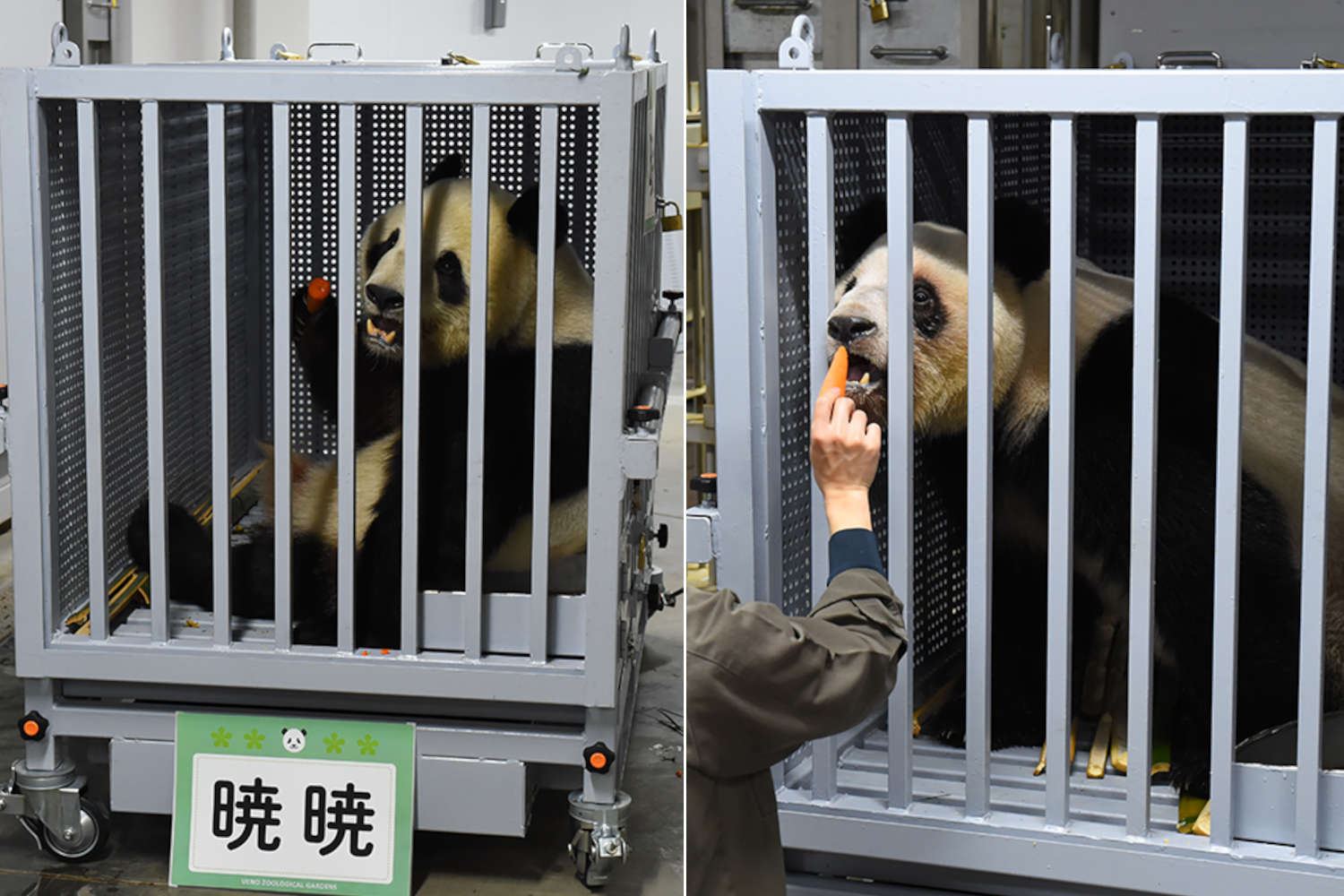
Today, January 27, the two giant pandas Xiao Xiao and Lei Lei will officially leave Ueno Zoo in Tokyo to return to China. In the days before departure, thousands of visitors crowded the park for a final farewell, transforming the event into a small collective ritual. The turnout was so high that it forced the zoo to introduce limited admissions, mandatory reservations and long waits, with queues that even exceeded three hours.
For many Japanese it was not just a matter of saying goodbye to two beloved animals (who unfortunately lived in captivity and will not return free), but of witnessing the end of an era: with their departure, Japan remains without pandas for the first time in over fifty years.
Two puppies born in Japan but “owned” by China
Xiao Xiao and Lei Lei were born in Tokyo in 2021, but like all giant pandas abroad, they do not belong to the country that hosts them. China considers the panda a national symbol and maintains ownership of each specimen, even when born outside its borders. The animals are only granted through temporary loan agreements, which provide for their return to their homeland after a few years.
The parents of the two cubs, Shin Shin and Ri Ri, had already returned to China in 2024, as had their older sister Xiang Xiang. Their departure therefore follows an already defined logic, but takes on particular weight in the current political context. The Ueno case brings the issue of panda diplomacy back to the center, a strategy used by Beijing for decades.
Panda diplomacy
Pandas are never given away, but lent as ambassadors of goodwill, within agreements that combine diplomacy, scientific cooperation and protection of the species. Hosting a panda means having strong relations with China, while failure to extend a loan may signal a cooling of relations.
Not surprisingly, the departure of the last pandas from Japan comes at a time of diplomatic tensions between Tokyo and Beijing. Similar situations have already occurred in the past in other Japanese cities, where the return of the animals has had a direct impact on local tourism.
Japan is not the only country involved in these exchanges. Today, Chinese giant pandas are present in several zoos around the world, especially in Europe and Asia. From Germany to Spain, from Belgium to Austria, up to Singapore and Russia, their presence represents still active bilateral relations with Beijing. All animals which, unfortunately, instead of living free in their habitat are forced into captivity inside zoos treated, as we have just seen, as if they were tourist attractions.
You might also be interested in:
