
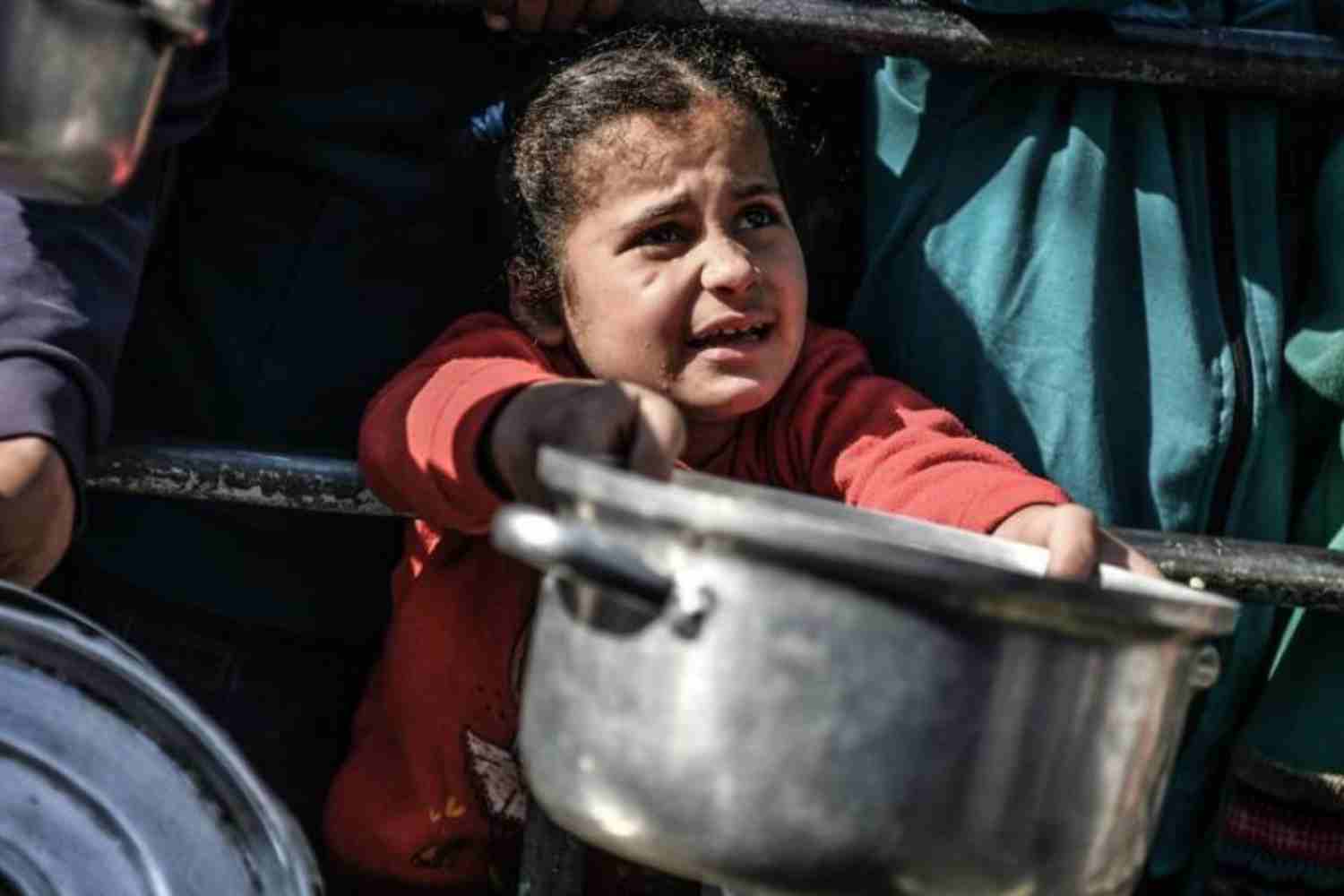
There is a way of doing politics that chooses a side, and the President of the Puglia Region Antonio Decaro did so, with a gesture that goes beyond symbolism: he signed the candidacy of the children of Gaza for the Nobel Peace Prize, promoted by the Brindisi association “L’Isola che non c’è”.
The choice of Puglia
The choice of Puglia is a clear stance that comes as the debate on the Nobel Peace Prize takes on surreal contours. While Prime Minister Meloni declared that she hopes “that we will be able to give the Nobel Peace Prize to Trump” and that she is ready to nominate him, Antonio Decaro does something different. Something that no Italian politician of this level had done before.
The announcement came in recent days, when Decaro explained that he had collected requests from citizens, intellectuals, trade unionists and students. The official signing took place during a public meeting in the Fresco Hall of the Aldo Moro University of Bari, where the regional councilor for Welfare Cristian Casili spoke on behalf of the Region.
The words with which Decaro justified his choice are clear and define a precise idea of politics:
It’s a choice that says which side we’re on. Because while some talk about peace by building walls, shooting at dissent and exchanging foreign policy for a game of Risk, we think that ‘peace builders’ are those who defend the freedom and dignity of people, starting from the little ones. They want us to believe that the true leader is the one who exercises the law of the strongest. We think, on the contrary, that the only true political force is peace.
Two opposing ideas of peace
The contrast is stark, on the one hand, those who nominate for the Nobel the president who gave the green light to ICE operations on American streets, those who unconditionally supported the war in Gaza, those who talk about “buying” Greenland and use tariffs as a geopolitical weapon. On the other, those who choose to be on the side of the children who suffer those wars firsthand.
There is a clear difference in the way of understanding international politics. Casili explained it well: “In a historical period in which this recognition is talked about, sometimes in an instrumental way, it seems necessary to remember the terrible daily sufferings of the Palestinian people.” It is not just about the destiny of Palestine, but about the future of entire generations who defend, through their survival, fundamental values such as freedom, education, peace and justice.
A necessary voice
Antonio Decaro proves himself, once again, to be a necessary voice in this country. That voice that does not confuse strength with arrogance, that does not exchange diplomacy with the adulation of the powerful in question, that does not believe that peace can be built with weapons or relationships of force.
Puglia thus becomes a leading region for the rights and defense of the Palestinians and Gaza. Not with abstract declarations of principle, but with concrete actions. Not by proclaiming one’s closeness to the powerful, but by taking the side of those who have no voice.
What does “building peace” mean?
This initiative says something important about what it means to truly be “peace builders”. It is not those who exercise the law of the strongest, it is not those who treat diplomacy like a board game, it is not those who promise military victories. They are those who defend the freedom and dignity of people, starting from the little ones. They are those who recognize that children – even those in Gaza – have the right to childhood, to life, to hope.
Puglia has chosen to take sides, and has done so together with dozens of personalities from the world of culture, economics, universities and civil society who have signed the candidature forwarded to the Norwegian Nobel Committee.
The candidacy will not resolve the conflict, but it is a way to break the silence and respond to violence with care for the most fragile. To bring attention to those who are too often forgotten in geopolitical analyses.
