
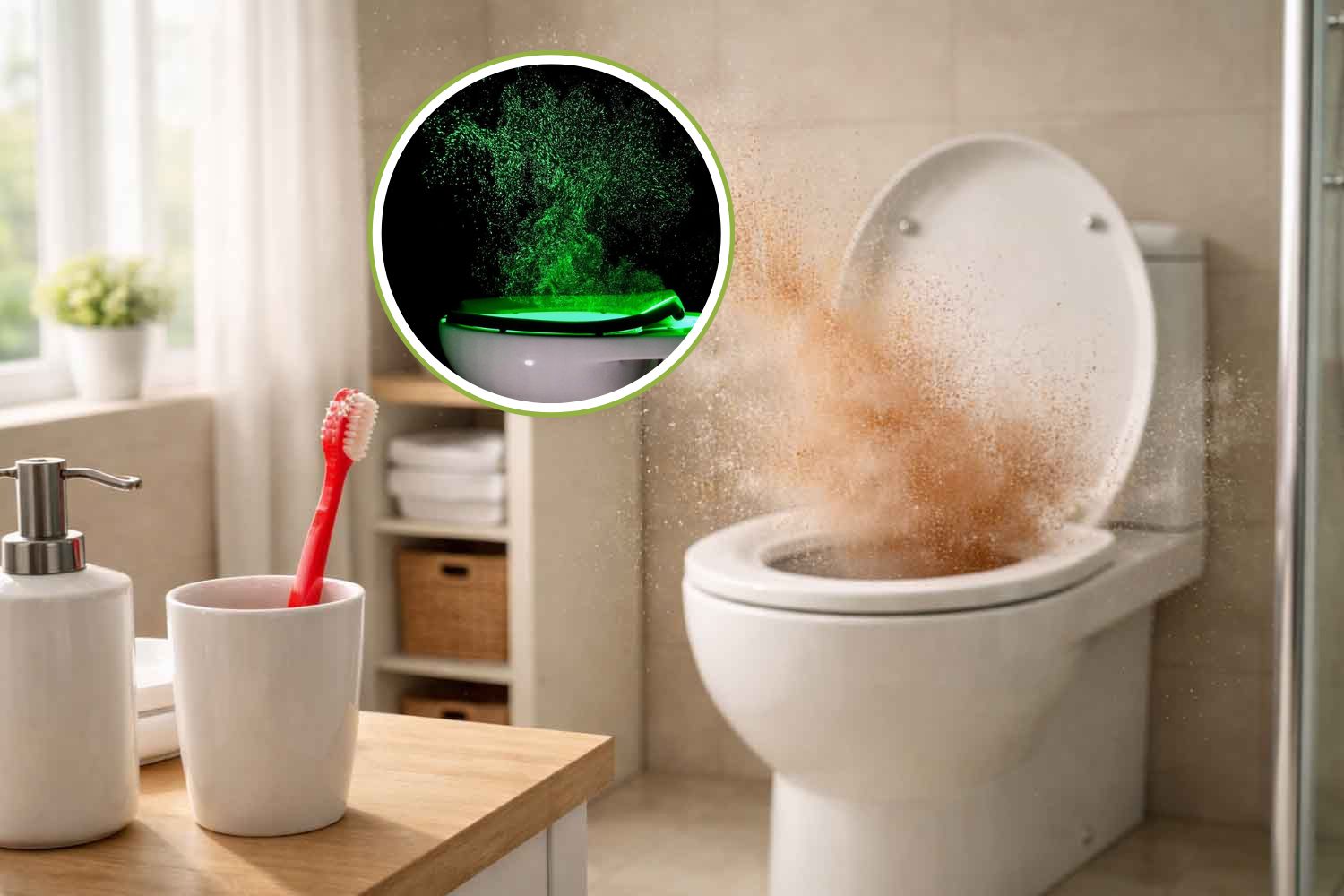
Bacteria from the toilet to the toothbrush is not an urban legend or an obsession of hygiene maniacs. For decades, science has carefully observed what happens every time we flush the toilet. And the conclusions, no need to go around it, are not at all reassuring.
The bathroom is one of the most paradoxical environments in the house: the elimination of body waste and the daily care of our personal hygiene coexist in the same space. A coexistence which, in light of the most recent research, presents more risks than we are led to imagine.
What happens when we flush the toilet
When the toilet is flushed, it doesn’t just take away what needs to be flushed out. The flow of water generates a phenomenon well known to scholars: the so-called toilet plumea cloud of micro-droplets that rises and disperses into the surrounding air.
The water used for discharge is initially drinkable and safe. However, the moment it comes into contact with urine and feces, the situation changes radically. The flushing process triggers a violent fluid dynamic event, studied since the 1950s and confirmed by 1975 research which demonstrated how toilet flushing was capable of spreading pathogens into the air.
There are two main mechanisms that produce aerosols. The first is splashing, or the impact of water against the ceramic, which generates relatively large drops, often exceeding 50 micrometres. These heavier particles tend to settle on surfaces close to the toilet, contaminating floors and objects in the immediate area.
The second mechanism is bubble bursting. During the discharge, large quantities of air are trapped in the water and rise in the form of bubbles which, exploding to the surface, produce microscopic particles. These droplets are light, remain suspended in the air for hours and can travel astonishing distances, often exceeding 1.8 metres. Poor ventilation and sanitary design contribute to further amplifying dispersion.
The toothbrush: why it is one of the most exposed objects
If the toilet is the source, the toothbrush is a favorite target. Its structure makes it anything but neutral. The nylon bristles, dense and close together, create a capillary effect that absorbs humidity and traps particles from the bathroom air.
A study conducted by Quinnipiac University found the presence of fecal coliform in 60% of toothbrushes analyzed in shared bathrooms. The most disturbing fact is that, in 80% of cases, those fecal residues didn’t even belong to the owner of the toothbrush.
Yet, the toothbrush is not a passive object. Subsequent research, such as the project known informally as “Operation Pottymouth,” has shown that the bristles host a veritable microbial community. Daily exposure to toothpaste, saliva and food residues favors the growth of oral bacteria which, in part, are able to counteract those coming from the toilet. This does not mean the absence of contamination, but a reduction in the load of external pathogens.
The type of toothbrush also matters. Some electric models with hollow heads, designed to transmit movement through an internal shaft, can accumulate up to 3,000 times more microorganisms than traditional toothbrushes. A real highway for bacteria.
Closing the lid or covering the toothbrush is not enough
The most popular idea is simple: lower the toilet lid before flushing. Unfortunately, fluid dynamic analyzes and a 2024 study published in theAmerican Journal of Infection Control demonstrate that effectiveness is limited. With the lid closed, the aerosols do not disperse upwards, but are pushed sideways, still contaminating the environment.
Toothbrush covers also seem like an intuitive solution, but they present a serious problem: they retain moisture. Recent studies have found a greater presence of Candida and Pseudomonas on covered toothbrushes, microorganisms potentially as dangerous as those carried by the toilet plume.
The most effective strategy is a combination of several measures. Chemical disinfection remains the main weapon. Toothbrush holders with UV light are able to significantly reduce the bacterial load on the bristles, although they only act on directly exposed surfaces. Regularly cleaning the toilet with disinfectants reduces the amount of pathogens at the source, making the aerosol cloud much less of a problem.
Distance also matters: keeping the toothbrush at least two meters from the toilet, even better if inside a well-ventilated cabinet, helps to limit exposure. It is essential to allow the toothbrush to dry completely: persistent humidity is an open invitation for unwanted microorganisms.
The toilet plume it is an inevitable consequence of traditional exhaust systems. Until we widely adopt vacuum toilets used on airplanes, living with this reality is inevitable. The goal is not absolute sterility, but to reduce cross-contamination and, above all, the disgust factor. Often, small gestures make a big difference.
You might also be interested in:
