
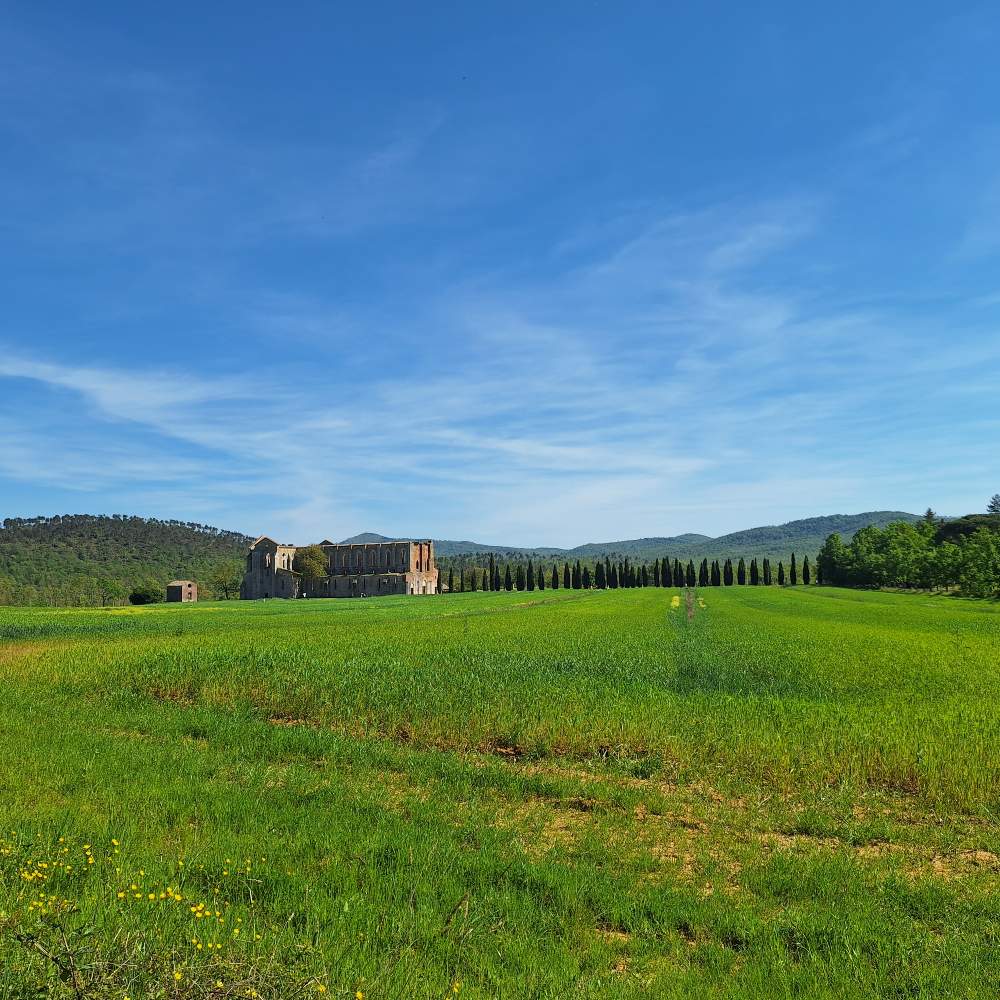
We arrived in Val di Merse, in the southwestern part of the province of Siena, on a clear and warm afternoon. The soft hills, the dense woods and the almost absolute silence are the setting for one of the most enigmatic places in Tuscany: the Abbey of San Galgano. It is not just a destination to visit, but an experience to go through slowly, step by step, letting history, spirituality and legend intertwine without forcing.
The impact with the roofless abbey
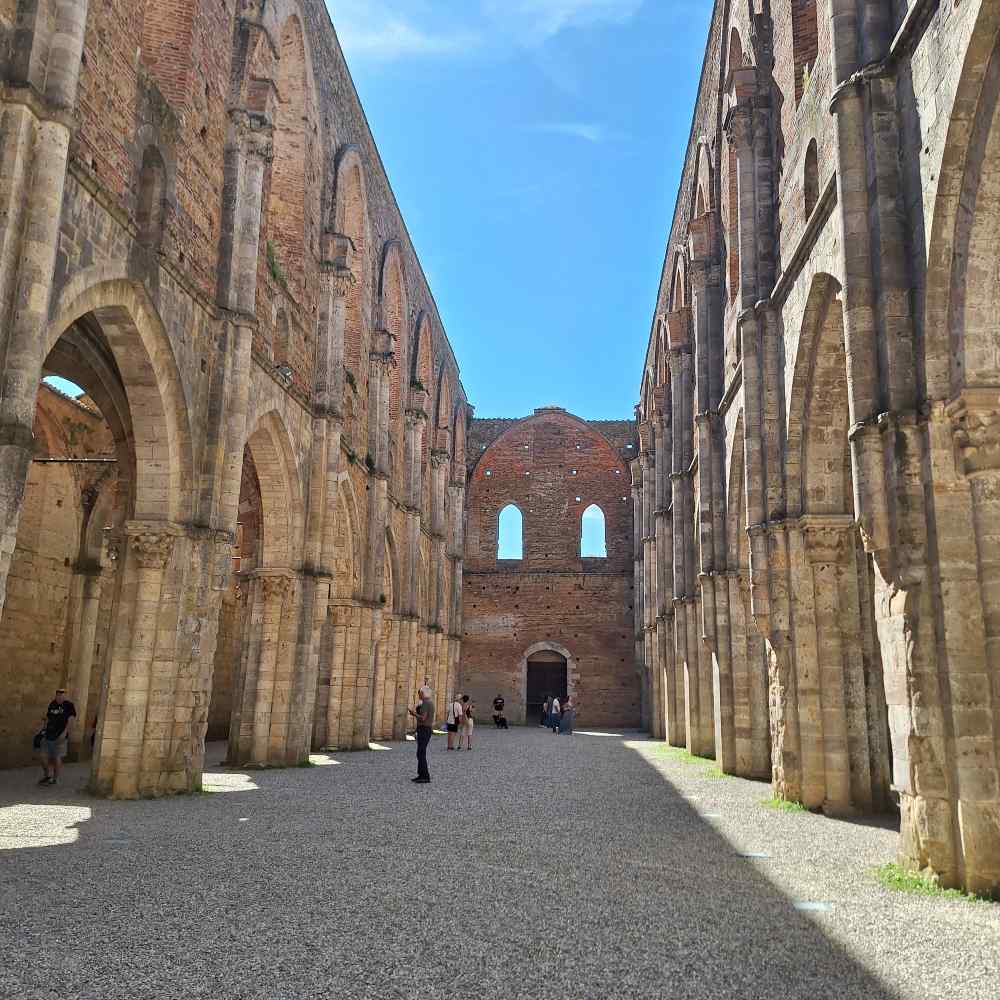
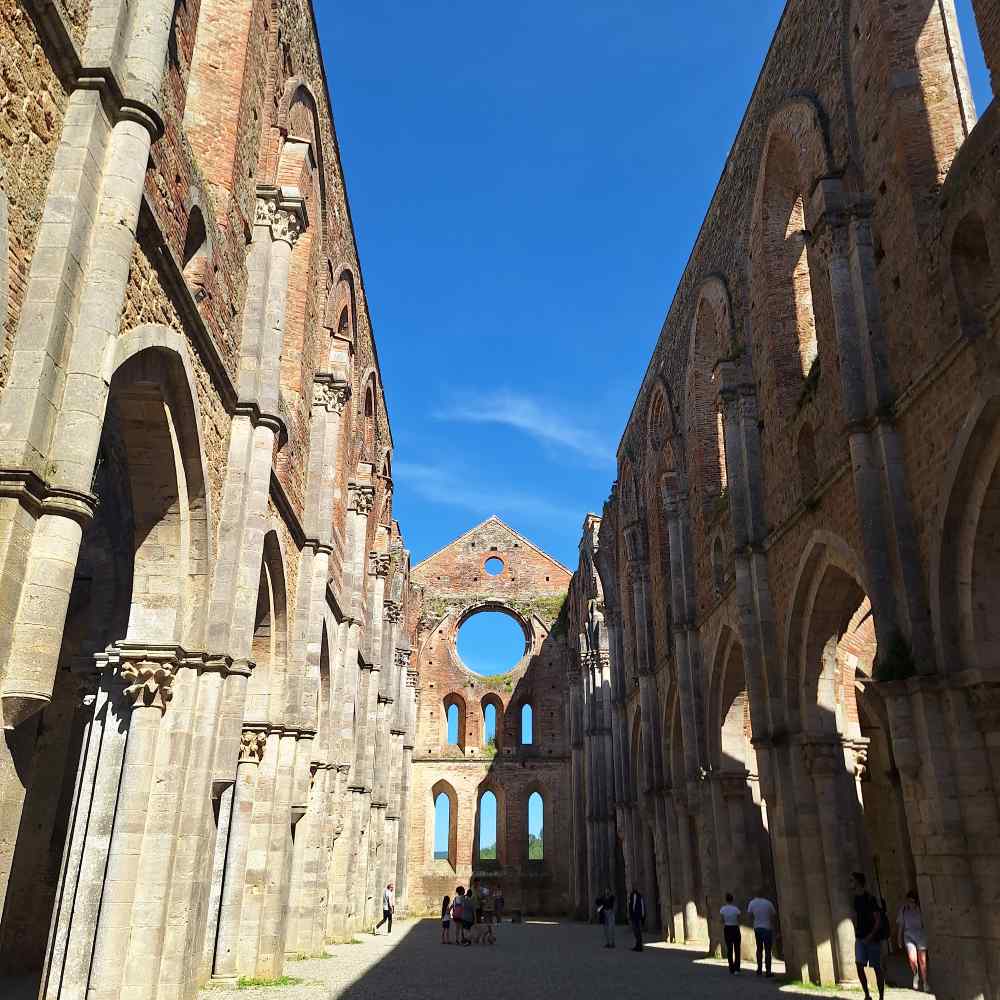
The first vision is powerful and unsettling: an image that immediately struck us and which remains in our memory for a long time. The Gothic walls of the abbey stand out against the sky, without cover, as if time had decided to stop an instant before the final collapse. Entering the nave means walking under the sun, with the light falling directly onto the ancient floor and drawing clear shadows on the columns. The absence of the roof, a consequence of the collapse that occurred in 1786 after a lightning strike on the bell tower, is not a lack: it has become the element that makes this place even more unique.
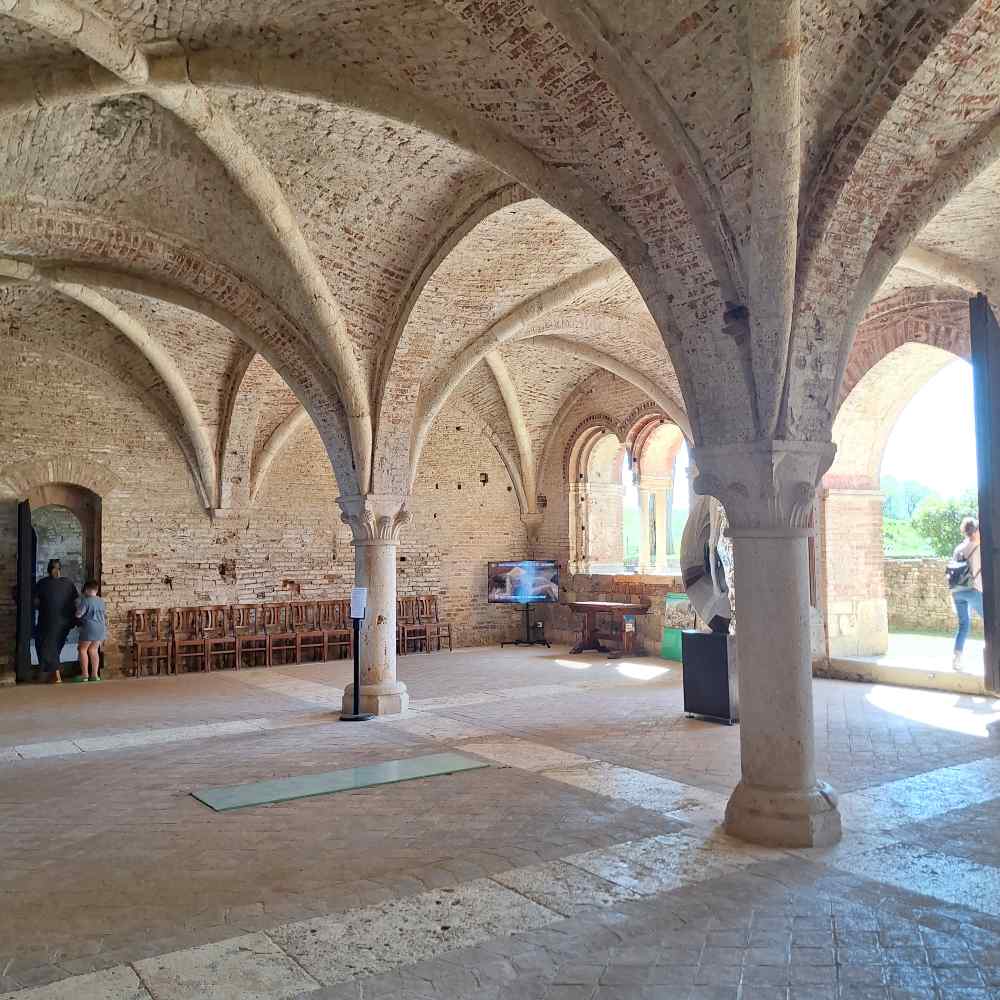
Walking among the remains of the church and monastery, we retraced the history of the Cistercian monks, who arrived here at the end of the 12th century. Faithful to the rule of Saint Benedict, they sought rigor, essentiality and a direct relationship with work and prayer. The abbey, consecrated in 1288, reflects these principles: severe architecture, reduced decorations, balance between Romanesque and Gothic. A place designed to last, which instead experienced famine, plague and slow abandonment.
Towards Montesiepi and the hermitage of San Galgano
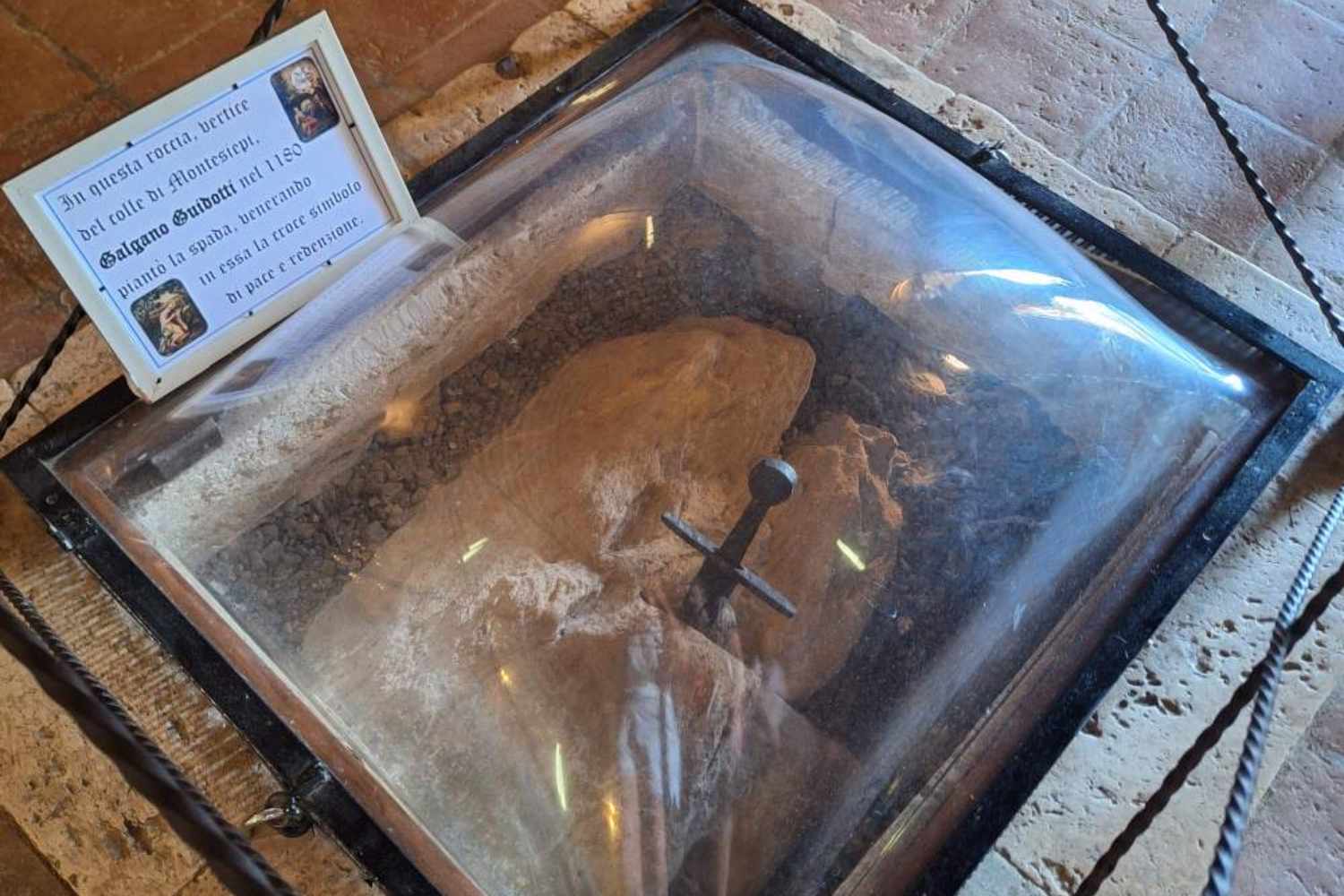
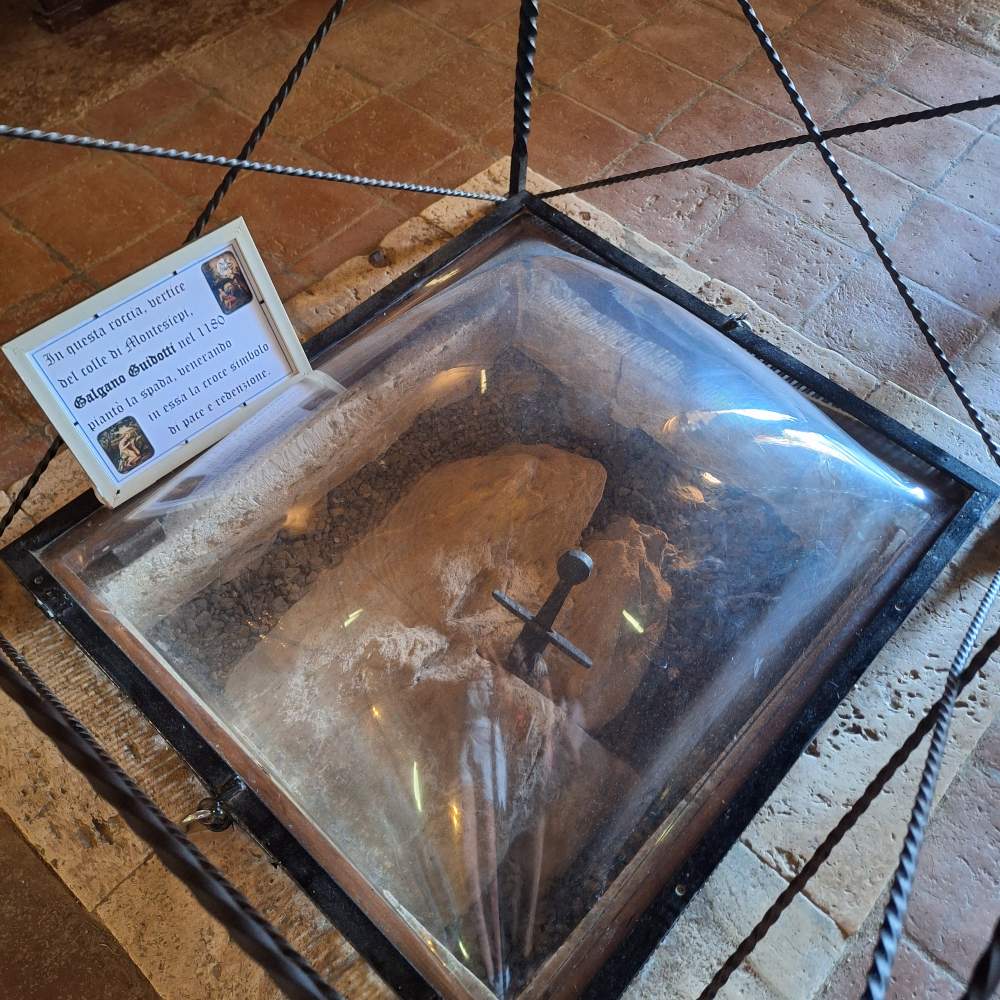
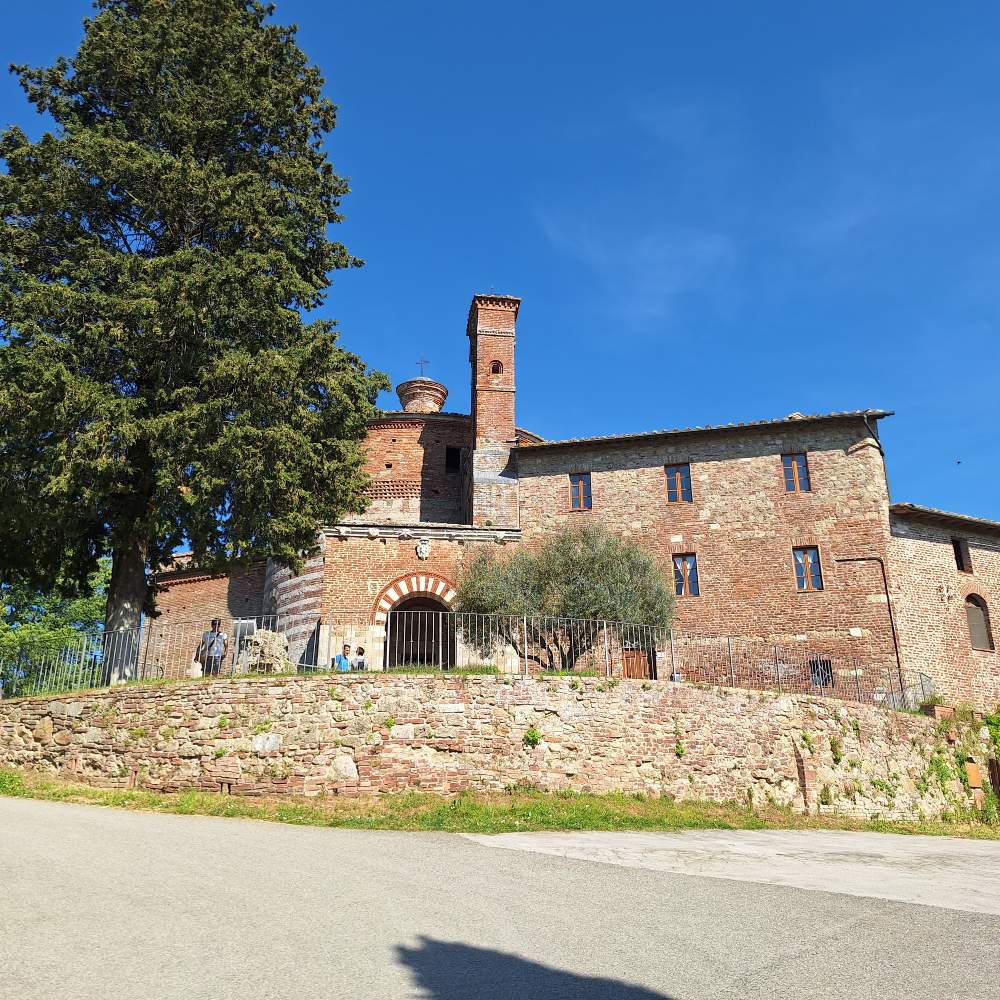
From the abbey we moved on foot along a slightly steep road (but don’t worry, you can also take the car and park comfortably a few steps away) immersed in the woods towards the Montesiepi hill, where the landscape becomes even more intimate. Here stands the hermitage of San Galgano, a circular chapel which seems to dialogue with Arthurian legends in terms of shape and atmosphere. Inside, the light is soft, the silence almost absolute. In the centre, protected by a display case, is the sword in the stone: not a scenographic object, but the fulcrum of a story that has its roots in the Middle Ages.
The figure of Galgano Guidotti accompanies every step of our visit. Born in 1148 to a noble family, he was a violent and restless knight before a radical conversion. According to tradition, after a vision of the Archangel Michael, he decided to renounce weapons and worldly life. The gesture of sticking the sword into the stone was a symbolic act of peace: transforming an instrument of war into a cross. Galgano died here in 1181, after just eleven months of hermit life.
It’s impossible not to think of King Arthur and The sword in the stonebut the line between legend and reality is clearer than it seems. Galgano is a historically documented character, canonized in 1185, even before the Arthurian cycle took shape in medieval literary works. Scientific analyzes conducted on the sword confirmed a medieval origin, compatible with the 12th century. This doesn’t dissolve the mystery, but it makes it more fascinating. And our emotion in contemplating the sword is palpable and worth the journey.
Light, stone and silence: far beyond the “usual” tourist attraction
Remaining seated in the hermitage for a few minutes means perceiving the value of slow time. The circular structure, the vault with concentric rings, the fourteenth-century frescoes attributed to Ambrogio Lorenzetti tell of a concrete spirituality, linked to the earth and light. Outside, the wind moves the trees and the profile of the abbey appears, downstream, like a large stone skeleton surrounded by greenery.
San Galgano is not just a tourist destination. It is a place that demands attention, respect and listening. Walking among its ruins, we had the feeling that every stone held an untold story, every opening towards the sky was an invitation to look beyond. A trip here is not limited to a visit: it is a return to an essential Tuscany, far from the most crowded routes, where the past continues to dialogue with those who are willing to slow down.
You might also be interested in:
