
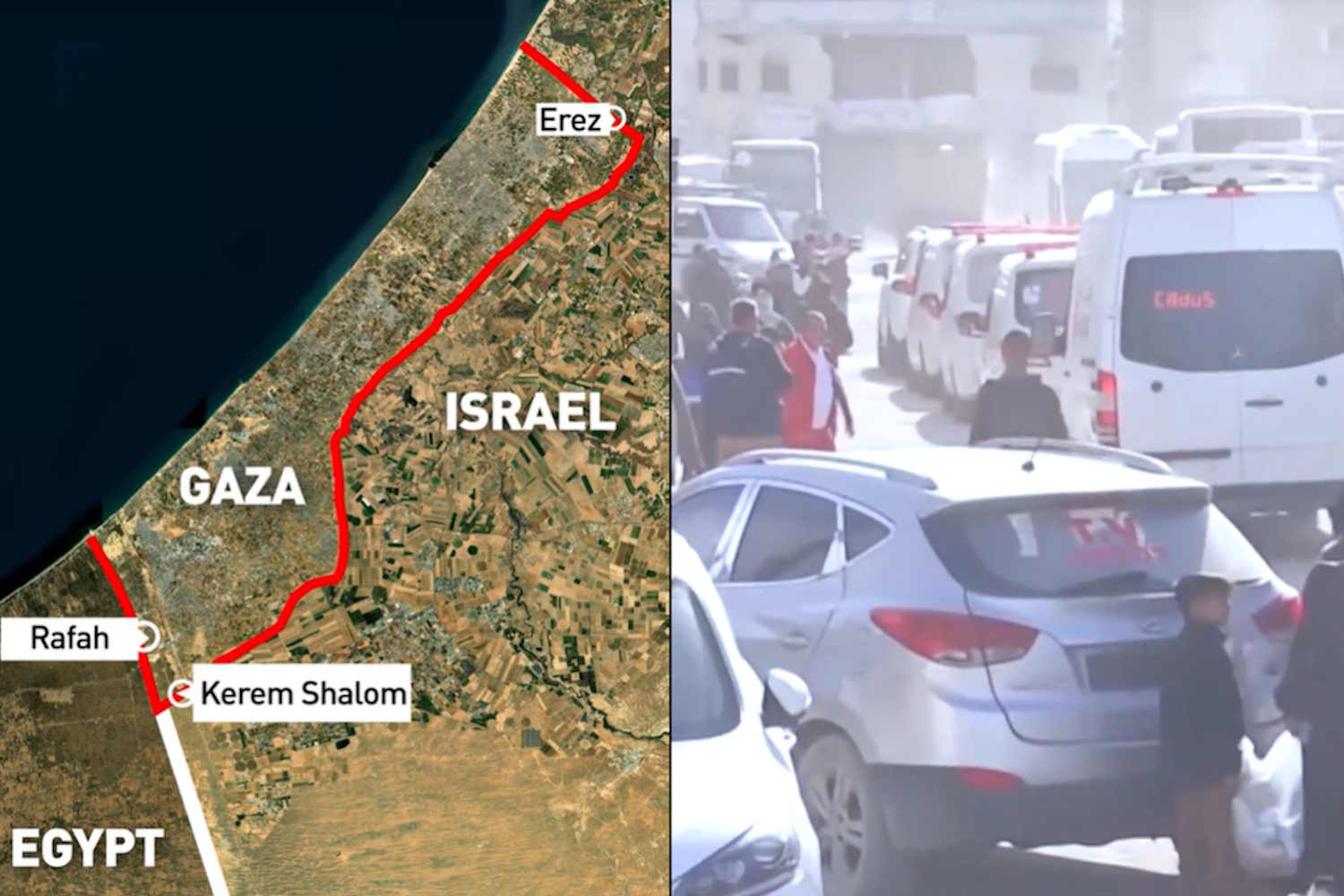
The reopening, albeit partial and highly limited, of the Rafah crossing – in the south of the Gaza Strip – lights up a spark of hope, after two years of almost total closure. But together with hope, as the United Nations says, a profound fear also grows, made up of uncertainty, violence and expectations that seem to never end.
Why? Because the crossing of Rafah crossingthe only crossing point between Gaza and Egypt, represents the only way for the Palestinian population to leave the enclave and access life-saving medical care, impossible to guarantee within a healthcare system devastated by war. All this, in the midst of a ceasefire announced last October that is barely holding, amidst constant bombing and ever-increasing civilian casualties.
UNRWA, the UN agency that assists the Palestinian people, describes the climate in Gaza. Sam Rose, Acting Director of UNRWA Affairs in Gaza, spoke of “contrasting dynamics”: on the one hand an important step forward such as the reopening of Rafah, on the other 30 Palestinians killed in air raids in the last 24 hours.
@eye0500 Rafah crossing reopens (Feb 2, 2026). Ambulances from Egypt entered Gaza to evacuate wounded Palestinians after the border reopened under tight restrictions. Only limited medical cases are allowed daily, prioritizing the critically injured. Gaza’s health system is overwhelmed, and thousands still need urgent treatment outside the Strip. This is a lifeline — but far smaller than the scale of the humanitarian need. Source: Reuters, UN OCHA #Gaza #RafahCrossing #MedicalEvacuation #HumanitarianCrisis #Palestine
♬ original sound – 𝔼𝕪𝕖
The result is a population suspended between the hope of being able to go out, get treatment, start breathing again and the concrete fear that everything could stop again at any moment. On the ground, the United Nations explains, access remains limited, the risks for the protection of civilians are high and the humanitarian needs remain enormous.
Only 50 people per day
The reopening of the crossing was one of the points of the 20-point peace plan presented last September by Donald Trump. But, in fact, it is a symbolic opening: only about 50 Palestinians a day can enter or leave Gaza, exclusively on foot.
We talked about it here: Is the end of the massacre in Gaza near? What Trump’s 20-point “Middle East Peace Plan” provides
The transition is coordinated with Egypt and supervised by the European Union, under the monitoring of the UN office for humanitarian affairs, OCHA. The procedures are long and complex: only residents who left Gaza during the war can return, subject to Israeli authorization, with double identity and security checks, including a corridor under Israeli military control.
“We’re seeing really competing dynamics here: on the one hand, positive progress with the reopening of Rafah, yet over the past 24 hours, 30 Palestinians were killed in airstrikes during a ceasefire,” UNRWA Sam Rose tells @BBCNews.
For #Gaza‘s population, fear and uncertainty… pic.twitter.com/rmzGbHqGbu
— UNRWA (@UNRWA) February 2, 2026
The UN Development Program (UNDP) has arranged bus transport for the returns, arriving at the Nasser hospital in Khan Younis, where a reception point has been set up with the support of UN agencies and NGOs. Psychologists and protection specialists work here, while food, information materials and internet access are distributed: small gestures, but fundamental for people arriving from months of isolation and trauma.
The reopening of the crossing also allowed the resumption, albeit minimal, of medical evacuations, with the support of the World Health Organization. But the numbers speak for themselves: the last medical evacuation through Rafah dates back to May 2024, today, over 18,500 patients in Gaza, including 4,000 children, are still waiting for treatment abroad.
Meanwhile, desperation grows. Dozens of injured people protested in front of the hospital, sitting in their wheelchairs, demanding that the number of people allowed through should not be 50, but hundreds per day. According to local testimonies, in one building alone there are around 100 patients awaiting transfer, while the total number of wounded requiring treatment outside Gaza exceeds 13,000 people.
@translating_falasteen “No to forced migration!” a woman shouts as 15 women and children arrive at Nasser Hospital in Khan Younis after crossing the Rafah land crossing from Egypt. They had left Gaza for medical treatment abroad during the genocide. Today marks the first day Rafah has reopened in both directions since May 2024. Despite returning after months outside Gaza for treatment, the message was clear: leaving was never a choice, and return is an act of defiance against ethnic cleansing, as families insist on staying rooted in Gaza despite the Israeli occupation’s horrific crimes.
♬ original sound – Translating Falasteen – Translating Falasteen
For OCHA, the most effective solution would be to resume transfers to the West Bank, including East Jerusalem, and rebuild damaged health facilities in Gaza. Meanwhile, UN member states are called upon to welcome more patients, because time, for many, is a luxury that no longer exists.
Finally, the reopening of Rafah also concerns the entry of aid. Between January 23 and 29, at least 13,800 pallets of humanitarian aid were unloaded, mostly food, but also tents, school supplies, medical supplies, fuel and nutrition kits. Since the announcement of the ceasefire, a total of over 270,000 pallets of goods have entered, important numbers, yes, but still insufficient compared to enormous needs.
