
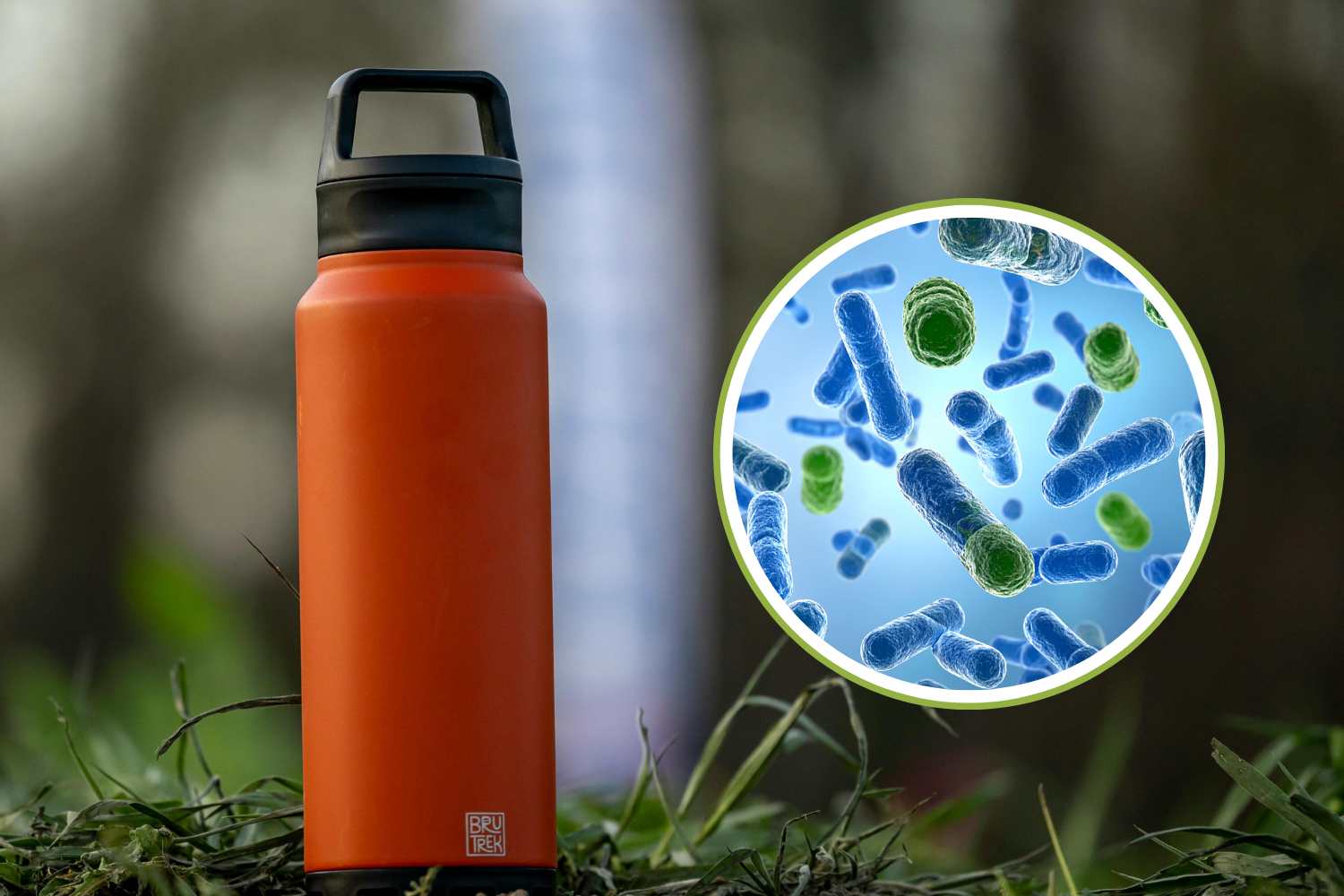
Do you think your water bottle only contains water? You are very wrong. If you don’t clean and sanitize it regularly, what you carry with you every day could be a real incubator for microorganisms. This is demonstrated by microbiologist Alessandro Mustazzolu who shared a video on social media that is causing discussion.
In the video, the microbiologist takes a sample from the internal surface of a water bottle used daily and analyzes it under a microscope. The result? A swarm of moving microorganisms, a real “microbial party” that takes place without the knowledge of those who drink calmly from their water bottle.
The water bottle is not just water: if you don’t clean and sanitize it, it can become a small incubator for bacteria – explains Mustazzolu – Carrying it with you every day also means carrying high microbial loads with you. Hygiene makes the difference.
Because water bottles are the ideal environment for bacteria
But why do water bottles so easily become a perfect habitat for microorganisms? The conditions are ideal: presence of organic residues (the “food” for bacteria), darkness, continuous agitation and, above all, the continuous supply of microbiota from our mouth every time we drink.
As the microbiologist himself explains in the comments on the video, there can be high levels of any species in the water bottles given the ideal conditions. And the problem does not only concern pathogenic bacteria – those that cause diseases – but also apparently harmless ones.
A fundamental concept that is often overlooked is that of microbial load: the presence of pathogens is not necessarily necessary to have health problems. “Paradoxically you can get sick with large quantities of ‘common’ germs and not with traces of pathogens“, clarifies Mustazzolu.
When bacteria, even non-pathogenic ones, multiply to very high levels, they can produce toxins capable of causing gastrointestinal disorders and other discomfort. High bacterial loads can cause damage, especially to young children, whose immune system is still forming.
Then there is another worrying aspect: even “common” bacteria can carry antibiotic resistance genes, which can then be transferred to other germs, contributing to the serious problem of antimicrobial resistance.
View this post on Instagram
The golden rules for using water bottles safely
However, using water bottles remains an ecological and convenient choice compared to disposable bottles. The important thing is to follow some simple hygiene rules, as reminded by the National Center for Water Safety (CeNSiA) of the Istituto Superiore di Sanità.
Change the water frequently
Especially in summer, with high temperatures, it is essential to change the water often: at least every 4-5 hours. Never fill the bottle to use it for more than 24 hours. Before filling it, rinse it with two or three washes.
Avoid promiscuous use
By drinking, we ourselves contaminate the water contained in the bottle with the microbiota of our mouth. This is why it is important that each water bottle is for strictly personal use.
Protect it from heat
Never leave the bottle under the sun or at high temperatures. When you’re at the beach, keep it inside a cooler bag or under the umbrella. If possible, use a thermal water bottle, which is designed to keep water cold longer.
Wash it daily
The bottle must be washed once a day, using a pipe cleaner and normal dish detergent, and rinsed with fresh running water. If your bottle allows it, it is preferable to wash it in the dishwasher.
Don’t forget caps and gaskets
Caps and seals are the parts most in contact with the neck of the bottle, where we rest our lips during use. Failure to clean or poorly clean these accessories could contaminate a perfectly clean water bottle. It is necessary to wash them periodically, preferably in the dishwasher or with normal dish detergent.
Eliminate odors with baking soda
To remove odors that can form over time, pour hot water and a teaspoon of bicarbonate into the bottle, close it, shake it and let it rest for a few hours (preferably overnight). Then empty it and rinse it with fresh running water.
Next time you fill your water bottle, remember those microscope images. And above all, remember to wash it. Everyday.
