
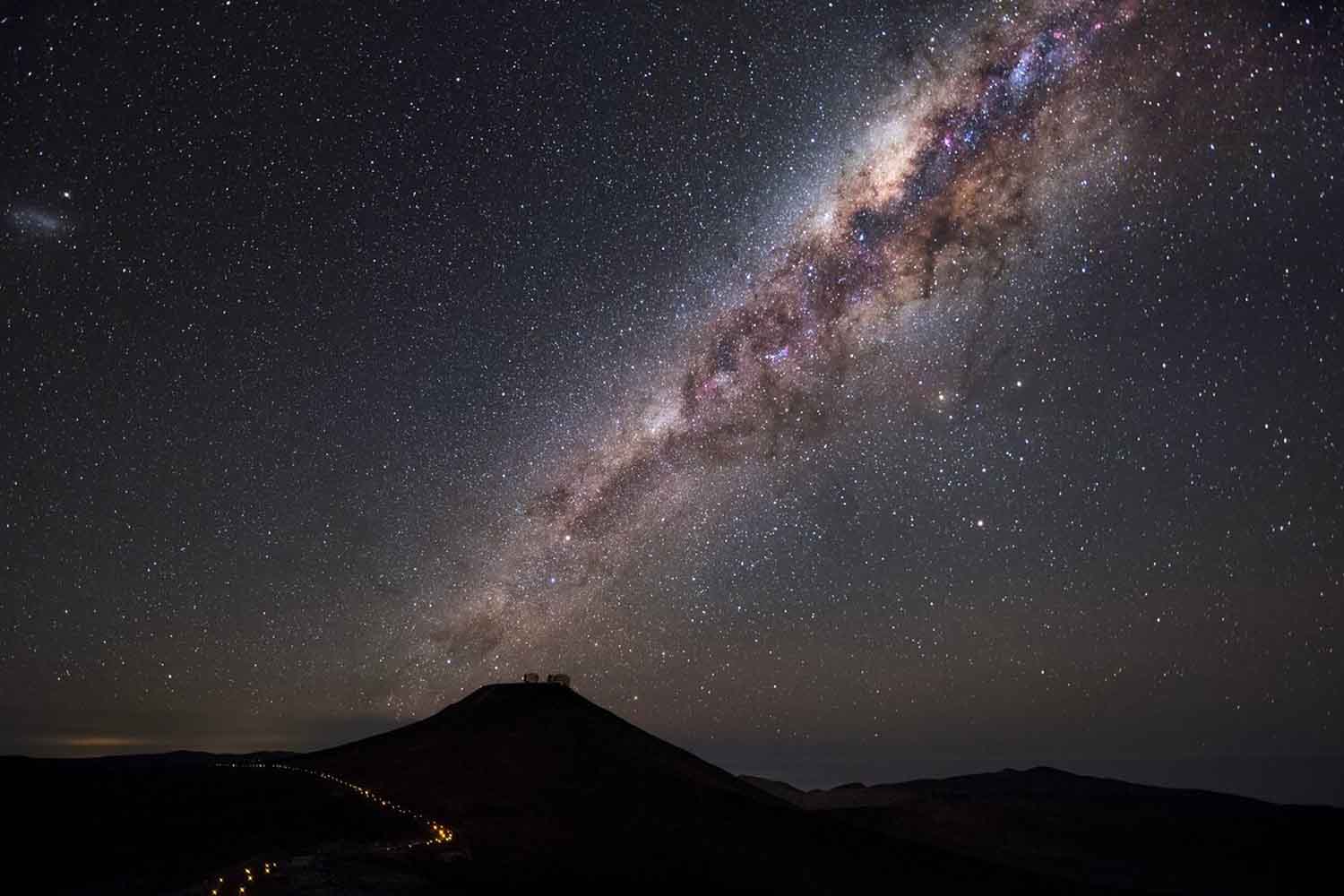
Good news, finally, comes from Chile and concerns one of the most precious natural and scientific heritages on the planet: the darkest and clearest sky in the worldthe one that overlooks the Atacama desert. After months of controversies, technical studies and increasingly clear positions taken by the international scientific community, the industrial project Innaplanned a few kilometers from the Paranal Observatory, seems destined to stop.
The company AES Andes has in fact announced its intention to definitively withdraw the projecta maxi complex for the production of green hydrogen and ammonia that could have irreversibly compromised one of the purest starry skies on Earth. A turning point welcomed byEuropean Southern Observatoryalthough caution remains a must until formal confirmation of the withdrawal by the Chilean Environmental Assessment Service.
Defending the darkest sky in the world: a heritage that belongs to all of us
This is not an ideological battle nor a rejection of renewable energy. The crux of the matter is location chosen for the Inna projecttoo close to an area considered unique in the world for astronomical observations. According to a technical analysis by ESO, published in recent months, the impact of the industrial complex would have been anything but marginal.
The increase inlight pollutionestimated in some simulations to be over 30%, would have altered the natural darkness of the night sky. They would have added to this microvibrationsgreater presence of fine dust and an increase in atmospheric turbulenceall factors capable of compromising the work of some of the most advanced scientific instruments in the world.
At stake is the future of infrastructures like the Very Large TelescopeThe VLT InterferometertheExtremely Large Telescopestill nearing completion, and the CTAO-Southdedicated to the study of gamma rays. Structures that function thanks to a very delicate environmental balance, which a large industrial area could have broken forever.
The Atacama desert, the starry sky and a lesson that also concerns Europe
The Inna case has put the spotlight on a broader issue: the lack of clear and binding rules to protect the areas around astronomical observatories. As ESO has highlighted several times, northern Chile is considered the best location in the world for optical astronomy, thanks to exceptionally dark skies, dry air and stable atmospheric conditions.
Yet, without adequate protections, even these places can become vulnerable. The international mobilization that accompanied the Inna case – scientists, associations, ordinary citizens – demonstrates how much the issue of protection of night skies be felt far beyond the Chilean borders. Because that sky above the Atacama Desert it is not just a tool for research: it is a common good, a piece of nature that tells of our relationship with the universe.
AES Andes’ decision to take a step back, officially motivated by the desire to concentrate investments on other renewable energy projects, could become an important precedent. A clear signal: ecological transition and environmental protection cannot proceed in watertight compartmentsbut they must dialogue, especially when there is something at stake that cannot be restored.
