
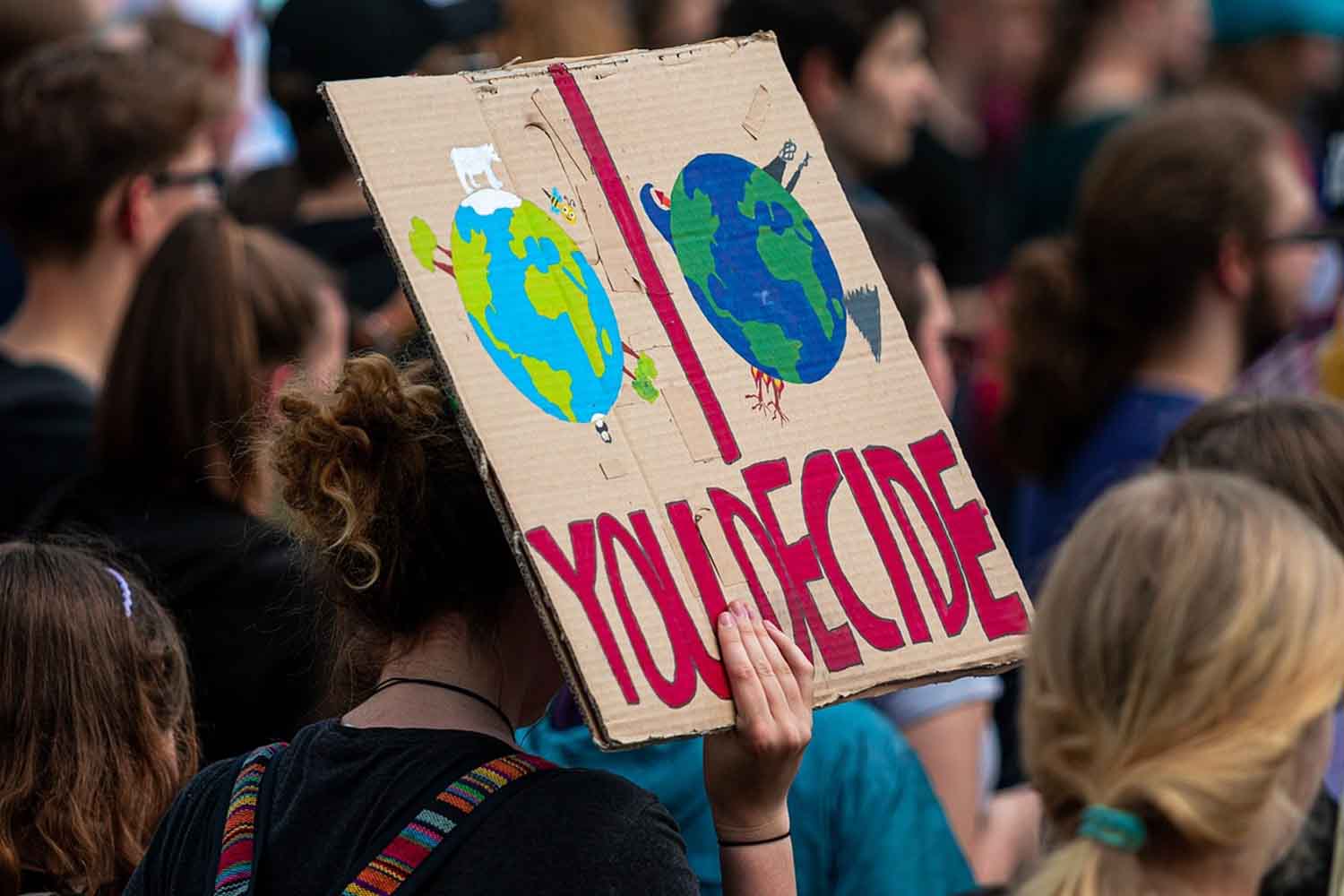
Protesting is good for your mental health and is not a slogan. It is a fact that emerges from years of studies in social psychology and which today becomes particularly understandable by looking at what happens in the squares, in the streets and in people’s bodies.
In the United States, the beginning of 2025 brought with it an escalation of tensions that in many cities resulted in ICE raids, arrests of protesters and violent clashes. In Minneapolis, in particular, the operations involved schools, kindergartens, homes and workplaces, stoking fear and anger in a community already under pressure. The answer came from below. Many people took to the streets to protect their most vulnerable neighbors, transforming the protest into a concrete gesture of alliance and presence.
Within a context marked by chronic stress and a widespread sense of helplessness, these mobilizations tell something that goes beyond politics. Research in social psychology shows how protesting activates profound mechanisms of emotional connection, stress regulation and sense of purpose, with measurable effects on individual well-being.
Social connection, emotional synchronization and psychological benefits
Studies on collective movements describe protest as a relational experience even before an ideological one. Being in the square means sharing a space, feeling other bodies nearby, moving at the same rhythm. This participation lowers the feeling of isolation and supports emotional regulation that occurs together with others.
Scientific literature highlights that participation in protests arises from strong emotional and identity factors. People become active when they perceive an injustice affecting the group, when they feel confidence in collective efficacy and when they recognize part of their values in the cause. A meta-analysis cited in a recent review indicates a significant correlation between moral belief and protest participation, based on dozens of studies and thousands of people.
This dimension explains why protesting resembles a gesture of internal realignment. Values, identity and action find a common direction. The body follows what the mind feels is coherent. From here comes a feeling of relief that many people recognize immediately, even without knowing how to explain it.
Collective effervescence, shared emotions and social well-being
A decisive contribution comes from an international study dedicated to the demonstrations of March 8, 2020, analyzed as true collective rites. The research involved almost three thousand people between Europe and Latin America, distinguishing those who had participated in person from those who had followed the events through media and social media.
The heart of the study concerns synchronization. Moving together, looking in the same direction, singing, walking at the same pace generates behavioral synchronization which translates into perceived emotional synchronization. Emotions align and amplify within the group. It is that feeling of shared energy that the sociologist Émile Durkheim called collective effervescence.
The results show higher levels of social well-being among demonstration participants. Cohesion, a sense of belonging, contact with one’s own values and the motivation to continue the collective commitment grow. The study also highlights a gender dimension. Women and non-binary people report a more intense experience on an emotional and relational level, especially when the mobilization directly concerns the rights that involve them.
From a statistical point of view, emotional synchronization is strongly associated with positive and self-transcendent emotions. The sequence that emerges appears clear: participation, synchronization, effervescence, social well-being. The emotional quality of the shared experience makes the difference.
These results fit into a broader framework that describes protest as a predominantly peaceful phenomenon. The most widespread forms remain marches, processions and assemblies. Contexts perceived as safe favor the emergence of emotional and relational benefits linked to participation.
From international to Italian markets
In recent months this has also been seen in Italy with the Global Sumud Flotilla. A distant event, on the open sea, has brought presences here. Full squares, spontaneous demonstrations, banners hanging from balconies, people taking to the streets in many Italian cities. Large organizational structures were not needed. It was enough to be there.
The same atmosphere described by the studies was created in those squares. Bodies walking together, shared silences, repeated gestures. For many people that presence meant feeling less alone, less crushed by emotions that were difficult to bear individually. A collective experience that transformed a personal feeling into something more breathable because it was shared.
When repression and stress interrupt the benefits of protest
The literature on collective effervescence also shows a clear limitation. The psychological benefits of protest depend on the conditions in which the experience occurs. The square supports well-being when it is experienced as a relatively safe space, capable of containing emotions and promoting shared regulation.
When the context slips into acute stress, marked by the use of force, encirclement or perception of constant threat, the virtuous mechanisms described by the research tend to collapse. The nervous system goes into survival mode. Attack, flight or immobility take over. Emotional synchronization changes form and can transform into contagion of fear, anger and disorientation.
Some recent episodes that occurred in Italy, such as those linked to the Turin protests, show in a concrete way what studies indirectly suggest. When tension exceeds a certain threshold, emotional synchronization no longer generates effervescence. The protest temporarily loses its function as a space for regulation and collective care and becomes a psychologically destabilizing experience for those who demonstrate and for those called upon to manage public order.
This does not disprove the research, on the contrary, it completes it: protest is good for mental health as long as it remains an experience of belonging, not of survival.
You might also be interested in:
