
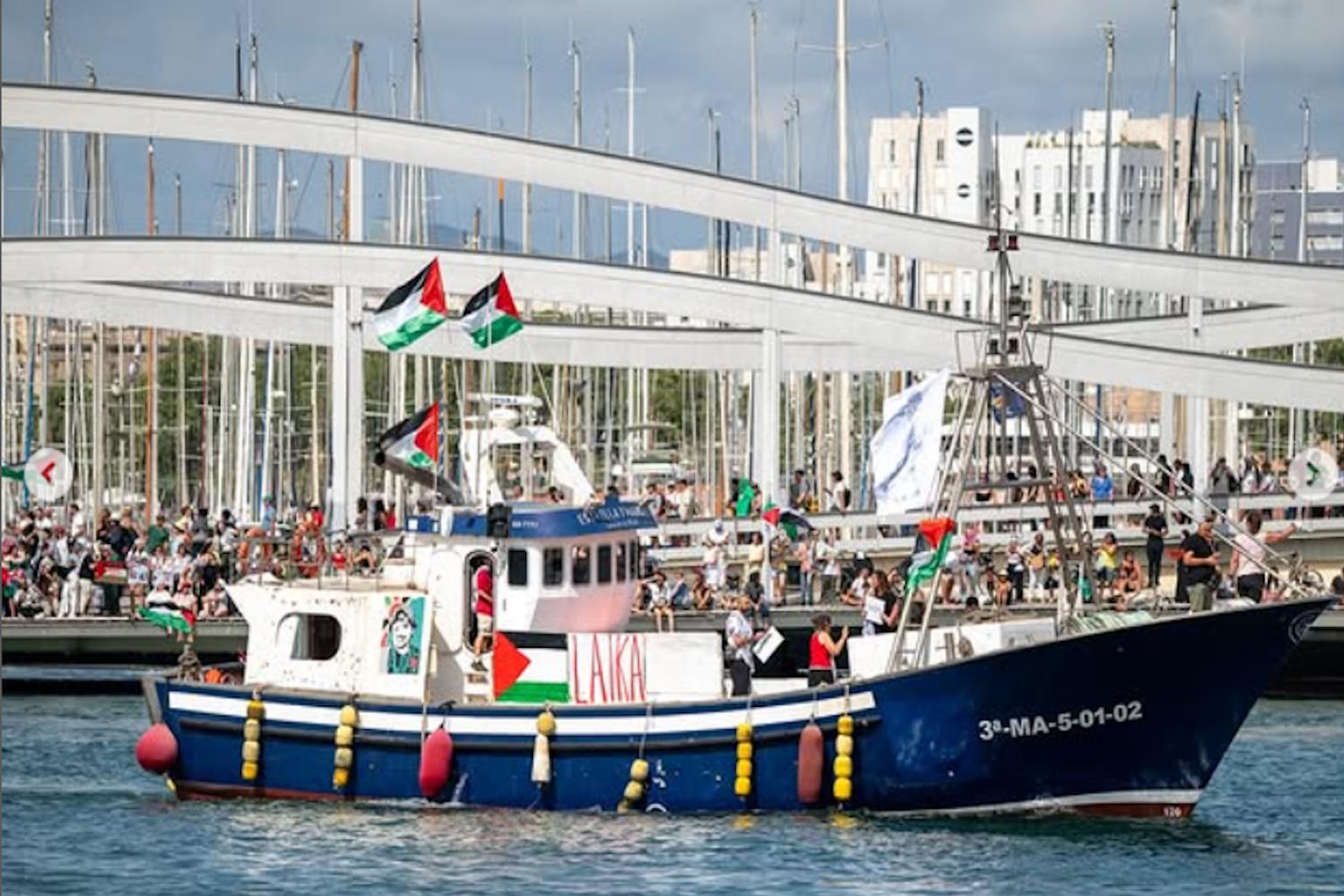
Global Sumud Flotilla chapter two. The new mission to Gaza will start on Sunday 29 March. Both at sea and, in parallel, by land, through Egypt, towards the Rafah crossing, which has just reopened with people counting and under strict Israeli control (while thousands of Palestinians wait to go for treatment abroad).
It will set sail from the port of Barcelona, as happened in the mission that began at the end of August last year, but this time the objective is more ambitious. There will be 100 boats and 3,000 participants and will involve doctors, engineers and war crimes investigators to work on the ground. It will also be accompanied by a ground convoy.
It will be the largest humanitarian action in history for Palestine, the organizers say at a press conference.
The objective is, in addition to breaking the blockade by bringing humanitarian aid to Gaza, to disembark and assist the population on the territory. Among the objectives there is also the reconstruction of schools and hospitals, devastated by Israeli bombings.
How the mission will take place
The mission includes not only the transport of aid, but also the presence of over 1,000 doctors, nurses and health workers, educators, engineers and reconstruction teams and war crimes and ecocide investigators, with the aim of documenting violations of international law in the field.
View this post on Instagram
Furthermore, alongside the maritime fleet, a land convoy will move through Egypt towards the Rafah crossing to try to circumvent the blockades and reach the Palestinian population from multiple fronts.
This new phase of the “Sumud effort” comes after the previous 2025 flotilla, made up of around 40 boats, was intercepted and stopped by Israeli forces in international waters, with dozens of activists detained and boats seized, sparking international protests and a heated debate over the legality of the naval blockade imposed on the Strip.
Organizers and supporters insist that the new mission will once again respect international law and aim to break the siege through civilian and nonviolent means, while calling for greater involvement of the international community to ensure security and humanitarian access, amid a crisis affecting more than 2 million people stranded in the Gaza Strip.
