
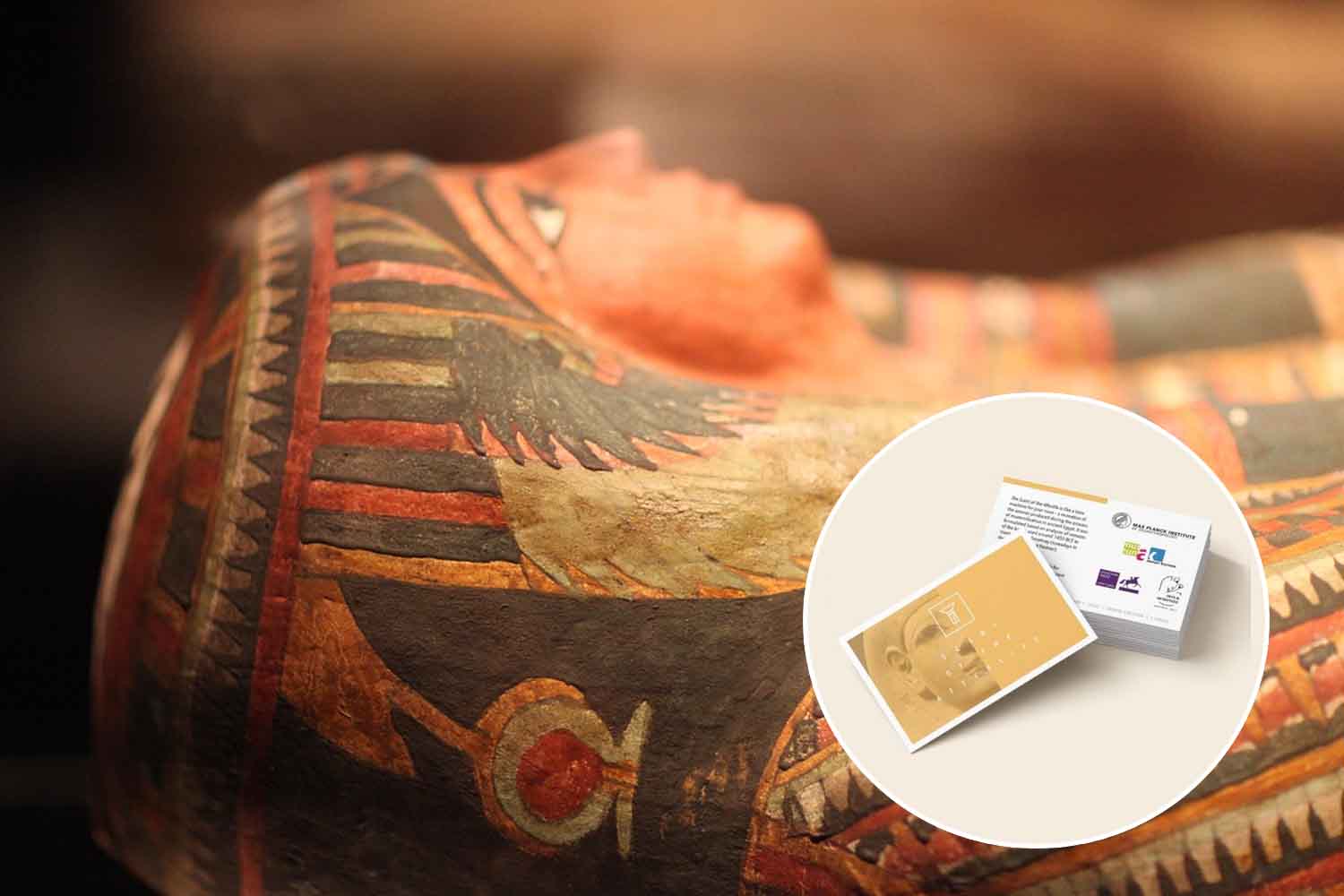
Entering a museum means observing, reading, listening, but soon it could also mean literally smell the story. Not to amaze or spectacularize, but to better understand the past. Science today is able to reconstruct the smells linked to ancient objects, rituals and daily practices thanks to tiny chemical traces that have remained trapped in the materials over the centuries. A change that is transforming the way we tell the story and that paves the way for a true multisensory experience in museumsmore accessible, empathetic and engaging.
And it is precisely smell, the most emotional and ancestral sense, that offers a new key to understanding the past. A smell can tell of medical practices, religious rituals, daily habits and beliefs of civilizations that lived thousands of years ago, making the visit to the museum more engaging, empathetic and memorable.
From chemical traces to ancient smells
A recent study published in the journal Frontiers in Environmental Archaeology shows how museums can turn complex scientific data into sensory experiences accessible to all. At the center of the research is biomolecular archaeology, a discipline that analyzes chemical residues present on archaeological finds to understand what they contained and how they were used.
Starting from this real evidence, the research team created scented cards and olfactory diffusion stations designed to accompany the exhibits on display. The result is a sensorial journey that combines sight and reading with the experience of smell, opening new perspectives on scientific dissemination.
As he explained Barbara Huberarchaeo-chemist of the Max Planck Institute of Geoanthropology and the University of Tübingen, this project marks a change of pace in the way of sharing scientific researchtaking it out of the laboratories and making it understandable and tangible even for the general public.
What made this dialogue between science and the public possible was also the meeting of different skills. Barbara Huber worked together with Sofia Collette Ehrichart historian and expert in olfactory storytelling, to combine ancient chemistry with the study of perfume as a cultural language.
From the molecular signatures that emerged from the research, the perfumer and pharmacist Carole Calvez has developed a fragrance inspired by the embalming rituals of ancient Egypt. It is not a simple copy of the original ingredients, but a complex creative process. Chemical data provides valuable clues, but it is up to the perfumer recompose the wholetransforming numbers and molecules into a coherent olfactory experience, capable of evoking the complexity of the original material.
The multisensory experience in museums between Germany and Denmark
This new form of sensorial narration has already become a reality in some European museums. At the Museum August Kestner in Hanover, Germany, the reconstructed fragrances were integrated into an exhibition dedicated to ancient Egypt through a portable scented card and a fixed diffusion station.
Visitors can smell the so-called “Scent of the Afterlife”an olfactory card in which the essence is inserted directly into the paper thanks to scented printing techniques. According to the curators Christian E. Loeben And Ulrike Dubielthe sense of smell allows us to overcome the horror film imagery often associated with mummification, helping to understand the spiritual and ritual motivations who were behind these practices.
The same installation was also brought to the Moesgaard Museum in Aarhus, Denmark. Here, as the curator said Steffen Terp Laursenthe introduction of the perfume has radically changed the approach of visitors, adding an emotional depth that information panels alone cannot offer.
According to the researchers, this experiment demonstrates how molecular traces of the past can become significant cultural experiences in the present. The goal is to offer museums innovative tools to tell history in a more inclusive, sensitive and engaging way, stimulating curiosity and awareness.
As Sofia Collette Ehrich pointed out, the idea is to bring visitors closer to the environments and practices of ancient civilizations through a sensorial interpretationcapable of speaking not only to the mind, but also to the emotions. Because, sometimes, to really understand the past, it’s not enough to look at it: you also have to feel it.
