
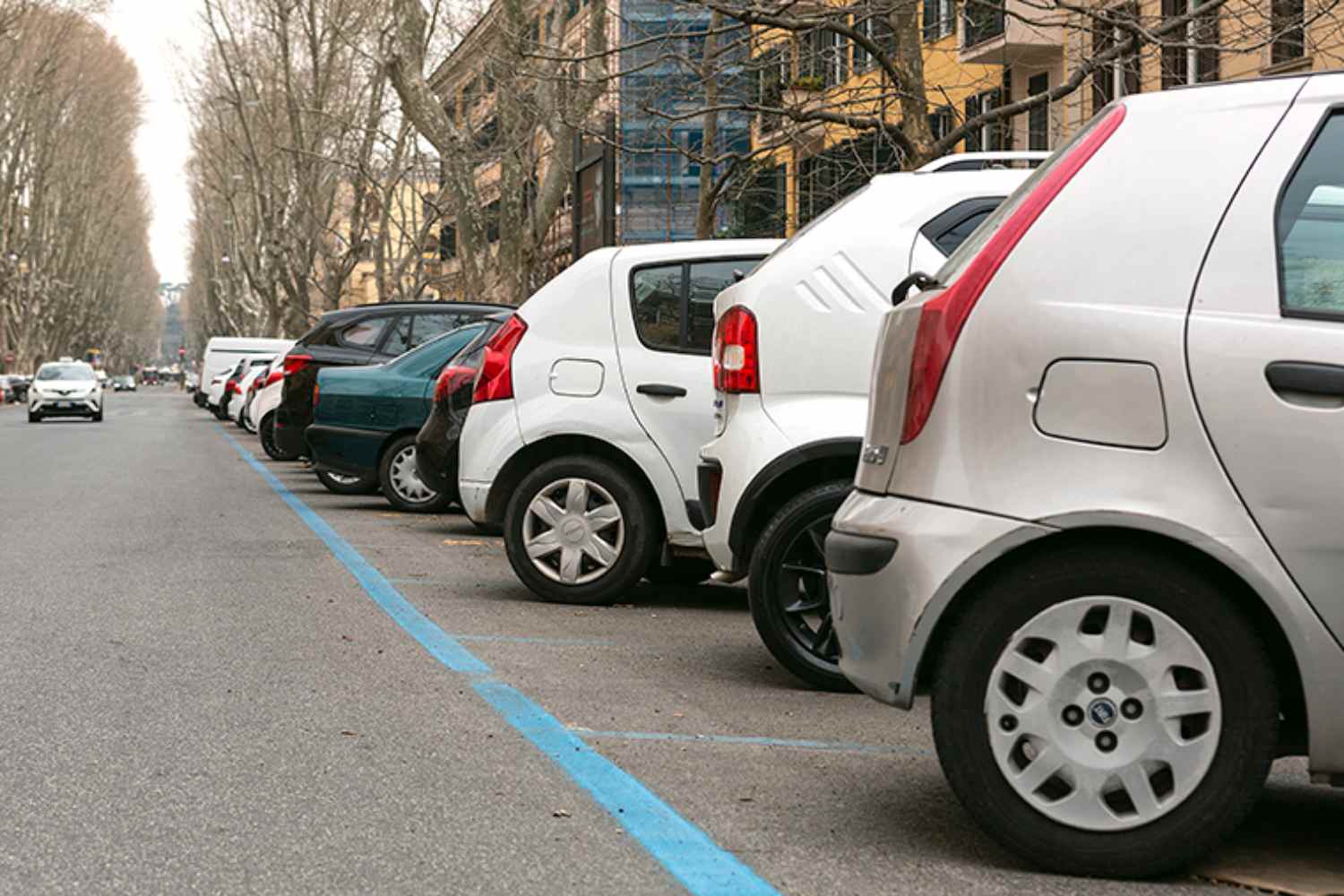
In Rome, parking is about to change its face. The Sospas project will start by the end of 2026, a system of hi-tech sensors inserted directly into the blue lines to monitor the presence of vehicles in real time. The objective declared by the Campidoglio is to make parking management more efficient, reduce irregularities and improve urban mobility, especially in the most congested areas of the capital.
How the sensors in the blue stripes work
The heart of the project is the Smart On-Street Parking System, a network of 7,514 electronic sensors that detect whether a space is occupied and for how long. The data is sent to a central platform which allows you to verify the correspondence between parking and payment. In case of anomalies, such as exceeding the allowed time or the absence of a valid ticket, the system reports the situation to the local police, who can intervene for checks and possible sanctions.
Where the devices will be installed
The experiment will involve Municipalities I and II, which account for approximately 80% of Rome’s paid parking. In 23 paid zones, a minimum coverage of 5% of the stalls will be guaranteed, a percentage which will rise up to 40% in the highest pressure areas, such as Trastevere, Prati, Monti, Celio and the historic centre. Over 760 sensors are planned in the heart of the city alone. A distribution designed taking into account traffic flows and real parking demand.
Parking meters that are increasingly less central
The project also accelerates the slow decline of traditional parking meters. Today in Rome there are just over two thousand active, but less than half of the payments take place directly at the columns. More and more drivers are using apps, cards and digital systems, making a revision of the model necessary. The administration aims to reduce the charging stations and modernize the remaining ones, combining them with more advanced control tools.
A piece of a broader strategy, but not without controversy
The arrival of the sensors has already sparked public debate. On the one hand there are those who see technology as a barrier to “smart parking people” and a useful tool to more easily find a free space. On the other hand, there is no shortage of criticism from those who fear an increase in fines and a city increasingly oriented towards monetizing parking.
In the background remains the unresolved issue of the lack of space, a structural problem that no sensor alone can solve. Sospas is part of a broader plan which provides for the increase of blue lines up to 100,000, the strengthening of traffic auxiliaries and more flexible mobility management.
You might also be interested in:
