
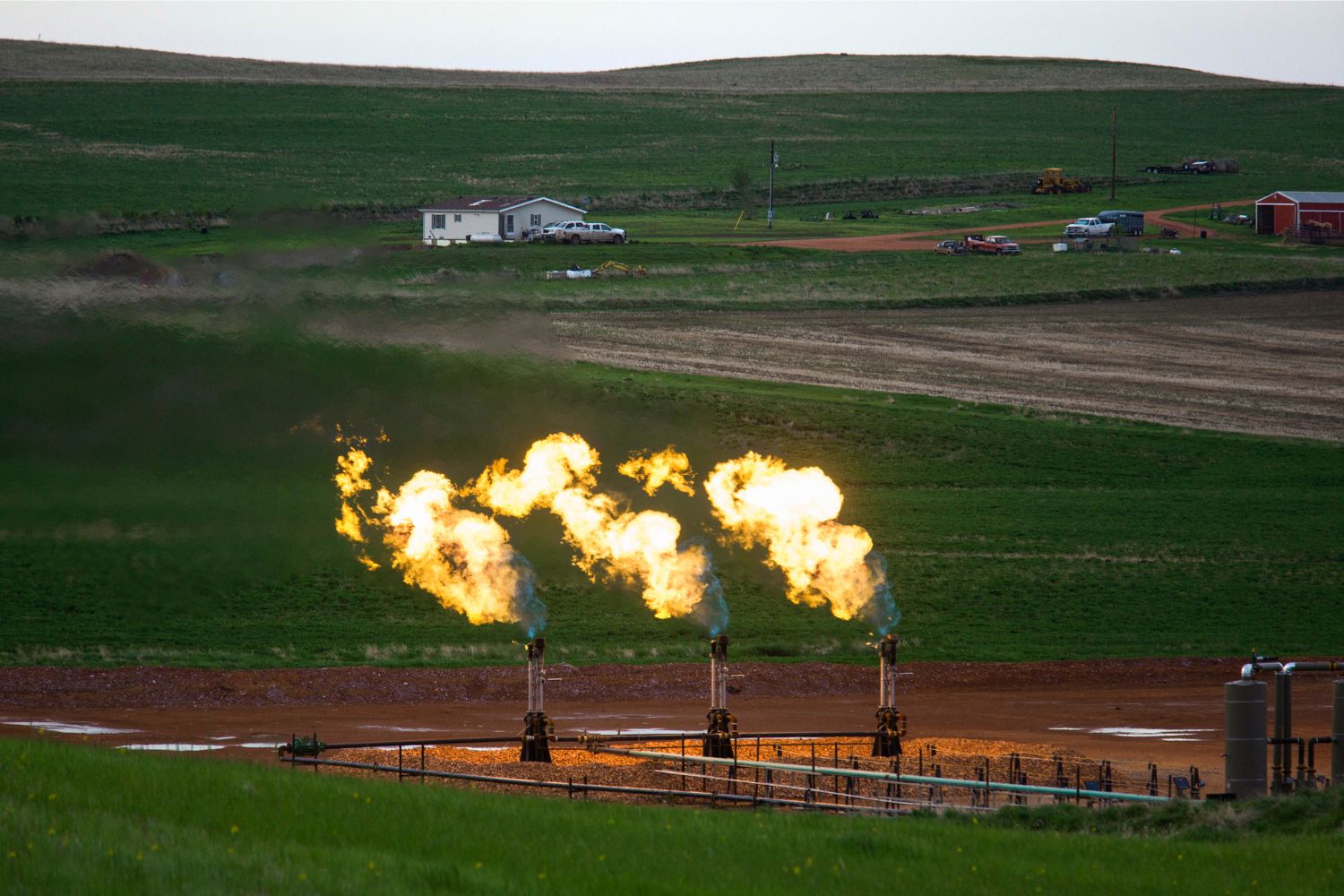
Those 500 torches a few meters from the villages have been burning waste gas from oil wells for almost 60 years, since 1967. Very long chimneys with a perpetual flame above them which are used for oil extraction, causing air pollution (gas flaring) and inevitably contributing to the degradation of biodiversity and people’s health.
In July 2021 the young activists of Wars over the Amazon achieved a historic judicial victory: a court ordered the elimination of all torches in the Ecuadorian Amazon region. But this was not the case and today against the government and multinationals, six indigenous peoples are still united in the Native Guard they are trying to defend with all their might this system and a power, the institutional one, that doesn’t look anyone in the face.
The smell of oil suffocating the Amazon
TO New Lojain the Amazonian province of Sucumbíos, the air does not smell of tropical vegetation but of hydrocarbons. It’s not just a feeling: the city owes its historic name, Lago Agrio, to the first large well drilled in the 1960s. Since then, oil extraction – carried out first by Texaco, then by Chevron and the state company Petroecuador – has left a trail of environmental contamination, social conflicts and diseases.
Even today, hundreds of gas flaring flares burn waste gases from mining day and night, a practice that releases toxic substances and large quantities of greenhouse gases into the atmosphere. The flames are often just a few meters from homes: constant light, heat, smoke and eye and throat irritation are part of the daily life of many families.
A true environmental emergency which, therefore, does not belong to the past: in 2025 a new oil spill contaminated waterways in the Cuyabeno area, one of the richest ecosystems in biodiversity in Ecuador. Similar episodes have also been repeated in previous years, showing how fragile the balance between extractive activity and environmental protection remains.
People such as Siona, Cofán, Shuar, Siekopai, Achuar and Kichwa live in these lands. For them the forest is a living being with which to maintain balance and reciprocity, according to the principle of Sumak kawsay“living well”. A vision also recognized in the Ecuadorian Constitution, which protects the rights of nature, but which in practice continues to clash with the extractive model.
In recent years this tension has become increasingly evident. The 2023 referendum asking to stop drilling in Yasuní Park marked a historic turning point, with a clear popular choice in favor of biodiversity. But the concrete implementation of the stop proceeds slowly, while the government continues to balance environmental protection and economic interests linked to fossil resources.
In this scenario, the role of Native guardmade up of women and men from local communities, to protect the territories, also against drug trafficking and unauthorized extractions.
Today the conflict in Ecuador has therefore become a clash between two ideas of the future: extracting immediate value from the subsoil or preserving the life of the forest for generations to come. While in Nueva Loja the torches continue to burn and the rivers flow with oily reflections, the indigenous communities remain there, to guard what remains.
