
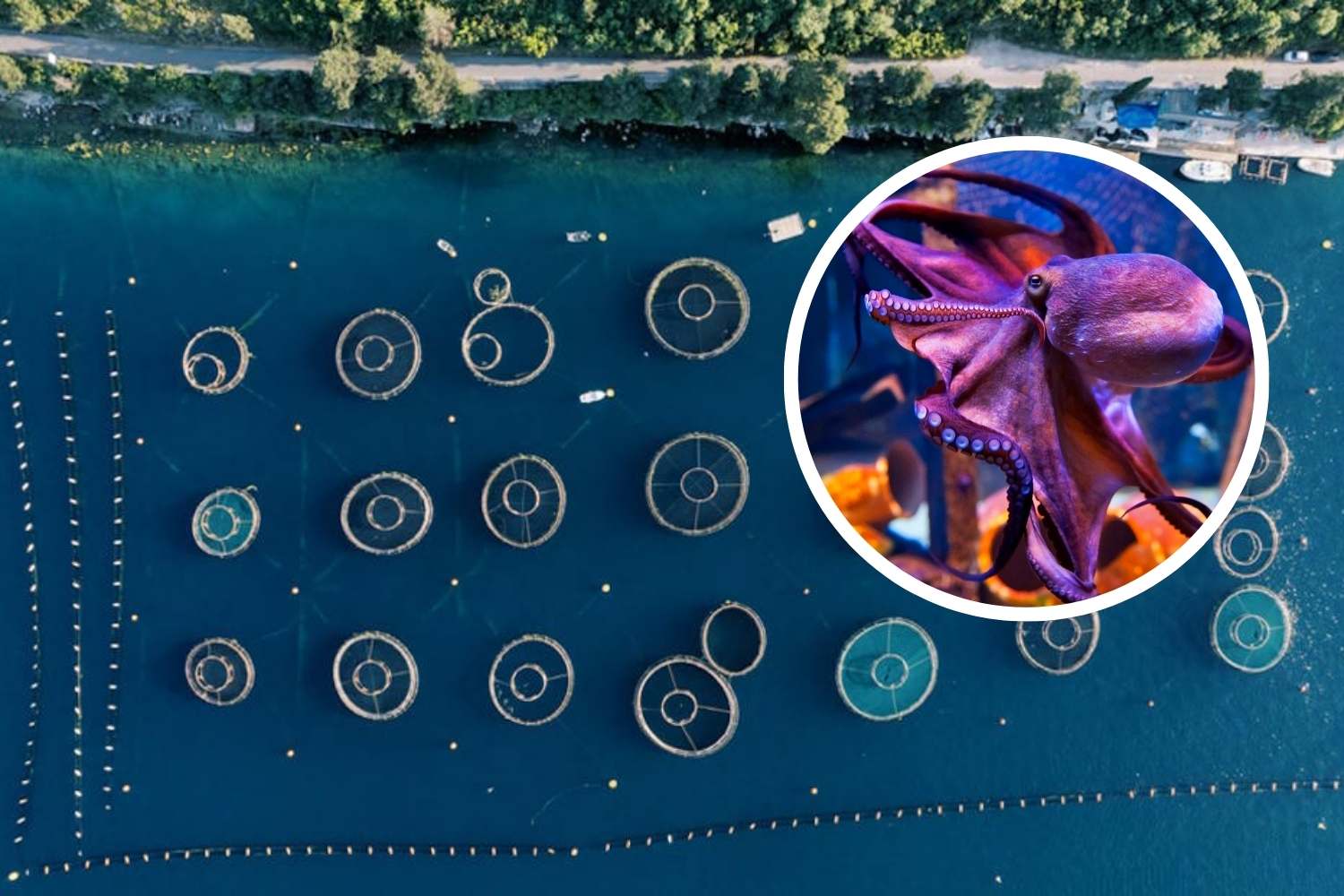
California has written a page destined to leave its mark on the global debate on animal welfare. In 2024, in California, with the signature of governor Gavin Newsom, law AB-3162 came into force which prohibits not only the farming of octopuses on state territory, both on land and in water, but also the sale of products derived from farmed octopuses. A double move that makes the State the first in the world to also block the trade of this type of product.
The vote of the California Senate was unanimous, a sign of a transversal consensus on an issue that intertwines ethics, science and the environment. After Washington State, California becomes the second American state to ban this practice, but it is the first jurisdiction to extend the ban to commercialization, thus preventing production from simply being moved elsewhere.
Octopuses are very intelligent creatures
At the center of the discussion is the very nature of octopuses. Scientists describe them as among the most intelligent creatures in the oceans: capable of solving complex problems, showing curiosity, adapting quickly and even exhibiting individual behavioral traits. Their recognized sensitivity has fueled the concerns of researchers and associations, according to which intensive farming would be incompatible with their biological and cognitive needs.
In 2021 a report titled Octopus Farming: A Recipe for Disaster has collected scientific evidence on the risks of this emerging industry, underlining the potential cruelty and environmental criticalities linked to a high-intensity production system. Subsequently, other analyzes have turned the spotlight on the plans of companies intending to start large-scale breeding, such as the project to produce one million specimens a year in the Canary Islands.
A precedent that can make history
The Californian ban also responds to a specific request made by organizations such as the Aquatic Animal Alliance and numerous researchers: a simple ban on production, without blocking sales, would have risked transferring the problem to other countries. The choice to ban the import and marketing of farmed octopus instead closes the circle.
Meanwhile, the topic is also moving at the federal level. California’s decision could lead the way, fueling an international debate on how to reconcile food innovation, sustainability and respect for marine animals. For now, the message is clear: at least in California, the idea of turning octopus into an industrially farmed product no longer finds space.
You might also be interested in:
