
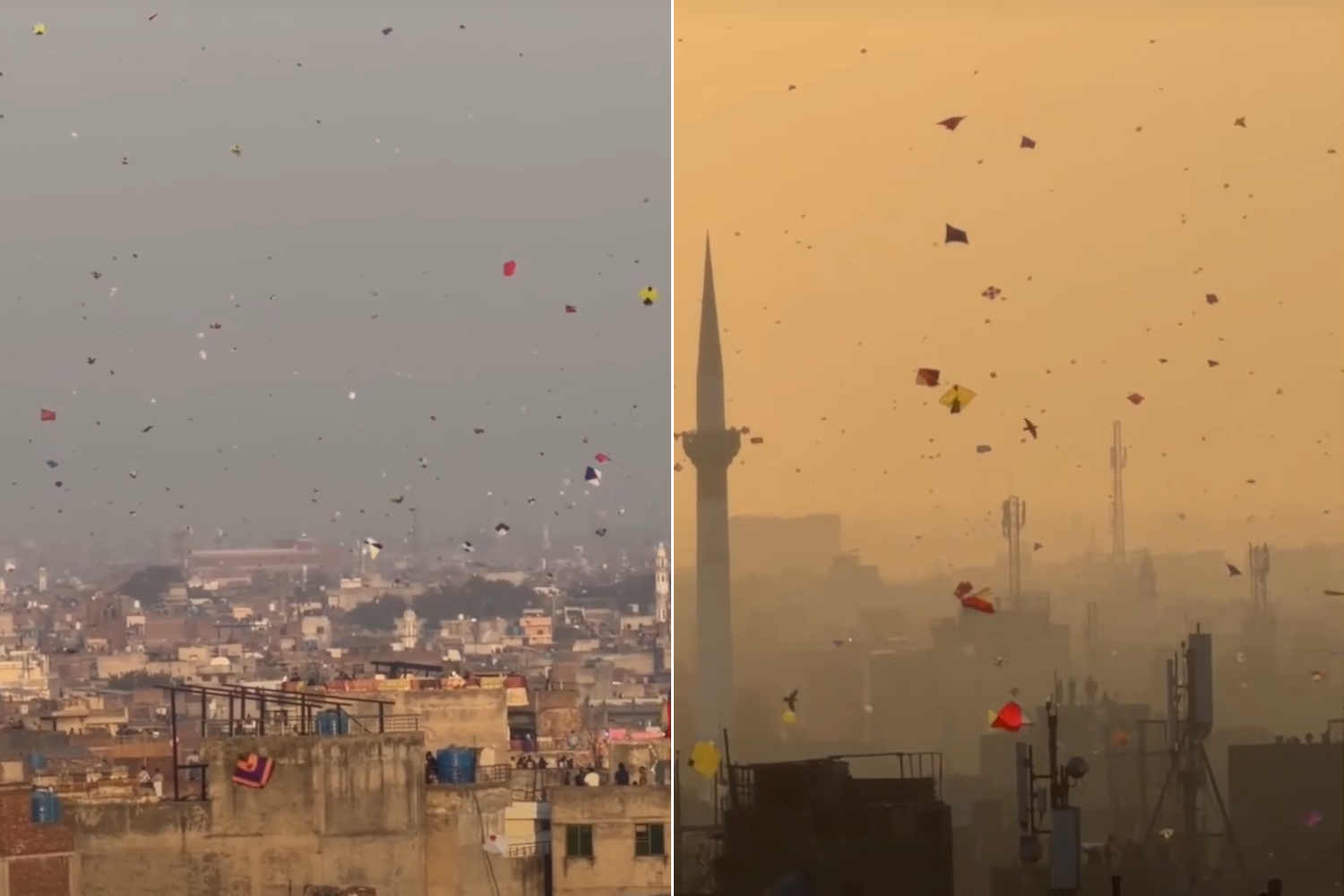
For three days, from 6 to 8 February, Lahore looked up at the sky as it hadn’t happened since 2008. The Basant festival, a celebration traditionally linked to the end of winter, returned to color the roofs and terraces with thousands of kites. A return awaited almost twenty years, after the authorities had banned the event due to serious security risks.
What may seem like a light and festive activity had transformed over the years into a dangerous practice. During competitions, the goal is not just to fly your own kite, but to cut your opponents’ string. To achieve this, many had started using wires reinforced with glass or metal, capable of becoming real blades suspended in the air. The severed wires remained entangled along the streets, injuring passers-by and motorcyclists. Over the years, deaths and injuries had been recorded, including falls from roofs and cases of electrocution when kites ended up on electrical cables.
View this post on Instagram
Strengthened security but still heavy toll
In 2007, the province of Punjab imposed a complete ban on kite flying, with severe penalties up to prison terms. After a final temporary suspension, the festival was definitively cancelled. This year, however, the head of the provincial government, Maryam Nawaz, decided to lift the ban limited to Lahore and only for the duration of Basant.
The organizational machine was impressive. Tens of thousands of police have been deployed in the city. The sale of reinforced wire and kites that are too large, which require stronger wire, has been banned. Motorcyclists were given metal bars to attach to the handlebars, designed to intercept any wires stretched at neck height. Despite the precautions, according to local media at least six people died and dozens were injured during the celebrations.
View this post on Instagram
Between smog and nostalgia, the city rediscovers the sky
The return of the Basant had a strong emotional impact. For many adults it was a dive into childhood, for many young people of Generation Z it was their first experience with a kite, after growing up in years of prohibitions. The terraces in the most picturesque neighborhoods were rented for thousands of dollars per evening, in a country where the GDP per capita in 2024 was around 1,500 dollars per year. In the markets, queues and crowds were seen in front of specialized shops.
And all of this happened under skies that, just a few weeks ago, were covered in a blanket of toxic smog. Lahore is among the cities with the most polluted air in the world and the contrast between the colorful kites and the persistent pollution was evident. A contrast that is good for the eyes, but not for the environment given the dozens of kites dispersed in the air which, unfortunately, will further aggravate the problem.
View this post on Instagram
You might also be interested in:
