
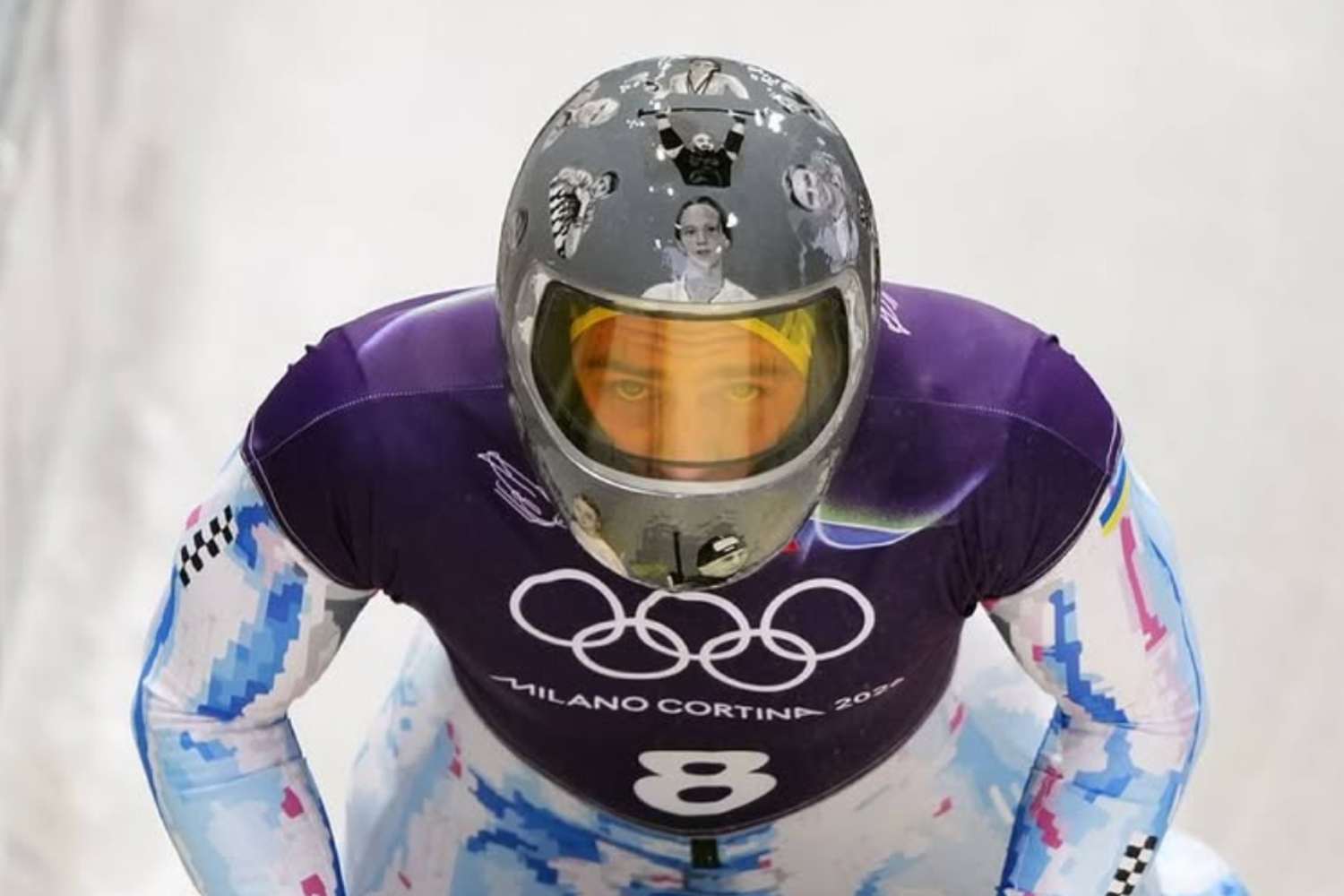
After days of controversy, censorship finally won, ignoring the circumstances and human value of its choice. Vladyslav Heraskevych, Ukrainian skeleton pilot, was in fact excluded from the Milan-Cortina 2026 races due to his commemorative helmet, which bore the faces of over 20 Ukrainian athletes and coaches killed during the war with Russia.
View this post on Instagram
The athlete had refused to replace it with one compliant with the rules of the International Olympic Committee, reiterating that “it is the price of our dignityThe decision was made by the International Bobsleigh and Skeleton Federation (IBSF) jury because the helmet did not comply with the IOC Guidelines on Athlete Expression.
View this post on Instagram
The last opportunity and the confrontation with the IOC
Just over an hour before the race, IOC president Kirsty Coventry met Heraskevych at the top of the track to attempt a compromise. Despite attempts at mediation and the possibility offered to compete wearing a black armband, the athlete did not change his mind, convinced that visibility in the race was essential to pay homage to his deceased colleagues. The official disqualification was therefore communicated immediately, preventing him from participating in a competition in which he was considered one of the main medal contenders having recorded the first time in the last timed test.
View this post on Instagram
View this post on Instagram
Ukraine’s reaction
The IOC’s choice sparked a harsh reaction in Kiev. Foreign Minister Andriy Sybiga called the decision a shame for the Committee, while the Verkhovna Rada passed a resolution in support of Heraskevych, demanding the right of Ukrainian athletes to use commemorative symbols for the victims of the war.
Heraskevych acted to honor lost lives and not to make propaganda: a gesture that, given the exceptional circumstances, deserved an exception to the rules. Is it really correct to silence a memory gesture? In exceptional circumstances like this, when we are talking about tens of thousands of deaths in a brutal and senseless war, perhaps it would have been appropriate to grant the skeleton athlete the opportunity to take to the track with this commemorative helmet, recognizing the importance of dignity and remembrance.
The IOC has banned not the Ukrainian athlete, but its own reputation. Future generations will remember this as a moment of shame.
He simply wanted to commemorate fellow athletes killed in war. There is nothing wrong with that under any rules or ethics.
The IOC intimidated,… pic.twitter.com/5FsK7FCakC
— Andrii Sybiha (@andrii_sybiha) February 12, 2026
Between ICE and former Israeli soldiers
However, the controversies at Milan-Cortina do not stop at skeleton. In fact, the presence of American ICE agents for diplomatic and investigative support, coordinating with the Italian law enforcement agencies without public safety tasks, caused a sensation. Their presence caused protests, with criticism even from the mayor of Milan Giuseppe Sala.
Adding to these tensions is the case of the Israeli delegation, which includes former soldiers active in military operations in Gaza, some of whom will compete sporting the national flag. The IOC has allowed the participation of Israeli athletes, despite their controversial military history, arguing that they do not violate the Olympic Charter.
Therefore, if on the one hand we are thrilled by the medals won by our athletes, on the other we cannot fail to record a climate which, unfortunately, is anything but an Olympic truce as President Mattarella and Pope Leone had hoped for.
You might also be interested in:
