
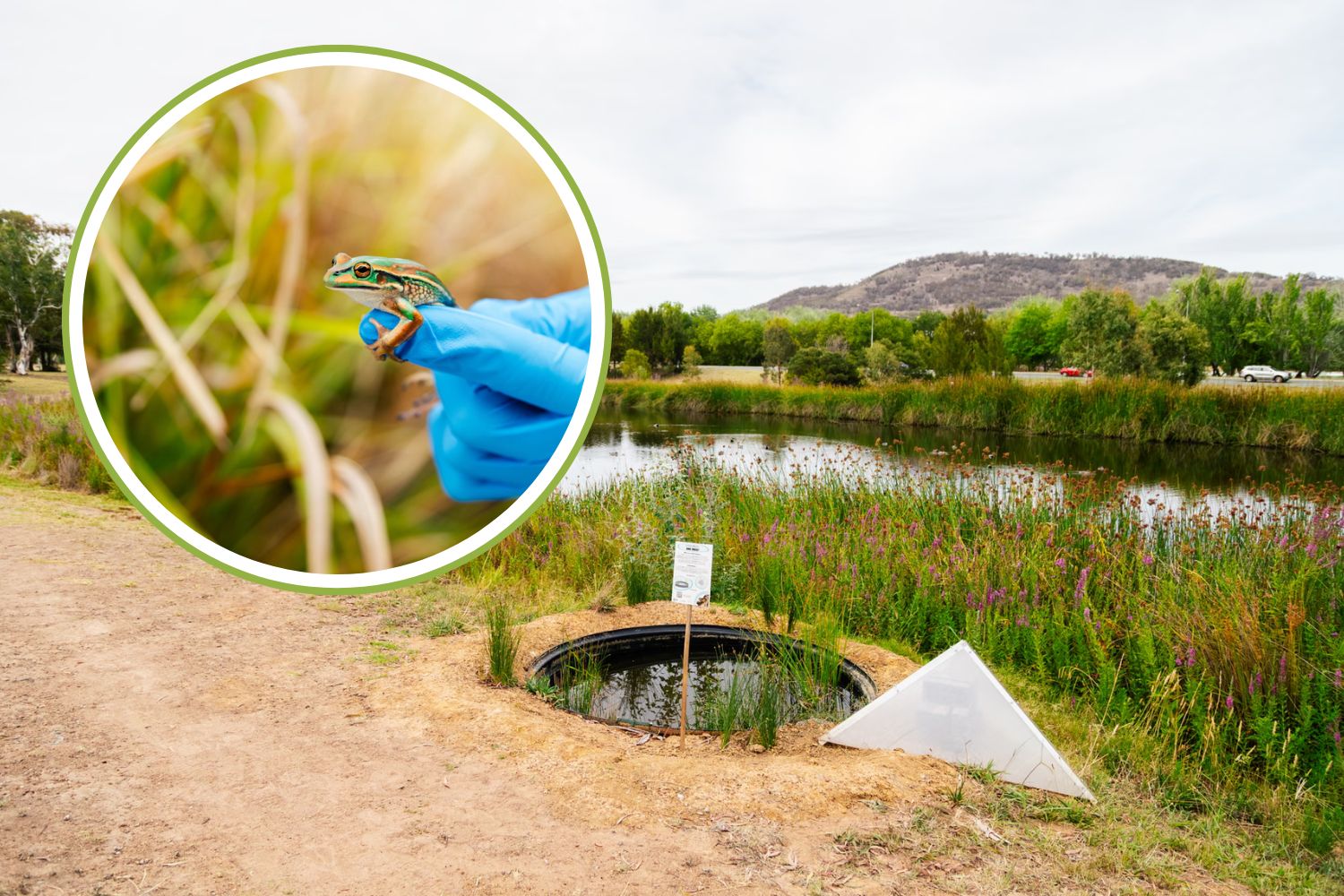
The green and golden frog was gone. Or at least that’s what we thought. In the Australian Capital Territory, around Canberra, this iconic species has not been seen since the 1980s, wiped out by a lethal fungus that has devastated amphibian populations around the world.
Today, however, something is changing. Thanks to a scientific project as ingenious as it is surprising – made up of immunizations, captive breeding and actual “frog spas” and “frog saunas” – over 300 specimens are returning to live in carefully selected ponds and wetlands. A story of resilience that talks about the climate crisis, biodiversity and the human ability to repair (at least in part) the damage done.
The return of the green and golden frog to Canberra
The person responsible for the silent massacre is chytrid, a pathogenic fungus that in recent decades has caused extinctions and demographic collapses of amphibians on every continent. Only recently has the scientific community started to understand how to really combat it. In the case of the green and golden frog, declared extinct in the ACT – the administrative area surrounding Canberra – they thought it was extinct, but the green and golden frog is reborn thanks to spas and saunas against the killer fungus. already around 1981, researchers at the University of Canberra chose an integrated strategy.
Captive breeding first. Then immunization against the disease caused by the fungus. Finally, the reintroduction into nature in groups of 15 individuals for each of the 15 identified ponds. The goal is clear: quickly reach at least 200 frogs for each site, creating stable and self-sufficient populations.
Each female can lay up to 8,000 eggs in a single breeding season. An enormous biological power, which could make the numbers grow quickly. But there is one key detail: newborns will not be immune to chytrid. And here the most brilliant idea of the project comes into play.
Frog spa and frog saunas
Chytrid has a weak point: it cannot tolerate heat. Temperatures above 25°C cause him difficulty; between 27 and 28°C can become lethal for the fungus. The green and golden frog, on the other hand, loves even higher temperatures, around 30°C.
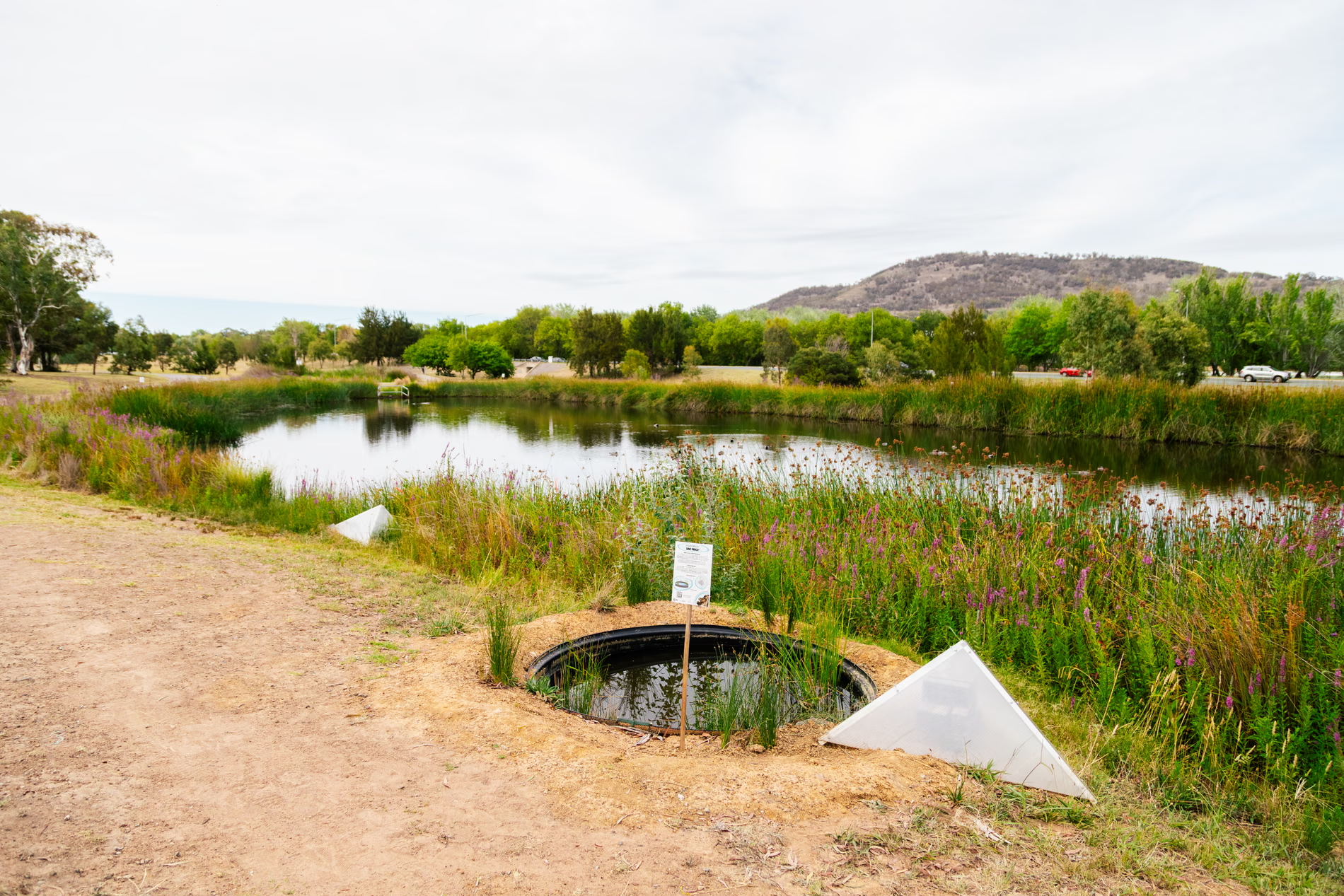
From this difference the idea of “frog saunas” was born. 180 structures made of black bricks, covered with rigid sheets of plastic arranged in a pyramid, have been installed near the ponds. The cracks in the bricks become perfect shelters for frogs, while the accumulated heat creates an ideal microclimate for them but hostile to the pathogen.
Next to the saunas, the scientists selected wet areas with slightly brackish water, dubbed “frog spas”. It is not a linguistic quirk: outside the ACT the species had survived in isolated pools with a certain salinity, capable of limiting the spread of the fungus.
Warm, slightly salty water and warm shelters: a small ecosystem tailor-made to give frogs a second chance. An experiment that combines scientific knowledge, observation of nature and a good dose of creativity. Because saving a species doesn’t just mean protecting it, but also understanding what it really needs to survive.
The green and golden frog is not out of the woods yet. But its return to the ponds of Canberra is a powerful signal: when research invests in biodiversity, even what seemed lost can breathe again. And perhaps we should ask ourselves how many other species are just waiting for a “frog spa” to be able to start again.
You might also be interested in:
