
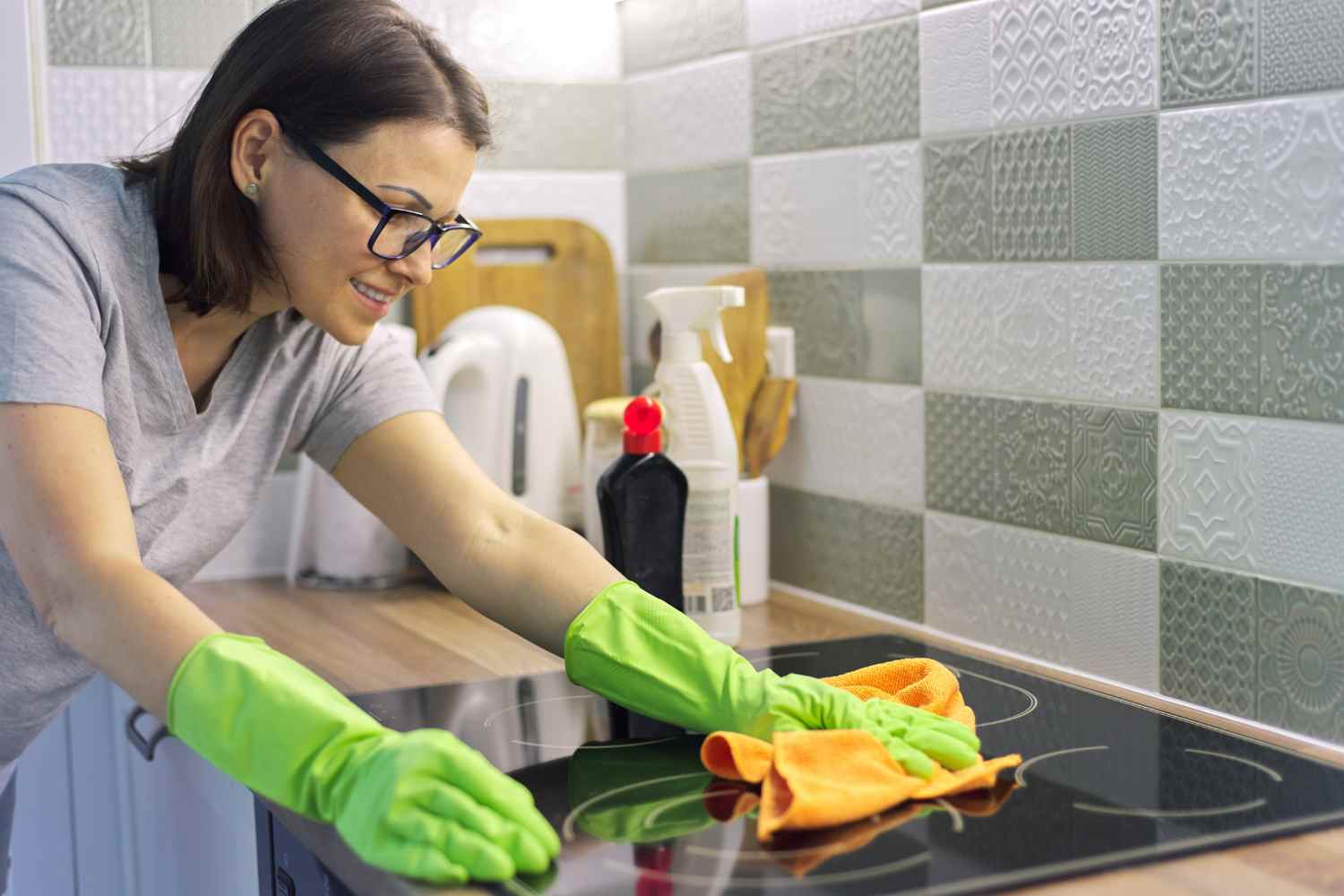
The glass-ceramic hob has many advantages: easy to use, conducts heat well and saves energy – as well as giving our kitchen an elegant and refined look. But what to do when it gets dirty?
Remains of food and burnt fat are difficult to remove, especially considering that it is a delicate surface. But, by using the right ingredients, we can restore the hob to its original splendor.
How to clean a glass ceramic hob
Baking soda
Sodium bicarbonate proves to be very useful when it comes to household cleaning (and not only). To eliminate food stains on our hob, mix a few tablespoons of bicarbonate of soda with a little warm water, until a thick paste is formed.
We distribute the paste obtained on the hob, in particular on the most visible stains. Let the bicarbonate act for an hour before removing it with the help of a soft damp cloth. The stains will disappear easily.
Lemon juice
Lemon juice is also often used as an ally for household cleaning: the citric acid contained in it, in fact, has disinfectant and degreasing properties, and helps remove bad odors from surfaces.
We take half a lemon (even if already squeezed) and rub the hob with it, paying particular attention to the stains. After the treatment, we let the juice act for a few minutes before removing it with the help of a damp cloth.
Dishwasher tablets
Did you know that common dishwasher detergent tablets, in addition to making our dishes clean, can be used to clean the glass-ceramic hob? In this way, by purchasing a single cleaning product we will be able to clean multiple elements of our kitchen.
A bit like we did with bicarbonate of soda, we need to create a “cleaning paste” using the dishwasher tablet: place it in a bowl or cup, crush it with a fork until it crumbles and mix the powder obtained with a little water.
We take the paste obtained and spread it on the hob, then leave it to act for about ten minutes. After this time, we use a soft sponge to remove the product.
White vinegar
White vinegar is another precious ally in cleaning the glass-ceramic hob. Thanks to its natural acidity, this ingredient is particularly effective in removing marks and limescale deposits that can form on the surface. To use it best, we can pour the pure vinegar directly onto a soft cloth and pass it over the hob with circular movements.
Alternatively, for more resistant stains, we can create a solution by mixing vinegar and water in equal parts in a spray bottle, spray the product on the dirty surface and leave to act for about five minutes. Then just wipe with a damp cloth to remove any residue.
Vinegar not only cleans but polishes the surface, restoring shine to the glass. A further advantage is that it is a completely natural and safe product, with no contraindications for health or the environment.
What never to do
When we take care of our glass ceramic hob, it is essential to know not only what to do, but also what to absolutely avoid. First of all, we must ban abrasive sponges, metal scourers and any type of rough sponge from our cleaning routine: these tools, although effective on other surfaces, can irremediably scratch the delicate glass of the hob, creating permanent lines which, in addition to being unsightly, can compromise the functionality of the appliance.
Equally important is to avoid the use of overly aggressive chemicals such as bleach or industrial degreasers, which could damage the protective coating of the surface. Another common mistake is to clean the hob when it is still hot: in addition to the risk of burning yourself, the heat can cause the cleaning products to evaporate too quickly, leaving streaks and making cleaning ineffective.
Finally, pay attention to never drag pots and pans on the surface: always lift them completely to move them, since even simple sliding can cause scratches, especially if the bottom of the pots has burnt residues or abrasive particles.
How to treat stubborn stains
Some stains require special attention because they behave differently than common dirt. Burnt sugar, for example, is one of the most delicate situations: when it melts and caramelizes on the hot surface, it creates a very hard crust that can damage the glass if it is not removed correctly.
In this specific case, we must act immediately while the hob is still hot, using a specific scraper for glass ceramics at an angle of approximately thirty degrees to delicately lift the caramelized sugar. Once cooled, in fact, it becomes much more difficult to remove and risks creating permanent damage.
Melted plastic represents another common problem: if we accidentally place a plastic container on the hot surface, it can melt and stick to the surface. Even in this case, we must intervene while the area is still warm, using the scraper with delicate movements.
For aluminum marks left by pans, however, we can rely on a slightly more concentrated bicarbonate paste, leaving it to act longer than usual, or use pure white vinegar, rubbing more vigorously but always with a soft cloth.
The glass ceramic scraper
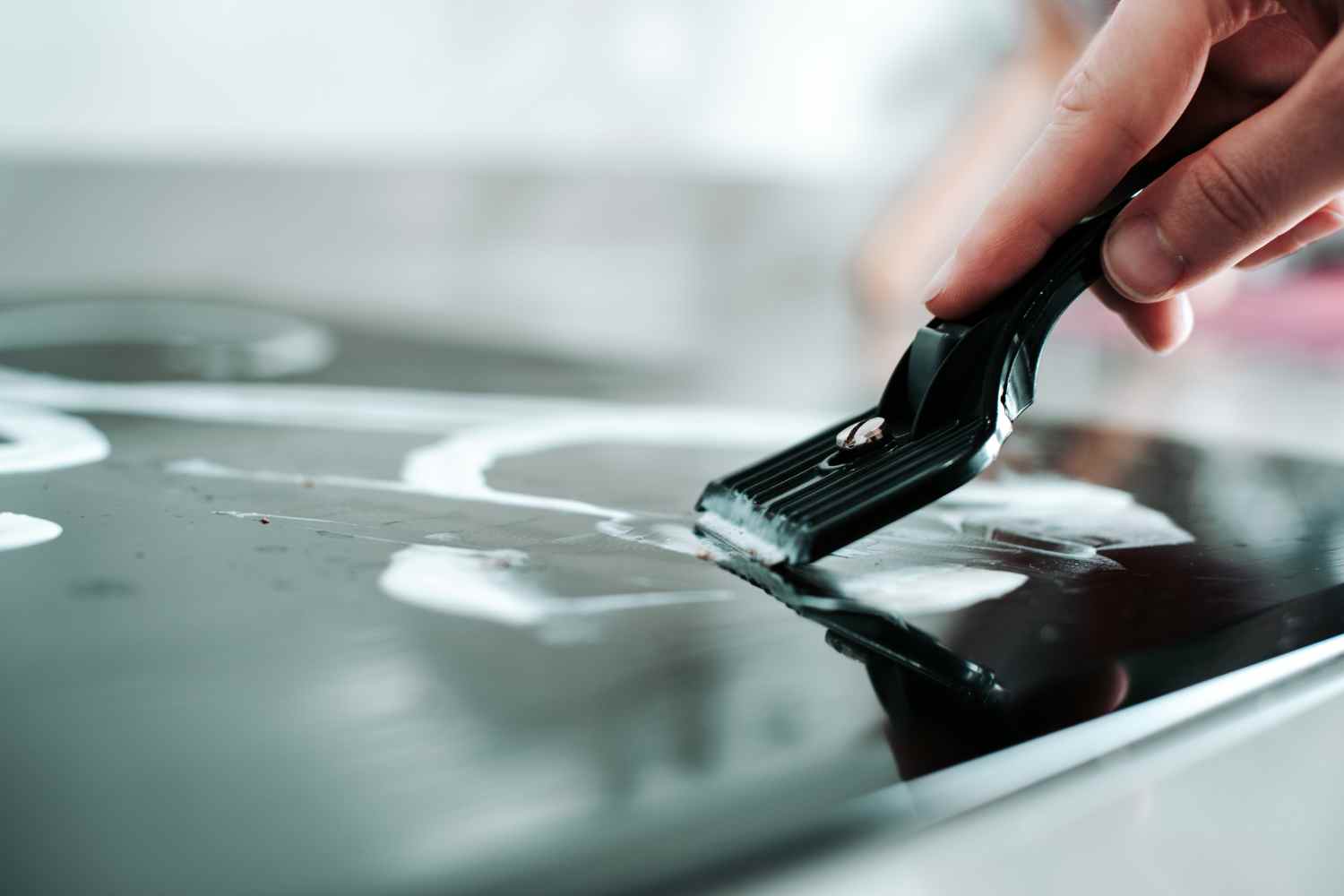
Among the essential tools for maintaining the glass-ceramic hob, the specific scraper deserves a special mention. It is a specially designed tool with a sharp but safe metal blade, mounted on an ergonomic handle that allows you to precisely control the angle and pressure during use.
Unlike other generic scrapers, the one for glass ceramic has a blade designed not to scratch the glass when used correctly, i.e. keeping it inclined at about thirty degrees to the surface. This tool is especially valuable for removing burnt food residues, the most stubborn encrustations and all those stains that do not dissolve with normal detergents. Its use is simple: after letting the hob cool, we position the blade at the beginning of the stain and, exerting moderate but constant pressure, slide the scraper under the dirt with a forward movement.
It is important to replace blades regularly when they become dull or damaged, as a blade in poor condition may scratch the surface instead of cleaning it. Many glass ceramic scrapers are sold with replacement blades included in the package, making this tool even more convenient and long-lasting.
Difference between glass ceramic and induction
There is often confusion between glass ceramic hobs and induction hobs, and this distinction is important not only for cleaning but also for daily use. Glass ceramic hobs use electrical resistors positioned under the glass surface which heat up by conduction, transmitting the heat to the pan through the glass itself. This means that the surface becomes hot during use and remains so for some time even after turning it off.
Induction hobs, on the other hand, despite having a visually similar appearance with their black glass surface, work through a magnetic field that directly heats the bottom of the pans without significantly heating the glass.
This difference has important practical implications: while we can use any type of pan on the glass-ceramic hob, the induction one requires pans with a ferromagnetic bottom. As for cleaning, induction hobs tend to get less dirty because the surface remains colder and food has less chance of burning, while glass-ceramic hobs require more attention because the high heat can cause more stubborn encrustations. Both types, however, require gentle cleaning and the use of non-abrasive products to preserve the integrity of the surface.
How often to clean the hob
Establishing a regular cleaning routine is essential to keeping your glass ceramic hob always efficient and beautiful to look at. Daily cleaning should become an automatic habit after each use: as soon as the hob has cooled down completely, we quickly pass a damp cloth over the entire surface to remove any splashes, drops or cooking residues. This operation, which literally takes a minute, prevents dirt from encrusting and makes subsequent cleaning much easier. We don’t have to worry about using detergents at this stage, just warm water.
Once a week, however, we dedicate a little more time to a deeper cleaning: in this case we use one of the natural methods described in the article, such as bicarbonate or vinegar, to treat the entire surface and remove any marks or stains that daily cleaning has not eliminated.
If we cook very frequently or prepare dishes that tend to make a lot of mess, we may need this thorough cleaning twice a week.
On the contrary, if we use the hob occasionally, a deep cleaning every ten days might be enough. The important thing is to never let dirt accumulate for too long, because the more time passes, the more difficult it becomes to remove, requiring more aggressive products or more tiring work.
How to care for your glass ceramic hob
Having a glass ceramic hob in your kitchen guarantees great savings in terms of energy consumption, but it is an object that deserves constant care and attention to function well and last over time. Here are some maintenance tips:
We also recommend:
