
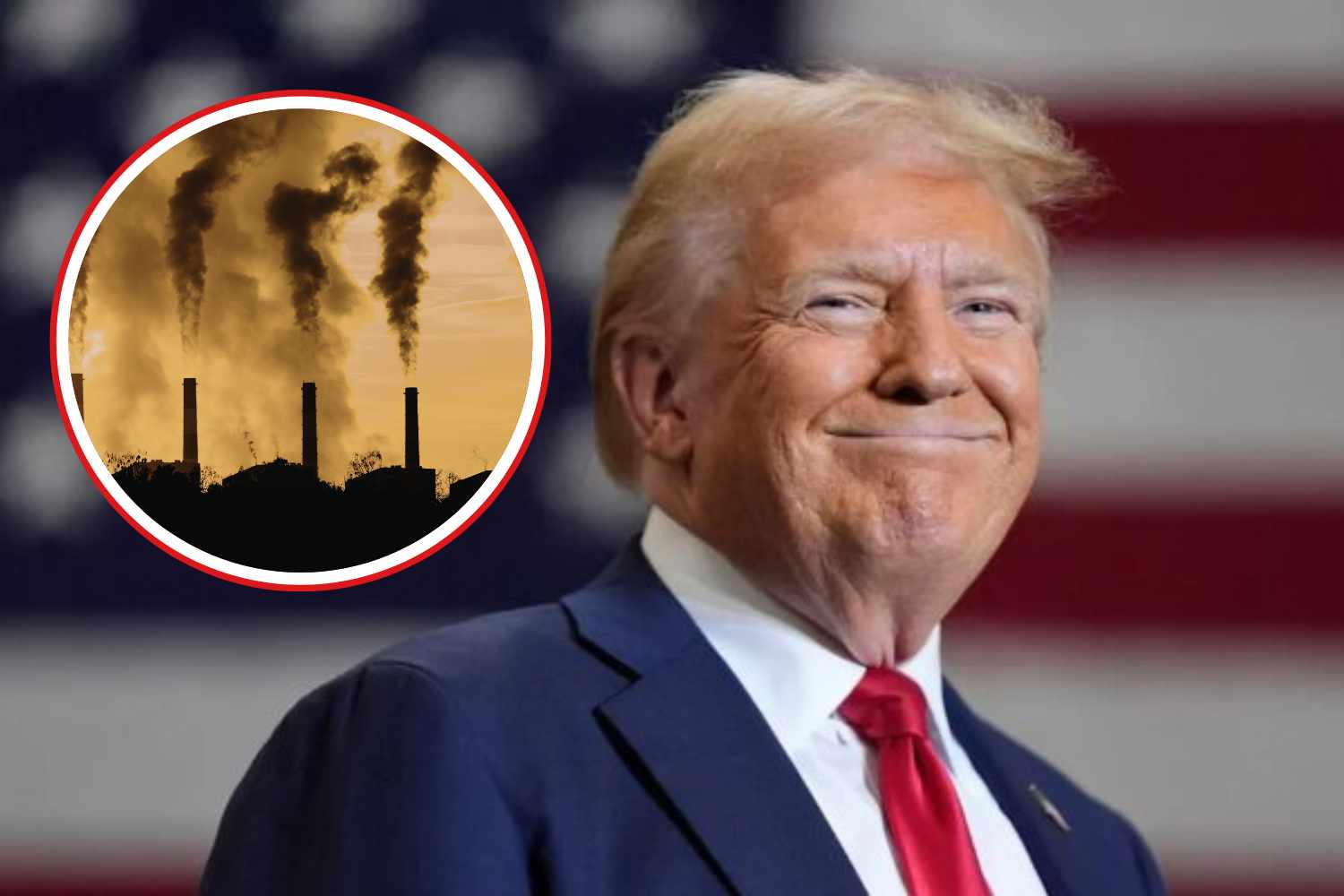
The Trump administration has dismantled the cornerstone of US climate regulation, erasing the scientific assessment that recognizes greenhouse gases as a public health risk and ending federal standards on car and truck emissions. A decision that marks the deepest environmental retreat in the recent history of the United States and which officially reopens the season of energy deregulation, i.e. the drastic reduction of public constraints on the production, consumption and environmental impacts of oil, gas and coal.
The measure, announced in Washington together with the leaders of the Environmental Protection Agency (EPA), eliminates the so-called “endangerment finding”, the legal basis introduced in 2009 which had allowed the federal government to limit climate-altering emissions pursuant to the Clean Air Act, the historic federal law that regulates the protection of air quality in the United States. For Trump, this is the “largest deregulation operation ever”, a turning point which, in the intentions of the White House, should lighten costs for businesses and consumers, but which according to numerous analysts risks transferring much greater burdens to the healthcare system, families and territories in the medium term.
The demolition of the regulatory system
According to the EPA, the climate threat assessment was based on a broad interpretation of air quality laws designed to address local and regional pollutants, not a global phenomenon such as global warming. A reading that overturns fifteen years of jurisprudence and public policies and which, in fact, reduces the ability of the federal state to intervene on one of the main systemic risk factors of the 21st century.
The move has an immediate impact on one of the most climate-relevant sectors. Transport and energy, each responsible for around a quarter of national emissions, are now emerging from a regulatory framework that aimed at a progressive reduction of the carbon footprint, with the aim of accelerating the transition towards electric mobility and renewable sources. A change of direction that comes as extreme events, fires, heat waves and floods are already putting pressure on infrastructure, health systems and public budgets in numerous states.
Industry divided, fossils celebrating
The productive world reacts unevenly. The main car manufacturers, although critical of targets considered difficult to reach in a short time, now fear regulatory fragmentation between individual states and a long season of legal uncertainty. The enthusiasm of the coal industry is clearer, as it sees the possibility of slowing down the closure of older power plants and postponing investments in new production capacities, prolonging the life cycle of the most emitting sources.
The administration estimates that repealing the rules could generate savings of up to $1.3 trillion. Opposing assessments, however, come from environmentalists, who recall how the previous climate policy promised net economic benefits for citizens thanks to the reduction of fuel and maintenance costs and above all health costs linked to air pollution.
The challenge in the courts
Environmental organizations have announced immediate appeals, believing that the EPA’s authority to address greenhouse gases remains legally sound. The legal battle could last years and reach the Supreme Court, reopening a front already explored in the past, when federal judges recognized the agency’s right and duty to regulate climate-altering emissions.
Experts warn that the cancellation of the danger assessment risks producing a boomerang effect, favoring a multiplication of civil lawsuits based on the concept of “public nuisance”, with unpredictable consequences for businesses and local administrations.
Meanwhile, the United States is moving further away from international efforts against global warming after withdrawing from the Paris Agreement and halting incentives for clean energy. Washington’s turning point is not just a change of national direction: in an interconnected climate system, the return to fossil America weighs on the global balance and makes the race against time to contain the increase in temperatures even more fragile.
You might also be interested in:
