
The famous saying “an apple a day keeps the doctor away” deserves a more cautious rereading today, at least in light of the results of the latest report published by PAN Europe, the coalition that brings together environmental organizations active in numerous EU countries. The investigation, conducted on 59 samples of apples from 13 European states, including Italy, provides a picture that raises serious questions about the safety of one of the most consumed fruits in our country.
The data speaks clearly:
What emerged from the analyzes on apples
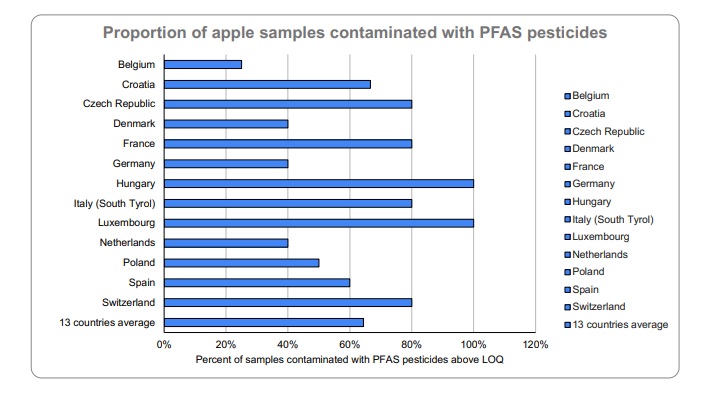
The most critical aspect concerns the nature of the substances identified. 64% of the samples analyzed in Europe present at least one pesticide belonging to the PFAS family, the now famous “eternal chemical substances” which have the ability to persist in the environment and accumulate in living organisms for very long periods.
Added to this is another relevant fact: 36% of apples contain neurotoxic pesticides, while 71% show the presence of substances classified by the European Union as “candidates for substitution”, a category that includes the active ingredients considered more dangerous and destined, at least on paper, for progressive elimination from the market.
The presence of Fludioxonil is particularly widespread, detected in almost 40% of the samples. This PFAS pesticide was recognized by the EU as an endocrine disruptor in 2024 and should have been withdrawn, but the ban has remained blocked for over a year due to resistance from member states.
The risk of the cocktail effect
According to experts, the greatest criticality does not concern the single substance, but the combination of several chemical residues present in the same food. Simultaneous exposure to different pesticides, called the cocktail effect, can produce complex interactions and amplify health risks.
These are the words of Gergely Simon, PAN Europe activist:
The European Food Safety Authority was tasked 20 years ago with developing a methodology to regulate the combined effects of pesticides, but has not yet fulfilled this legal obligation. Scientific evidence increasingly links chronic pesticide exposure to infertility problems and potentially cancer.
There is also room for a harsh attack on the authorities who deal with rules and controls, coming from Martin Dermine, the executive director of PAN Europe:
If the law were implemented correctly, a number of pesticides detected in apples would have been banned long ago, such as acetamiprid, a toxicant for brain development, or difenoconazole, an endocrine disruptor and neurotoxicant.
The case of Italian apples
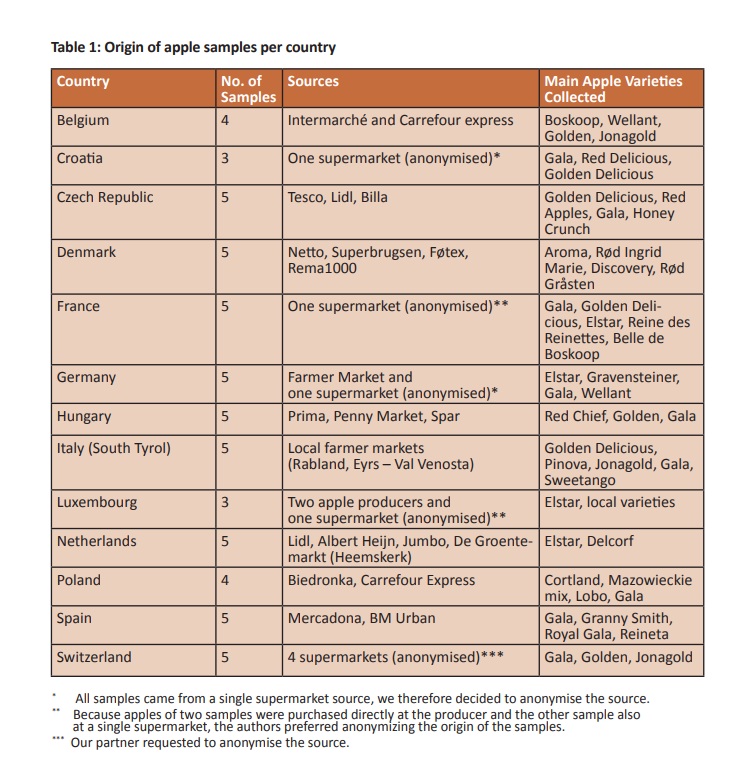
The report dedicates specific attention to the Italian situation, with a focus on the production of Alto Adige, an area symbol of national apple excellence. The analyzes involved five samples collected in September 2025 in the farmers’ markets of Val Venosta, in locations such as Rabland and Eyrs.
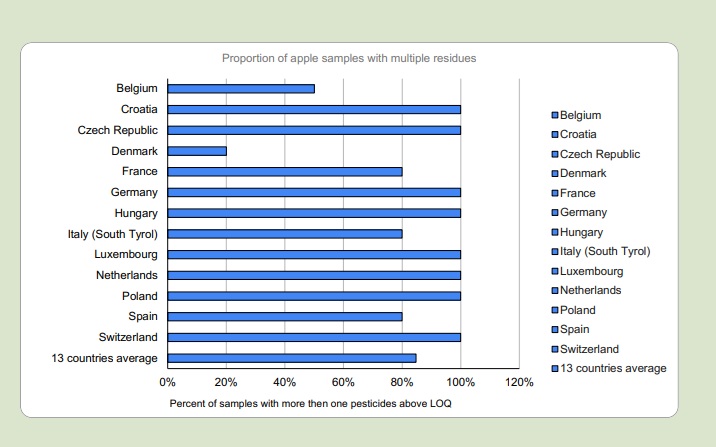
The result appears anything but reassuring, given that 80% of the Italian apples examined, belonging to very popular varieties such as Golden Delicious, Gala, Pinova, Jonagold and Sweetango, contain pesticide residues. In all contaminated samples the presence of a mix of several substances at the same time emerges. The sales context is also striking, since the samples come from local farmers’ markets, places that many consumers associate with freshness, authenticity and lower chemical impact.
A further element of alarm concerns the type of residues, because 100% of contaminated Italian apples contain PFAS pesticides and substances classified as “candidates for replacement”.
The only positive difference compared to other European countries concerns the absence of neurotoxic pesticides in the Italian samples analyzed.
Ultimately, only one apple in five is completely free of chemical traces, a fact that confirms how contamination now represents the rule and no longer the exception.
A regulatory paradox that also concerns children
The report highlights a paradox that is difficult to ignore, in which the same apples sold freely to adult consumers could not be used for food intended for children under three years of age. In fact, European legislation imposes much stricter limits for products aimed at early childhood, recognizing the risks linked to exposure to pesticides during the developmental stages.
Many parents are unaware that offering their children “conventional” fresh fruit and vegetables can increase pesticide exposure by up to 600 times, compared to, for example, processed foods specifically designed for infants.
The Omnibus proposal and the risk of deregulation
To further complicate the picture, the European Commission’s recent proposal, known as Omnibus, aims to deregulate the sector, with the introduction of unlimited approval periods for pesticides and the elimination of the obligation to review every 10-15 years in light of new scientific knowledge.
In concrete terms, Member States could authorize the use of certain substances, ignoring the most recent studies on their possible danger, a crazy choice that represents a clear setback in the protection of public health and the environment.
PAN Europe and the 13 partner organizations involved in the investigation, including Générations Futures, PAN Germany and Ecologistas en Acción, express clear opposition to the proposal and instead call for stricter enforcement of existing rules.
What Italian consumers can do
While waiting for more effective regulatory interventions, PAN Europe suggests some practical precautions. The first remains the choice of organic apples, grown without synthetic pesticides. If you buy conventional products, peel them to reduce exposure to residues, which are mainly concentrated on the peel.
It remains clear, however, that responsibility can no longer fall solely on individual choices. The theme of Italian apples, a symbol of health and food tradition, calls into question an agricultural and regulatory model that should put the protection of citizens and ecosystems at the centre, before the interests of the agrochemical industry.
The full report is available on the PAN Europe website.
