
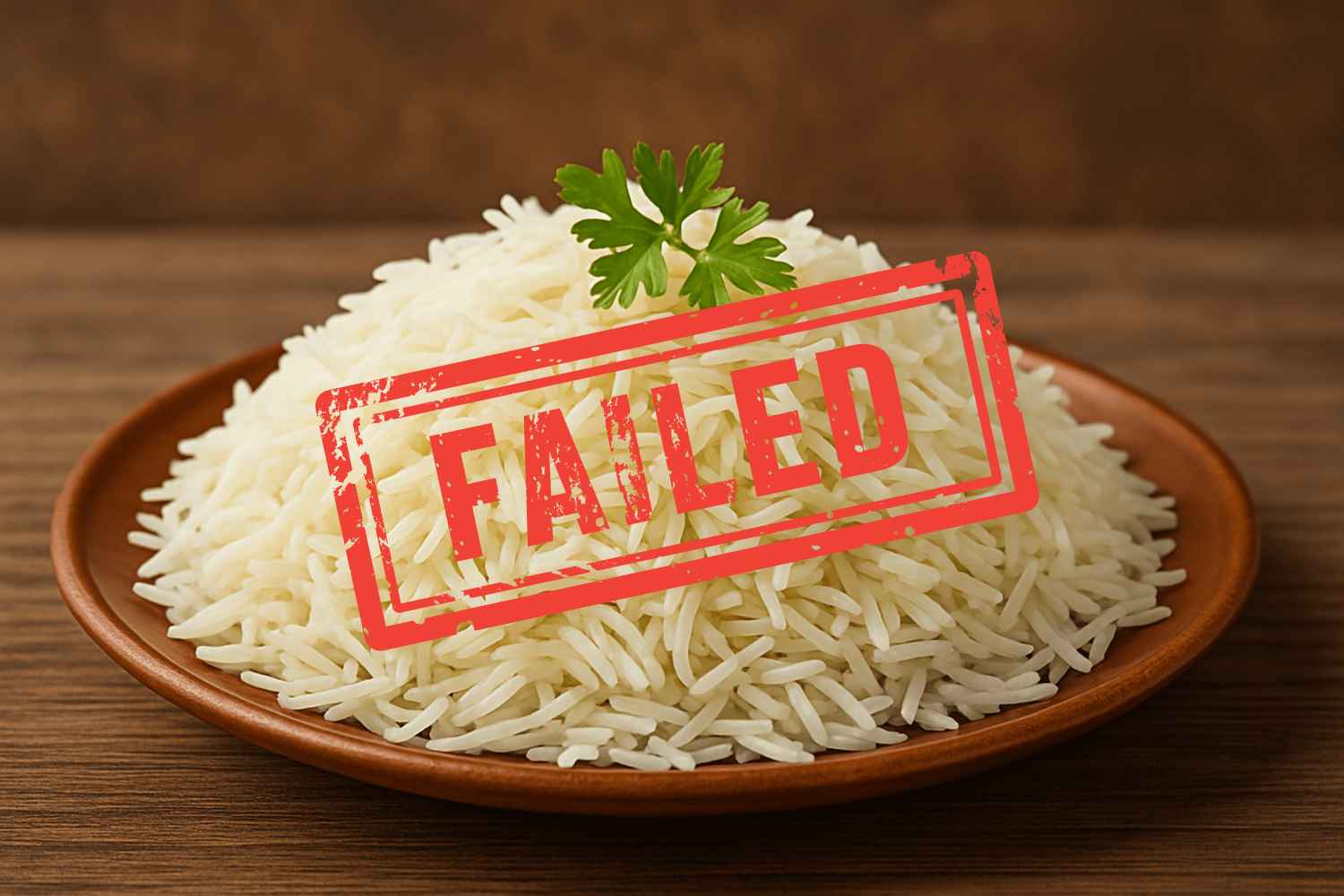
The worst basmati rice you can find in the supermarket is Curtiriso Basmati Rice, the only product that completely failed in the recent Altroconsumo test. The analyzes detected levels of aflatoxin B1 above the legal limits set at 2 μg/kg, together with the presence of other aflatoxins (B2, G1 and G2). For this reason the consumer association explicitly invites you not to purchase it.
But the problem isn’t just about one brand. The survey, conducted on 8 basmati rice sold in large-scale Italian retail, gives an overall worrying picture: no product reaches a quality considered acceptable and all obtain low scores.
The results of the analyses
In five out of eight samples, aflatoxins were found, mycotoxins produced by molds that proliferate in warm and humid environments, typical of the basmati cultivation areas between India and Pakistan. Even when they remain below the legal limits, the quantities detected in four products are still considered not negligible, especially in the case of frequent consumption.
Nearly half of the samples also had pesticide residues. Although formally within European legal limits, in several cases these are substances banned in the EU but still used in their countries of origin. Some active ingredients are included among endocrine disruptors according to the French Anses or among CMR substances (carcinogenic, mutagenic or toxic for reproduction) according to European legislation.
The picture fits into a broader context: in the first six months of 2025 the European rapid alert system RASFF recorded 66 reports of contamination on batches of imported basmati, especially from India and Pakistan, often due to banned pesticides or aflatoxins above the threshold. On average, a batch is stopped or collected at European borders every three days. A situation that the National Risi Authority has defined as unacceptable, calling for stricter rules and reciprocity in controls.
The ranking of the tested basmati rice
All products are of low quality:
How the test was carried out
Samples were purchased in May 2025 and analyzed between June and September. The laboratories verified:
The products were also blind tasted by a consumer jury after traditional boiling. The final judgment derives 45% from laboratory analyses, 45% from sensorial testing and 10% from the label, with a strong penalty for safety non-compliances.
The Italian alternatives
In light of the results, Altroconsumo suggests limiting the consumption of imported basmati and alternating it with aromatic varieties grown in Italy, such as:
Home storage
To reduce the risk of mold and mycotoxins it is important to store rice in dry and cool environments, away from heat sources and preferably in airtight containers.
Basmati remains a food appreciated for its aroma and lightness, but data shows that quality and safety are not always guaranteed: reading labels and origin carefully becomes therefore essential before putting it in the shopping cart.
