
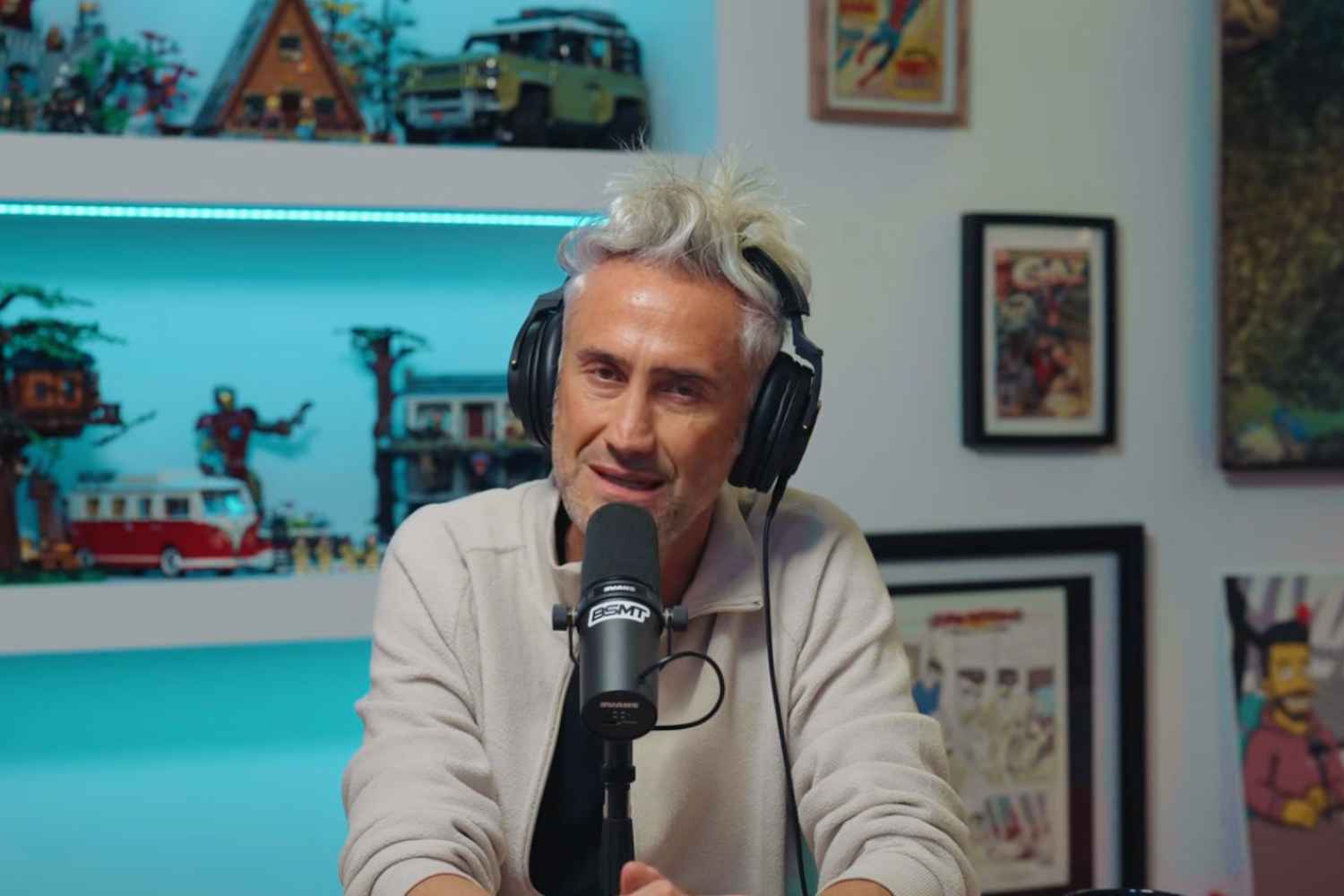
The reflections of physics and chemistry teacher Vincenzo Schettini, the most famous physics professor on the web, have sparked a lively discussion on the future of education in Italy. During his appearance on Gianluca Gazzoli’s podcast “Passa dal BSMT”, the professor outlined a provocative scenario for the educators of tomorrow.
Teaching will change a lot. The school will also be enjoyed online, outside the four walls, many teachers will work part-time and offer online content, even for a fee.
Why must a good product be on sale in a supermarket and why not good culture? We must move away from the cliché that culture must always be free. If a method is good, it is right that it becomes an accessible product. I myself purchased online English courses because I recognized the value of the method
Schettini exposed.
The origin of the controversy
Grazia Sambruna kicked off the controversy by extrapolating and sharing the most debated portion of the interview on social media. This choice significantly amplified the discussion:
Education represents a RIGHT, not a COMMODITY, wrote Sambruna. On such essential principles there are no ‘eventually’. These are apparently harmless steps that open up undesirable prospects (except for those with economic means, therefore certainly not for the COMMUNITY)
The prof #VincenzoSchettiniresponding to the controversy on #school of the future online and for everyone, invites you to retrieve the interview. It’s full of pearls like THIS: in the early days, he FORCED his students to follow the live broadcasts he did on YouTube to get more views. Master https://t.co/MxrYqaJNnW
— GraceSomehow (@LaSambruna) February 15, 2026
Luisella Costamagna intervened with even more severe tones:
All that was missing was the controversial Professor Schettini to propose a commercial education. School education – free and universal – is an essential right protected by our Constitution. He should be aware of it and, above all, take care of it. ‘Value formation’ cannot be transformed into ‘privilege for the wealthy’”.
We missed the (serious) professor. #Schettini on “paid education” (?!?). School – free and open to all – is an inalienable right enshrined in our Constitution. He should know it and above all defend it. “Good culture” must not be “rich stuff”. pic.twitter.com/RW8XtwPzue
— luisella costamagna (@luisellacost) February 14, 2026
The debate on social media
These positions mobilized those who interpreted Schettini’s statements as an opening towards market logic in education, a prelude to a possible privatization of the public system. At the same time, others took the professor’s defense, claiming that his words had been taken out of context or used instrumentally.
Honestly, this intervention seems to me rather to be a reassuring message aimed at future teachers worried that teaching innovation could threaten their employment. On the other hand, education has always involved investments. Schettini does not argue that state funding will disappear,
a user replied to Costamagna, attempting to draw attention back to the original meaning of the statements.
Several commentators have highlighted how there are already teachers who provide paid private tutoring, commercial digital learning services and paid online training programs, without this having ever compromised the principle of free public education.
Schettini’s complete message
Analyzing the interview in its entirety, an aspect emerges that the digital debate has crushed: Schettini does not suggest replacing public education with commercial offers, but rather proposes a complementary model for teaching professionals. Imagine a tomorrow in which teachers can partially dedicate themselves to educational institutions and at the same time produce digital educational materials intended for those seeking insights or innovative teaching methodologies.
Beyond the controversy and exploitation, this affair highlights a real dilemma that Italian schools can no longer ignore. On the one hand there is the sacrosanct constitutional guarantee of public education, free and accessible to all, an irreplaceable pillar of democracy. On the other, the undeniable reality of a changing world: digitalisation is advancing, young people are already learning through multiple channels, and many teachers are experimenting with new forms of dissemination.
The real question is not whether to defend public schools – that is a non-negotiable achievement. The challenge is to understand how to evolve it without betraying its founding principles. How to integrate innovation without creating disparity. How to valorise the talent of teachers without turning education into a privilege for those who can afford it.
Perhaps the problem lies not so much in Schettini’s words, but in the – legitimate – fear they express: in a country where public schools are already under pressure, where resources are lacking and buildings are collapsing, the idea that quality education could become “premium” is frightening. And it should make everyone think, not just those who teach.
