
From the Seveso disaster to that of the Grimaldi ship, from the Costa Concordia to the Morandi Bridge, the history of Italy is dotted (also) with tragic events that unequivocally show the devastating impact that human error can have.
If we only focus on the second half of the twentieth century, a thin line common to every single misfortune emerges: carelessness, Italian-style corruption, the inadequacy of the political class. All seasoned with a good dose of ease, which – be careful – always remained the same between the First and Second Republic, between “we’ll make everyone happy” Christian Democrat and the “Italy of doing” Berlusconi.
The context is exactly this. So let’s try to unravel the threads of this story, let’s try to investigate why it led to an environmental (and human) disaster at the same time.
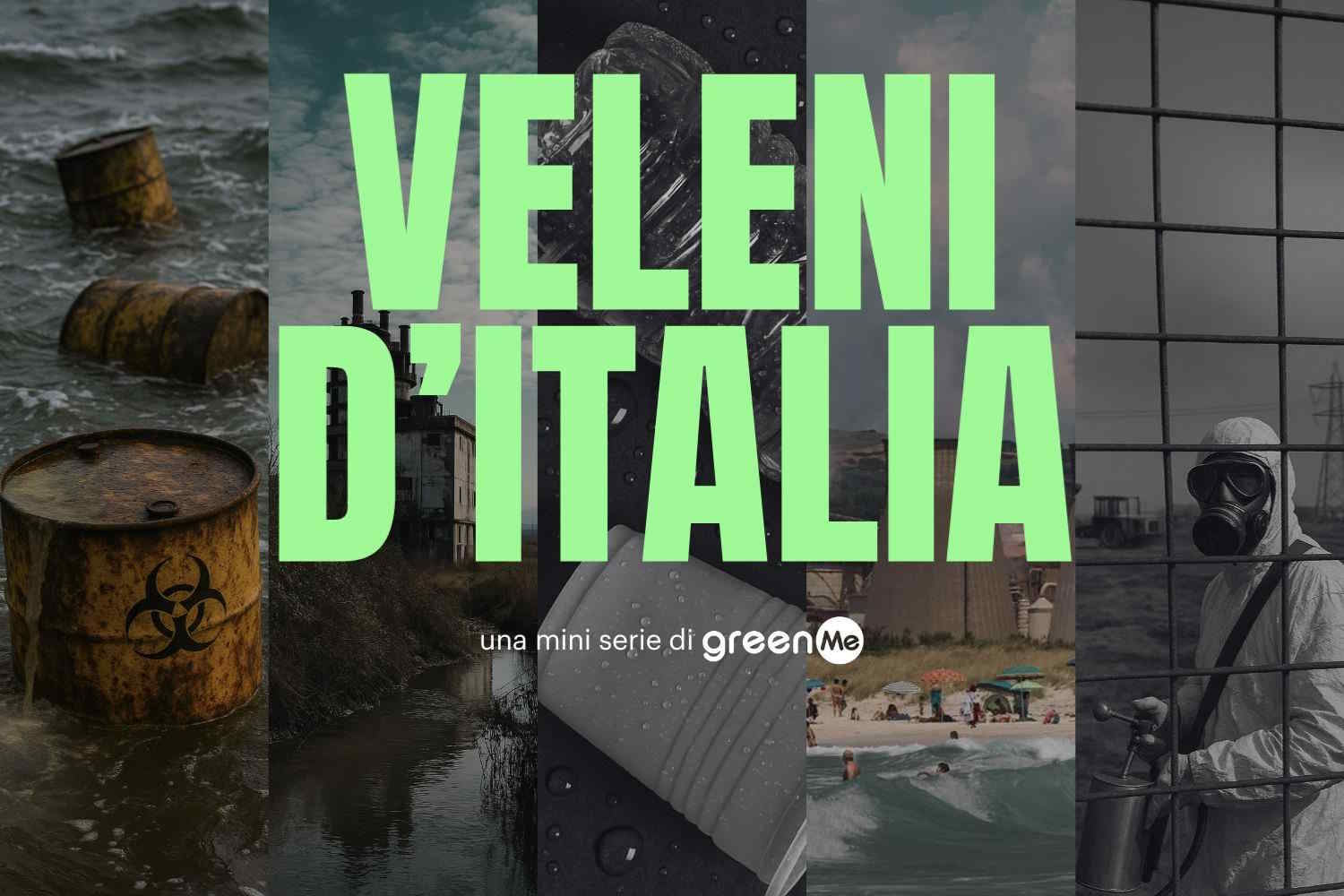
We at GreenMe have joined the pieces and created a single large picture: in the new series “Poisons of Italy” we will retrace 5 cases of ecological catastrophes, united by the spread of toxic substances and, indeed, poisons in the environment.
Are there only 5 environmental disasters in Italy in recent years? Absolutely not. Those chosen by us are among the most serious, even if it is really complicated to draw up a ranking. In fact, they all have the common thread of a something that could have been avoided.
Disasters in Italy, why they happen
Our country, despite being a country rich in natural beauty and breathtaking landscapes, has suffered serious environmental disasters during the 20th century, many of which were caused, as we were saying, by irresponsible actions and incorrect industrial choices. Territorial instability, land consumption and industrial pollution are the emergencies that Italy has practically faced since long before. And he continues to face.
As Gabriella Corona of the Institute for Studies on Mediterranean Societies of the National Research Council of Naples (Issm-Cnr) teaches in her interesting “Brief history of the environment in Italy“(Il Mulino), starting from the mid-19th century the first emergency, especially in the South, was the deforestation of mountainous areas, which began to increase the erosion phenomenon, the transport of debris and the stagnation of water especially at the mouths of rivers. The second environmental problem was that of the impact resulting from the industrialization of the country: at the beginning of the 1900s, for example, 20% of Italian industries were already considered unhealthy and not only that: the disposal of fumes and toxic fluids took place with total indifference and unawareness, even trusting in the self-purification of the air or in the dilution of the water
The underestimation continued to the point that in 1999 57 polluted sites of national interest were identified, especially former industrial areas such as Porto Marghera, Gela, Taranto or Orbetello, explains the researcher.
Another socio-economic phenomenon that has had a strong impact on the environmental level has undoubtedly been the consumption of land caused by urbanization and housing dispersion.
From this perspective, it is clear that all the catastrophic events that have followed have left deep scars in the territory, threatening the health of people and the balance of ecosystems. From Seveso (1976), the chemical accident that contaminated the air with dioxin, to the Vajont of 1963, when a huge landslide overwhelmed entire villages causing thousands of deaths, to the still very current issue of Taranto and ILVA to the Casale Monferrato asbestos disaster, they have contributed to highlighting the fragility of our ecosystem and the urgency of adopting more rigorous safeguard policies.
In our “Poisons of Italy”, in 5 episodes we will think together about how these events, although tragic, must serve as a warning. Here are the ones:
The Grimaldi ecological disaster
198 toxic barrels swallowed by the Tyrrhenian Sea, in the heart of the Cetacean Sanctuary, without anyone realizing it. An announced storm, a dangerous load lost between Gorgona and Livorno, days of silence and too many unanswered questions. From emergency maneuvers to investigations, up to a trial that found no culprits. The story of a forgotten environmental disaster and who should have prevented it.
PFAS in Veneto
PFAS: an invisible poison that has contaminated the water of hundreds of thousands of people for years, silently entering our bodies. “Eternal pollutants” spread everywhere, but still without a total ban as health risks continue to accumulate.
From the Venetian disaster to industrial and political responsibilities, a truth that has remained hidden for too long.
Seveso disaster
On 10 July 1976 a cloud of dioxin poisoned Seveso and changed Italian environmental history forever. A disaster born from industrial silence and aggravated by delays, omissions and truths denied to the population. Between evacuations, illnesses and a still open wound, Seveso remains a warning that we cannot forget.
Valle del Sacco, the Italian Chernobyl
For over half a century the Sacco Valley has paid the price for illegal dumping, pesticides and buried waste. A territory declared among the most contaminated in Italy, marked by diseases, unfinished reclamations and sins that have never really been punished. The “Italian Chernobyl” tells the dark side of industrial development and institutional silence.
The white beaches of Rosignano
The white beaches of Rosignano seem like a paradise, but their beauty is the result of over a century of industrial waste. Under that white sand lies one of the most contaminated areas of the Mediterranean, with toxic substances, legal exemptions and health risks. A fragile balance between work, environment and truth that has never fully emerged.
